
Grey orchid
Vanda tessellata, family Orchidaceae
A yellow and brown checkered orchid from the Indian subcontinent to Indochina
Grey orchid (Vanda tessellata) is an epiphytic orchid found from India to Indochina. Its yellow flowers are marked with brown lines and a bluish lip. The plant is valued in traditional medicine, and its roots and leaves are used in various remedies and rituals.
- Yellow flowers with brown checkered lines and a bluish lip
- Native from India to Indochina
- Roots and leaves used in traditional medicine
- Epiphytic orchid with thick, recurved leaves
- Sometimes used in ritual and folk practices
What does Grey orchid look like?
Grey orchid is a perennial orchid that grows on other plants (epiphytic). Its stem is stout and can reach up to 60 cm, with thick, recurved leaves about 15–20 cm long. The flowers appear in clusters of 6–10, each yellow with brown checkered lines and white margins. The lip of the flower is bluish and dotted with purple. The plant produces long, ribbed seed capsules after flowering.
Where does Grey orchid come from?
Vanda tessellata is native to the Indian subcontinent and stretches east to Indochina. It grows wild in these regions, often found attached to trees. The orchid has a long history of use in traditional medicine systems in India, such as Yunani and Ayurveda. Its common names reflect its checkered flower pattern.
When and how Grey orchid blooms
This orchid grows as an epiphyte, clinging to trees with thick aerial roots. It produces flower clusters on stalks up to 25 cm long. The plant is perennial, with leaves and roots that persist year after year. It is usually grown from seed or division, but the sources do not give detailed cultivation methods.


How Grey orchid is used
The roots and leaves of Grey orchid are used in traditional medicine for a range of ailments, including fever, rheumatism, bronchitis, and nervous disorders. In some Indian traditions, the plant is used in rituals and by shamans for its supposed hypnotic effects. The leaves are also used as anklets by Santhal girls.
Kinds of Grey orchid
There are no named cultivars or varieties mentioned in the sources, but the plant is sometimes called Checkered Vanda for its distinctive flower markings. Related orchids may be used in similar ways in traditional practices.
What Grey orchid means
Grey orchid holds a place in Indian traditional medicine and folklore. It is used in Yunani and Ayurvedic systems for its supposed healing properties. There are reports of its use in ritual and shamanic practices, though evidence is limited. The plant is also valued for its unusual flower pattern.
Questions people ask about Grey orchid
Where does the Grey orchid come from?
Grey orchid (Vanda tessellata) is native to the Indian subcontinent and extends to Indochina. It grows wild in these regions, often attached to trees as an epiphyte.
What does the Grey orchid look like?
The plant has stout stems and thick, recurved leaves. Its flowers are yellow with brown checkered lines and white edges, and the lip is bluish with purple dots.
How is Grey orchid used?
Its roots and leaves are used in traditional Indian medicine for ailments like fever, rheumatism, and bronchitis. It is also used in some rituals and by shamans.
Is the Grey orchid fragrant?
The sources do not mention a specific scent for the Grey orchid, though the root is described as fragrant in some traditional texts.
What does the Grey orchid symbolise?
The sources do not mention a particular symbolic meaning, but it is valued for its medicinal uses and unique flower pattern.
Good reading and sources
- Browse Articles | International Journal of Impotence ResearchNature, Article
- IUCN Red List of Threatened SpeciesIUCN Red List, Article
- Plants of the World OnlineRoyal Botanic Gardens, Kew, Plant database
- Where it has been recordedGBIF, Plant database
- Sightings and photos by naturalistsiNaturalist, Plant database
- Vanda tessellata on WikipediaEncyclopedia
- More photos on Wikimedia CommonsPhotos
- Wikidata recordOpen data
The facts on this page come from the Wikipedia article "Vanda tessellata", written by its contributors and used under the CC BY-SA 4.0 licence, and from its Wikidata record (CC0). Phool rewrote the text in its own words, with AI assistance, and compares every page with the article to make sure no passage is copied. It may be reused under the same CC BY-SA 4.0 licence with a link back.
It may contain mistakes. It is not medical or foraging advice: many flowers are poisonous, and traditional uses are reported, not recommended. If something is wrong, tell us. Last refreshed 2026-10-03.
Others in the family Orchidaceae
The whole family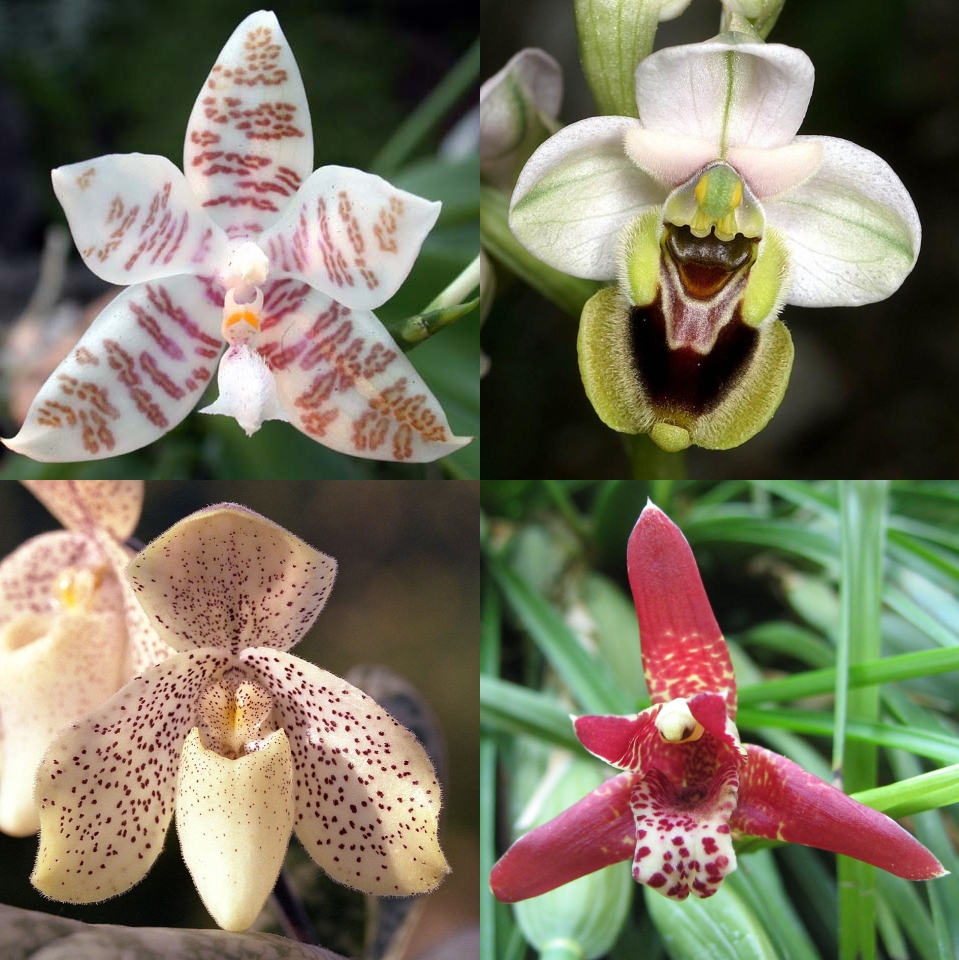 OrchidOrchidaceae
A vast family of colourful, often fragrant flowers found almost everywhere on earth
Orchidaceae · Wildflower
OrchidOrchidaceae
A vast family of colourful, often fragrant flowers found almost everywhere on earth
Orchidaceae · Wildflower
 Vanilla
Climbing orchids with pods used for the world’s most popular flavor
🇲🇽 Mexico and 7 more · Wildflower
Vanilla
Climbing orchids with pods used for the world’s most popular flavor
🇲🇽 Mexico and 7 more · Wildflower
 Orchis
A group of wild orchids with tuberous roots from Europe, North Africa and Asia
🇹🇷 Turkey and 7 more · Wildflower
Orchis
A group of wild orchids with tuberous roots from Europe, North Africa and Asia
🇹🇷 Turkey and 7 more · Wildflower
 Paphiopedilum glaucophyllum
A Southeast Asian slipper orchid with blue-green leaves and striped flowers
🇮🇩 Indonesia · Wildflower
Paphiopedilum glaucophyllum
A Southeast Asian slipper orchid with blue-green leaves and striped flowers
🇮🇩 Indonesia · Wildflower
More from India
All the flowers of India FennelFoeniculum vulgare
A tall, aromatic herb with feathery leaves and yellow umbels, used for food and spice
🇨🇳 China and 7 more · Herb or useful flower
FennelFoeniculum vulgare
A tall, aromatic herb with feathery leaves and yellow umbels, used for food and spice
🇨🇳 China and 7 more · Herb or useful flower
 TulipTulipa
Spring-blooming bulbs with showy, cup-shaped flowers in many colours
🇳🇱 Netherlands and 7 more · Wildflower
TulipTulipa
Spring-blooming bulbs with showy, cup-shaped flowers in many colours
🇳🇱 Netherlands and 7 more · Wildflower
 Common flaxLinum usitatissimum
The slender blue-flowered plant grown for linen and linseed
🇨🇳 China and 7 more · Wildflower
Common flaxLinum usitatissimum
The slender blue-flowered plant grown for linen and linseed
🇨🇳 China and 7 more · Wildflower
 Eucalyptus
The tall, aromatic trees and shrubs known as gum trees or eucalypts
🇦🇺 Australia and 7 more · Flowering tree
Eucalyptus
The tall, aromatic trees and shrubs known as gum trees or eucalypts
🇦🇺 Australia and 7 more · Flowering tree