
Weigela
Deciduous flowering shrubs from eastern Asia with pink, red, or white blooms
Weigela is a group of deciduous shrubs native to eastern Asia, known for their showy clusters of pink, red, or white flowers in early summer. Popular in gardens, these hardy plants attract bees and hummingbirds and are valued for their ease of care and ornamental appeal.
- Native to eastern Asia, including Japan and China
- Produces pink, red, white, or rarely yellow flowers in early summer
- Popular garden shrub that attracts bees and hummingbirds
- First introduced to Western gardens in 1845
- Many hybrids and cultivars are widely grown
What does Weigela look like?
Weigela shrubs grow between 1 and 5 meters tall and have ovate-oblong leaves with serrated edges, measuring 5 to 15 cm long. Their flowers, which appear in small clusters, are funnel-shaped with five lobes and range in color from white and pink to red, and rarely yellow. These blooms appear in early summer and are often attractive to bees and hummingbirds. The plant produces dry capsules filled with many small, winged seeds.
Where does Weigela come from?
Weigela is native to eastern Asia, with species found in regions such as northern China, Korea, and Japan. The genus was named after Christian Ehrenfried Weigel, a German scientist. The first species introduced to Western gardens, Weigela florida, was brought from North China to England in 1845 by Robert Fortune. More species and varieties were collected from Japan in the mid-19th century as the country opened to Westerners. Fossil records show ancient relatives in Denmark from the Miocene period.
When and how Weigela blooms
Weigela flowers in late spring to early summer. It is a hardy shrub that grows well in gardens, thriving in a range of soils and climates. Most garden plants are hybrids, especially crosses involving Weigela florida. Popular cultivars like 'Red Prince' and 'Pink Princess' are valued for their compact form and profuse flowering. Plants are usually grown from cuttings or young shrubs bought from nurseries.


How Weigela is used
Weigela is widely grown as an ornamental shrub in gardens and parks for its colorful and abundant flowers. Its blooms attract pollinators such as bees and hummingbirds, making it a favorite for wildlife-friendly gardens. Some national collections of Weigela can be found in botanical gardens in the UK and Germany.
Kinds of Weigela
There are between six and 38 species of Weigela, with many hybrids and cultivars developed for gardens. Notable varieties include 'Red Prince', 'Alexandra', 'Florida Variegata', and 'Pink Princess', each offering different flower colors and growth habits. Most garden plants are hybrids, especially those involving Weigela florida.
What Weigela means
Weigela has become a popular garden shrub in Europe and beyond since its introduction from Asia in the 19th century. It is not tied to specific symbolism or religious use in the sources, but its showy flowers and ease of care have made it a staple in ornamental horticulture. National collections are maintained in botanical gardens in the UK and Germany.
Questions people ask about Weigela
Where does Weigela come from?
Weigela is native to eastern Asia, with species found in northern China, Korea, and Japan. It was first introduced to Western gardens in the mid-19th century.
What does Weigela look like?
Weigela is a deciduous shrub that grows 1 to 5 meters tall, with ovate-oblong, serrated leaves and clusters of funnel-shaped flowers in pink, red, white, or rarely yellow.
How is Weigela used?
Weigela is mainly grown as an ornamental shrub in gardens and parks for its colorful flowers, which attract bees and hummingbirds.
Are there different types of Weigela?
Yes, there are several species and many garden cultivars, including 'Red Prince', 'Alexandra', and 'Pink Princess', each with different flower colors and sizes.
Does Weigela have any special meaning or symbolism?
The sources do not mention any specific symbolism or religious use for Weigela. It is valued mainly for its ornamental qualities.
Good reading and sources
- Encyclopaedia BritannicaArticle
- Weigela 'Red Prince'Royal Horticultural Society, Article
- USDA Plants DatabaseUS Department of Agriculture, Article
- Plants of the World OnlineRoyal Botanic Gardens, Kew, Plant database
- Where it has been recordedGBIF, Plant database
- Sightings and photos by naturalistsiNaturalist, Plant database
The facts on this page come from the Wikipedia article "Weigela", written by its contributors and used under the CC BY-SA 4.0 licence, and from its Wikidata record (CC0). Phool rewrote the text in its own words, with AI assistance, and compares every page with the article to make sure no passage is copied. It may be reused under the same CC BY-SA 4.0 licence with a link back.
It may contain mistakes. It is not medical or foraging advice: many flowers are poisonous, and traditional uses are reported, not recommended. If something is wrong, tell us. Last refreshed 2026-10-03.
Others in the family Caprifoliaceae
The whole family HoneysuckleLonicera
Twining vines and shrubs with sweet-scented tubular flowers and edible nectar
Lonicera · Wildflower
HoneysuckleLonicera
Twining vines and shrubs with sweet-scented tubular flowers and edible nectar
Lonicera · Wildflower
 Common ValerianValeriana officinalis
Tall, sweet-scented wildflower with pale pink blooms and a long history in herbal lore
🇮🇸 Iceland and 8 more · Wildflower
Common ValerianValeriana officinalis
Tall, sweet-scented wildflower with pale pink blooms and a long history in herbal lore
🇮🇸 Iceland and 8 more · Wildflower
 Lomelosia comosa
A perennial wildflower and Mongolia's national flower
🇲🇳 Mongolia and 1 more · Wildflower
Lomelosia comosa
A perennial wildflower and Mongolia's national flower
🇲🇳 Mongolia and 1 more · Wildflower
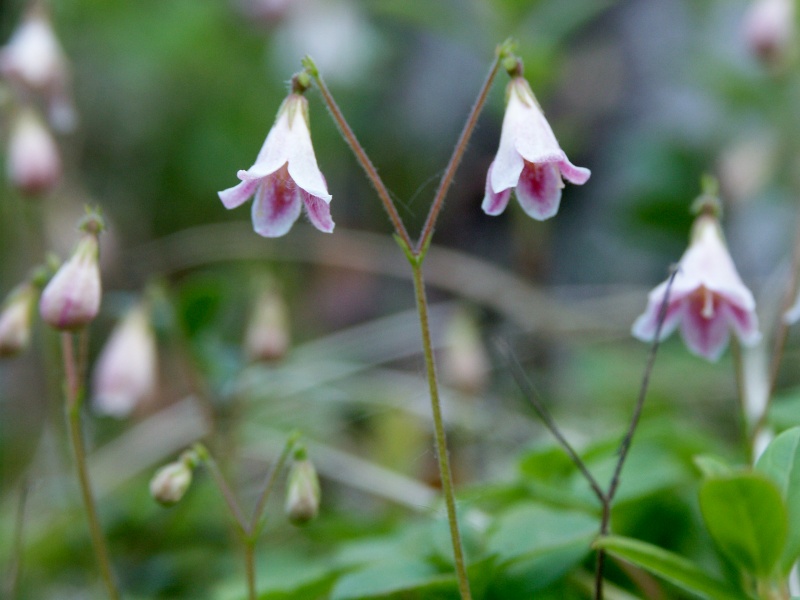 TwinflowerLinnaea borealis
A small woodland plant with paired pale pink flowers, named for Carl Linnaeus
🇺🇸 United States and 2 more · Wildflower
TwinflowerLinnaea borealis
A small woodland plant with paired pale pink flowers, named for Carl Linnaeus
🇺🇸 United States and 2 more · Wildflower
More from Japan
All the flowers of Japan PeachPrunus persica
A flowering fruit tree from China, grown for its pink blossoms and sweet fruit
🇨🇳 China and 7 more · Flowering tree
PeachPrunus persica
A flowering fruit tree from China, grown for its pink blossoms and sweet fruit
🇨🇳 China and 7 more · Flowering tree
 Chrysanthemum菊花
Autumn-blooming flower with thousands of varieties, cherished in East Asia and beyond
🇨🇳 China and 6 more · Wildflower
Chrysanthemum菊花
Autumn-blooming flower with thousands of varieties, cherished in East Asia and beyond
🇨🇳 China and 6 more · Wildflower
 Sacred lotusNelumbo nucifera
The pink aquatic flower sacred in Asia and grown for food, worship and beauty
🇮🇳 India and 7 more · Water flower
Sacred lotusNelumbo nucifera
The pink aquatic flower sacred in Asia and grown for food, worship and beauty
🇮🇳 India and 7 more · Water flower
 Wild cherryPrunus avium
A tall flowering tree native to Europe, grown for its sweet fruit and spring blossom
🇮🇹 Italy and 6 more · Flowering tree
Wild cherryPrunus avium
A tall flowering tree native to Europe, grown for its sweet fruit and spring blossom
🇮🇹 Italy and 6 more · Flowering tree