
Habranthus
A group of rain lilies once classified as their own genus
Habranthus refers to a set of tender, bulbous flowering plants now grouped within the genus Zephyranthes. They grow 10–30 cm tall with narrow leaves and angled, zygomorphic flowers, often blooming after rain.
- Flowers grow at an angle, not upright
- Now classified as part of Zephyranthes
- Blooms often follow rainfall
- Considered heirloom plants in the U.S.
- Bulbs are hardy in warm zones
What does Habranthus look like?
These plants grow from bulbs and reach up to 30 cm in height. Their leaves are long, narrow, and appear each year. The flowers grow on stalks, usually one to four per stem, and are asymmetrical, unlike many lilies, they tilt sideways rather than face upward.
Where does Habranthus come from?
Originally described as a separate genus by William Herbert in 1824, Habranthus was later merged into Zephyranthes based on genetic evidence. Earlier classifications had even placed it under Hippeastrum, but DNA studies showed close ties among several genera, leading to its current status as a subgenus.
When and how Habranthus blooms
Former Habranthus species bloom unpredictably, often triggered by rainfall, which makes their flowering seem erratic. They thrive in warm climates, particularly USDA zones 8 to 10, and can be grown in pots in colder areas if protected from frost during winter.


How Habranthus is used
In the United States, these plants are valued by bulb enthusiasts as heirloom garden subjects. Though not common in mainstream landscaping, they are appreciated for their toughness and unique floral form in suitable climates.
Kinds of Habranthus
Two well-known former members are Zephyranthes robusta, with pink blooms, and Zephyranthes tubispatha, which bears yellow flowers. Both were once classified under Habranthus before the taxonomic revision.
Questions people ask about Habranthus
Where does Habranthus come from?
The sources do not specify its native range, but species formerly in Habranthus are grown in the United States as garden plants.
What does Habranthus look like?
It has narrow, annual leaves and short stems bearing one to four tilted, asymmetrical flowers that may be pink or yellow.
Is Habranthus still a valid genus?
No. Genetic studies led to its inclusion in the genus Zephyranthes as a subgenus since 2019.
When does it bloom?
Its flowering is irregular and often follows rain, making it unpredictable in gardens.
How is it used?
It is grown by bulb specialists as an heirloom garden plant, especially in warm regions of the United States.
Good reading and sources
- USDA Plants DatabaseUS Department of Agriculture, Article
- Plants of the World OnlineRoyal Botanic Gardens, Kew, Plant database
- Where it has been recordedGBIF, Plant database
- Sightings and photos by naturalistsiNaturalist, Plant database
- Zephyranthes subg. Habranthus on WikipediaEncyclopedia
- More photos on Wikimedia CommonsPhotos
- Wikidata recordOpen data
The facts on this page come from the Wikipedia article "Zephyranthes subg. Habranthus", written by its contributors and used under the CC BY-SA 4.0 licence, and from its Wikidata record (CC0). Phool rewrote the text in its own words, with AI assistance, and compares every page with the article to make sure no passage is copied. It may be reused under the same CC BY-SA 4.0 licence with a link back.
It may contain mistakes. It is not medical or foraging advice: many flowers are poisonous, and traditional uses are reported, not recommended. If something is wrong, tell us. Last refreshed 2026-10-03.
Others in the family Amaryllidaceae
The whole family Narcissus
Spring-flowering bulbs with trumpet-shaped blooms in white, yellow, and orange
🇬🇧 United Kingdom and 7 more · Wildflower
Narcissus
Spring-flowering bulbs with trumpet-shaped blooms in white, yellow, and orange
🇬🇧 United Kingdom and 7 more · Wildflower
 Allium
The genus of onions, garlic, leeks, chives and their wild relatives
Allium · Wildflower
Allium
The genus of onions, garlic, leeks, chives and their wild relatives
Allium · Wildflower
 Wild GarlicAllium ursinum
A wild woodland plant with star-shaped white flowers and edible leaves
🇮🇪 Ireland · Wildflower
Wild GarlicAllium ursinum
A wild woodland plant with star-shaped white flowers and edible leaves
🇮🇪 Ireland · Wildflower
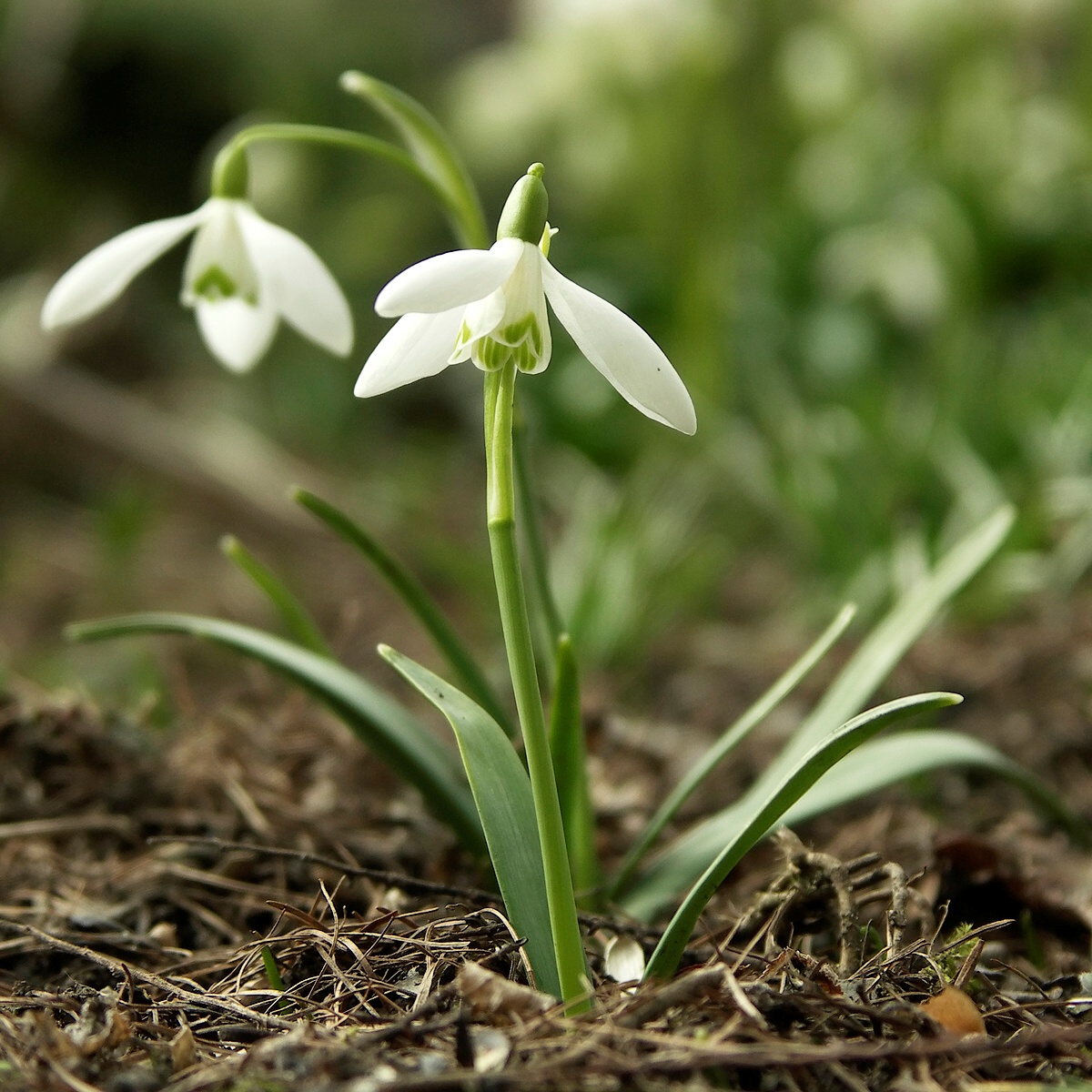 SnowdropGalanthus
White bell-shaped flowers that bloom at the end of winter
🇹🇷 Turkey and 7 more · Wildflower
SnowdropGalanthus
White bell-shaped flowers that bloom at the end of winter
🇹🇷 Turkey and 7 more · Wildflower
More from the United States
All the flowers of the United States PeachPrunus persica
A flowering fruit tree from China, grown for its pink blossoms and sweet fruit
🇨🇳 China and 7 more · Flowering tree
PeachPrunus persica
A flowering fruit tree from China, grown for its pink blossoms and sweet fruit
🇨🇳 China and 7 more · Flowering tree
 AlmondPrunus amygdalus
A Mediterranean tree grown for its fragrant spring flowers and edible seeds
🇮🇷 Iran and 6 more · Flowering tree
AlmondPrunus amygdalus
A Mediterranean tree grown for its fragrant spring flowers and edible seeds
🇮🇷 Iran and 6 more · Flowering tree
 CactusCactaceae
Succulent plants with spines, native to the Americas
🇲🇽 Mexico and 7 more · Wildflower
CactusCactaceae
Succulent plants with spines, native to the Americas
🇲🇽 Mexico and 7 more · Wildflower
 Chrysanthemum菊花
Autumn-blooming flower with thousands of varieties, cherished in East Asia and beyond
🇨🇳 China and 6 more · Wildflower
Chrysanthemum菊花
Autumn-blooming flower with thousands of varieties, cherished in East Asia and beyond
🇨🇳 China and 6 more · Wildflower