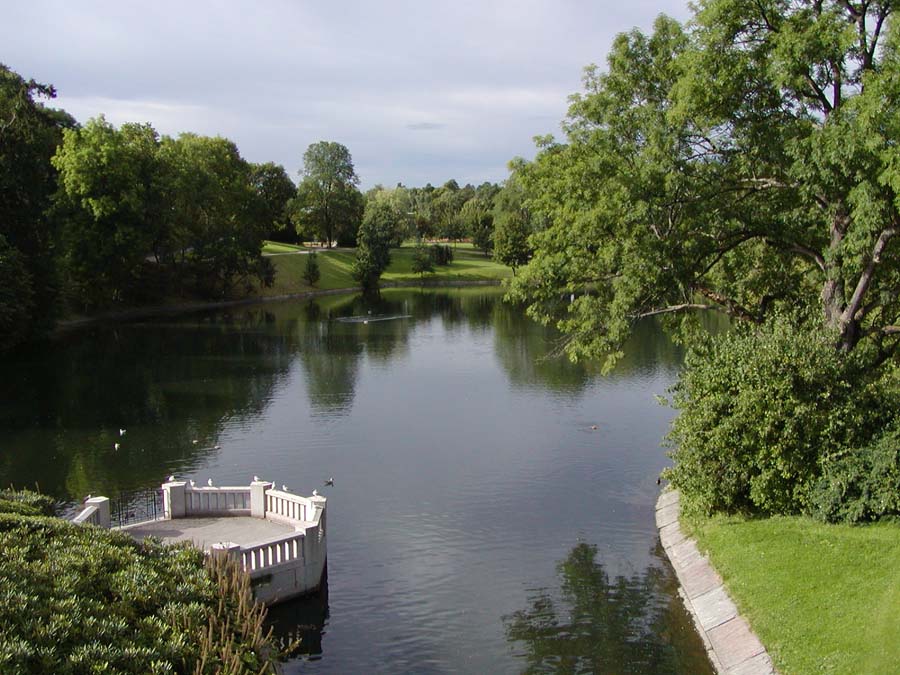
Frogner Park
In its own language: Frognerparken
Oslo’s largest public park, home to 14,000 roses and Vigeland’s sculpture installation
Frogner Park is a large public park in Oslo, Norway, known for its extensive rose gardens and the Vigeland installation, a collection of over 200 sculptures by Gustav Vigeland. The park includes Frogner Manor, Oslo Museum, historic pavilions, and is open year-round, attracting millions of visitors.
- Home to Norway’s largest rose collection with 14,000 plants of 150 species
- Features over 200 sculptures by Gustav Vigeland, including the Monolith
- Open to the public at all times, attracting up to 2 million visitors yearly
- Some park trees are more than 250 years old
- First park in Norway protected under the Heritage Act
What is Frogner Park?
Frogner Park is a 45-hectare public park in Oslo, featuring wide lawns, tree-lined paths, and a renowned rose garden with 14,000 plants from 150 species. The Vigeland installation, a highlight of the park, displays over 200 bronze and granite sculptures along a central axis, including the famous Monolith and Angry Boy. The park also contains historic buildings like Frogner Manor and the octagonal Henriette Wegner Pavilion, as well as sports facilities, a café, and a restaurant.
The history of Frogner Park
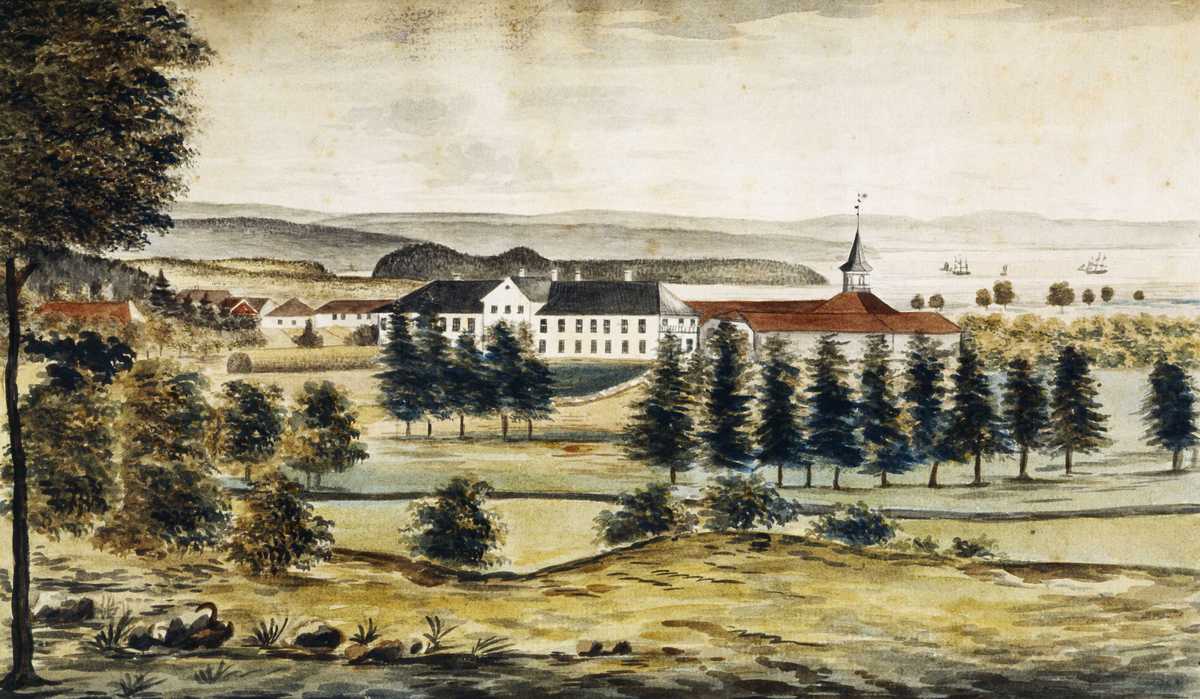
The park began as a baroque garden for Frogner Manor in the mid-1700s, laid out by Hans Jacob Scheel. In the 1840s, Benjamin and Henriette Wegner transformed it into a romantic landscape park. The city of Oslo purchased the estate in 1896, opening it to the public from 1904. The Vigeland installation was added from 1924, making the park a unique blend of historic gardens and modern sculpture. In 2009, Frogner Park and the Vigeland installation became the first park in Norway protected under the Heritage Act.
What there is to see
The park’s gardens are maintained with a focus on biological principles. The rose garden is planted with a wide range of species and colors. The Vigeland installation was created over several decades, with sculptures arranged along a main axis. The Monolith, carved from a single block of granite, took 14 years to complete. The park also features mature trees, some over 250 years old, and exotic species like magnolia and ginkgo.



When to go
Frogner Park is open to the public at all times and is Oslo’s most visited tourist spot, drawing 1 to 2 million visitors yearly. Locals and tourists come for walks, picnics, and to view the gardens and sculptures. The park hosts exhibitions and is a popular site for recreation and cultural events. The rose garden is especially admired in spring and summer.
Parts and collections
Within the park, the Wegner romantic park preserves the 19th-century landscape style near the manor house. The Vigeland installation includes distinct areas: the Bridge with child statues, the Fountain with bronze reliefs, the Monolith Plateau with 36 figure groups, and the Wheel of Life sculpture. The park’s rose collection covers 150 species, making it Norway’s largest.
Why Frogner Park matters
Frogner Park is a cultural landmark and the most popular tourist attraction in Norway. The Vigeland installation is the world’s largest sculpture park by a single artist. The park’s name is officially Frognerparken, though tourists sometimes call it Vigeland Park. The park and sculptures are protected as a national heritage site. The Henriette Wegner Pavilion and Frogner Manor reflect the park’s layered history.
The flowers of Frogner Park
 RoseWoody perennial plants with showy, often fragrant flowers in many colours
 Magnolia sieboldiiA summer-blooming magnolia with white, cup-shaped flowers from East Asia
 Magnolia liliifloraA small Chinese magnolia with large pink-purple spring flowers
 Saucer magnoliaA spring-flowering magnolia with large pink, white, or purple blooms
 Houpu MagnoliaA Chinese mountain magnolia valued for its fragrant white flowers and aromatic bark
 Banana magnoliaA fragrant evergreen tree with velvety buds and creamy or purple flowers
Questions people ask about Frogner Park
Where is Frogner Park located?
Frogner Park is in the Frogner district of Oslo, Norway, in the city’s West End. It is Oslo’s largest public park and is easily accessible from the city center.
What is Frogner Park famous for?
The park is known for its vast rose garden and the Vigeland installation, a collection of over 200 sculptures by Gustav Vigeland. It is also home to historic buildings and is Norway’s most visited tourist attraction.
What flowers can be seen in Frogner Park?
The park’s rose garden contains 14,000 roses from 150 species, making it the largest in Norway. There are also mature trees, including magnolia, sequoia, ginkgo, and walnut.
When is the best time to visit Frogner Park for flowers?
Spring and summer are the best seasons to see the rose garden in full bloom, with a wide range of colors and species on display.
Is the Vigeland installation a separate park?
No, the Vigeland installation is a sculpture arrangement within Frogner Park, not a separate park. The name 'Vigeland Park' is mostly used by tourists and is not the official or local name.
Good reading and sources
The facts on this page come from the Wikipedia article "Frogner Park", written by its contributors and used under the CC BY-SA 4.0 licence, and from its Wikidata record (CC0). Phool rewrote the text in its own words, with AI assistance, and compares every page with the article to make sure no passage is copied. It may be reused under the same CC BY-SA 4.0 licence with a link back.
It may contain mistakes. Opening times, prices and bloom dates change: check with the place before you travel. If something is wrong, tell us. Last refreshed 2026-10-03.
More of the same kind
 Place
AlhambraLa Alhambra
Medieval palace and fortress complex overlooking Granada, Spain
Granada, 🇪🇸 Spain · Flower garden
Place
AlhambraLa Alhambra
Medieval palace and fortress complex overlooking Granada, Spain
Granada, 🇪🇸 Spain · Flower garden
 Place
Chashme Shahi
A Mughal garden built around a spring in Srinagar, Kashmir
Srinagar, 🇮🇳 India · Flower garden, Mar to Nov
Place
Chashme Shahi
A Mughal garden built around a spring in Srinagar, Kashmir
Srinagar, 🇮🇳 India · Flower garden, Mar to Nov
 Place
Yadavindra Gardens
A 17th-century Mughal garden with seven terraces in Pinjore, Haryana
Panchkula, 🇮🇳 India · Flower garden, Apr to Dec
Place
Yadavindra Gardens
A 17th-century Mughal garden with seven terraces in Pinjore, Haryana
Panchkula, 🇮🇳 India · Flower garden, Apr to Dec
 Place
Shalimar Bagh
A Mughal-era garden of terraces, fountains and chinar trees by Dal Lake, Srinagar
Srinagar, 🇮🇳 India · Flower garden
Place
Shalimar Bagh
A Mughal-era garden of terraces, fountains and chinar trees by Dal Lake, Srinagar
Srinagar, 🇮🇳 India · Flower garden
More from Norway
All the flowers of Norway Place
Flor og Fjære
Tropical-inspired gardens and restaurant on Sør-Hidle island, Norway
Stavanger, 🇳🇴 Norway · Flower garden, May to Sep
Place
Flor og Fjære
Tropical-inspired gardens and restaurant on Sør-Hidle island, Norway
Stavanger, 🇳🇴 Norway · Flower garden, May to Sep
 Wild cherryPrunus avium
A tall flowering tree native to Europe, grown for its sweet fruit and spring blossom
🇮🇹 Italy and 6 more · Flowering tree
Wild cherryPrunus avium
A tall flowering tree native to Europe, grown for its sweet fruit and spring blossom
🇮🇹 Italy and 6 more · Flowering tree
 Pedunculate oakQuercus robur
A towering oak tree with stalked acorns, native to Europe and western Asia
🇷🇸 Serbia and 8 more · Flowering tree
Pedunculate oakQuercus robur
A towering oak tree with stalked acorns, native to Europe and western Asia
🇷🇸 Serbia and 8 more · Flowering tree
 CloudberryRubus chamaemorus
A golden berry of northern bogs and tundra, picked wild for food and drink
🇳🇴 Norway and 7 more · Wildflower
CloudberryRubus chamaemorus
A golden berry of northern bogs and tundra, picked wild for food and drink
🇳🇴 Norway and 7 more · Wildflower