
Bifrenaria
A genus of robust, fragrant orchids from South America
Bifrenaria is a genus of about twenty orchid species native to Central and South America, especially Brazil. These plants have fleshy pseudobulbs, leathery leaves, and clusters of strongly scented flowers that attract large bees or hummingbirds.
- Flowers are strongly scented and often pollinated by large bees
- Distinguished by a spur-like calcar at the base of the flower
- About 20 accepted species, mostly from Brazil
- Fruits take eight months to ripen and hold hundreds of thousands of seeds
- Recent taxonomy merges several former genera into Bifrenaria
What does Bifrenaria look like?
Bifrenaria orchids are robust plants ten to sixty centimeters tall. They grow sympodially with four-angled, fleshy pseudobulbs, each topped by a single leathery, fan-folded leaf. Their inflorescences bear up to ten flowers that rarely exceed the leaf length. The flowers are fleshy, often fragrant, with sepals slightly larger than petals and a distinctive spur-like calcar at the base.
Where does Bifrenaria come from?
First described in 1824 as Dendrobium harrisoniae, the genus Bifrenaria was formally established by John Lindley in 1832. Its name refers to the two pairs of pollinia held by separate stalks. Originally thought to originate in southeastern Brazil, recent studies suggest a Central American origin followed by spread southward. Taxonomic confusion led to multiple proposed genera like Adipe and Stenocoryne, now mostly merged back.
When and how Bifrenaria blooms
Bifrenaria species bloom on short or long inflorescences depending on the group. Large-flowered types from southeastern Brazil are often lithophytes or epiphytes with erect flower clusters. Smaller-flowered species, once placed in Adipe, are typically epiphytic with delicate, longer stems. Flowers may be pollinated by large bees or hummingbirds, depending on scent and color. Fruits take about eight months to ripen and contain hundreds of thousands of tiny seeds.


Kinds of Bifrenaria
The genus splits into two main groups. The large-flowered group, native to southeastern Brazil, includes lithophytes and epiphytes with fragrant blooms. The small-flowered group, formerly classified as Adipe, contains more delicate epiphytes from the Amazon and other regions, with less scent and smoother labella. Molecular studies confirm these divisions but reject splitting them into separate genera.
What Bifrenaria means
Bifrenaria orchids are prized by growers for their abundant, seemingly artificial-looking flowers. Though they have no known traditional uses, their strong fragrance and striking form make them horticultural favorites. Recent taxonomic revisions have expanded the genus to include several former genera such as Rudolfiella and Scuticaria, reflecting updated phylogenetic understanding.
Questions people ask about Bifrenaria
Where does Bifrenaria come from?
Bifrenaria is native to Panama, Trinidad and South America, especially Brazil, with many species originating in the southeast of the country.
What do Bifrenaria flowers look like?
They have fleshy, often fragrant flowers with sepals slightly larger than petals and a distinctive spur-like structure called a calcar at the base.
How is Bifrenaria pollinated?
Large, fragrant species are likely pollinated by large bees; smooth, brightly colored ones may attract hummingbirds. Direct observation of pollination is rare.
Are Bifrenaria orchids used for anything?
There are no known traditional uses, but their showy, abundant flowers make them popular among orchid growers.
How many species are there?
About twenty species are generally accepted, divided into large-flowered and small-flowered groups, with ongoing taxonomic revisions.
Good reading and sources
- Plants of the World OnlineRoyal Botanic Gardens, Kew, Plant database
- Where it has been recordedGBIF, Plant database
- Sightings and photos by naturalistsiNaturalist, Plant database
The facts on this page come from the Wikipedia article "Bifrenaria", written by its contributors and used under the CC BY-SA 4.0 licence, and from its Wikidata record (CC0). Phool rewrote the text in its own words, with AI assistance, and compares every page with the article to make sure no passage is copied. It may be reused under the same CC BY-SA 4.0 licence with a link back.
It may contain mistakes. It is not medical or foraging advice: many flowers are poisonous, and traditional uses are reported, not recommended. If something is wrong, tell us. Last refreshed 2026-10-03.
Others in the family Orchidaceae
The whole family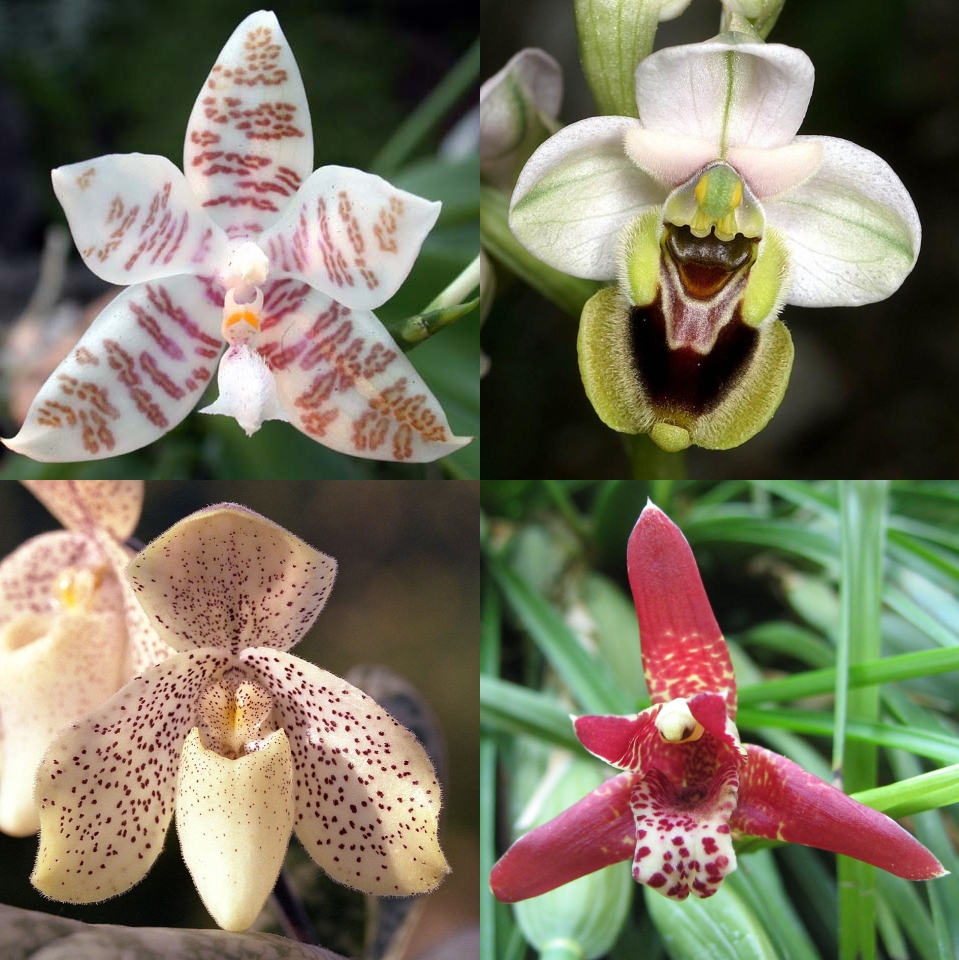 OrchidOrchidaceae
A vast family of colourful, often fragrant flowers found almost everywhere on earth
Orchidaceae · Wildflower
OrchidOrchidaceae
A vast family of colourful, often fragrant flowers found almost everywhere on earth
Orchidaceae · Wildflower
 Vanilla
Climbing orchids with pods used for the world’s most popular flavor
🇲🇽 Mexico and 7 more · Wildflower
Vanilla
Climbing orchids with pods used for the world’s most popular flavor
🇲🇽 Mexico and 7 more · Wildflower
 Orchis
A group of wild orchids with tuberous roots from Europe, North Africa and Asia
🇹🇷 Turkey and 7 more · Wildflower
Orchis
A group of wild orchids with tuberous roots from Europe, North Africa and Asia
🇹🇷 Turkey and 7 more · Wildflower
 Pansy orchidMiltoniopsis
An orchid with flowers that resemble garden pansies
🇨🇷 Costa Rica and 5 more · Orchid
Pansy orchidMiltoniopsis
An orchid with flowers that resemble garden pansies
🇨🇷 Costa Rica and 5 more · Orchid
More from Brazil
All the flowers of Brazil Miltonia
Medium-large Brazilian orchids with showy, long-lasting flowers
🇧🇷 Brazil and 2 more · Orchid
Miltonia
Medium-large Brazilian orchids with showy, long-lasting flowers
🇧🇷 Brazil and 2 more · Orchid
 Cattleya
A showy orchid genus from Central and South America
🇨🇷 Costa Rica and 2 more · Wildflower
Cattleya
A showy orchid genus from Central and South America
🇨🇷 Costa Rica and 2 more · Wildflower
 Masdevallia
A large group of cool-growing orchids from the high Andes
🇲🇽 Mexico and 5 more · Wildflower
Masdevallia
A large group of cool-growing orchids from the high Andes
🇲🇽 Mexico and 5 more · Wildflower
 Epidendrum secundum
A South American orchid with dense clusters of colorful flowers
🇧🇷 Brazil and 3 more · Wildflower
Epidendrum secundum
A South American orchid with dense clusters of colorful flowers
🇧🇷 Brazil and 3 more · Wildflower