
Chuquiraga jussieui
A low, endangered shrub of the high Andes, with pale yellow or orange flowers
Chuquiraga jussieui is a low shrub of the high Andes, roughly 75 cm tall, with flowers in pale yellow or orange. It grows wild in Ecuador and Peru between 3,000 and 5,000 metres high, is classed as endangered, and its nectar feeds a hummingbird.
- A low shrub of the high Andes, about 75 cm tall
- Flowers are pale yellow or orange
- Native to Ecuador and Peru, growing at high altitude
- Listed as an endangered species
- Its nectar feeds the hummingbird Oreotrochilus chimborazo
What does Chuquiraga jussieui look like?
Chuquiraga jussieui is a low shrub, meaning a woody plant that branches near the ground rather than growing one trunk. It reaches about 75 cm tall. Its flowers are pale yellow or orange. The plant belongs to the aster family, Asteraceae, and it lives high in the Andes, the long mountain range along the western edge of South America, between 3,000 and 5,000 metres high. It is an endangered species. The hummingbird Oreotrochilus chimborazo comes to the flowers for nectar. The sources say nothing about scent.
Where does Chuquiraga jussieui come from?
Chuquiraga jussieui is one species within the genus Chuquiraga, and it is native to Ecuador and Peru. The article gives it the name flower of the Andes, and the mountains do seem to define it, since it grows only at high altitude. The sources do not say when the plant was first described, who chose its name, or how it spread elsewhere. They name no cultivated forms. In the wild it is endangered.


How Chuquiraga jussieui is used
People have taken an interest in this plant for its chemistry: the sources note that it contains bioactive components with medicinal properties. Beyond that, the article records no everyday use. There are no garlands, no garden planting, no food and no dye in the material. In the wild, the flowers serve as a nectar source for at least one hummingbird, Oreotrochilus chimborazo, which feeds at them. No ceremonial or religious role is described.
Kinds of Chuquiraga jussieui
The genus Chuquiraga is the plant's wider group, and Chuquiraga jussieui is one species inside it. The sources name no varieties, subspecies or cultivated forms, and they record no regional differences in how the plant looks. They do not compare it with other members of the genus either.
What Chuquiraga jussieui means
Chuquiraga jussieui is nicknamed the flower of the Andes, which places it among the plants of one of the world's longest mountain chains. It carries no national or state emblem in the sources. Its clearest status is a troubling one: the article calls it endangered. No festival, rite, artwork or poem is attached to it in the material. Its chemistry has drawn scientific attention, and a hummingbird depends on its nectar.
Questions people ask about Chuquiraga jussieui
Where does Chuquiraga jussieui come from?
It is native to Ecuador and Peru, in the Andes. There it grows between 3,000 and 5,000 metres high, in the wild rather than as a garden plant. The sources list no other countries for it.
What does the plant look like?
It is a low shrub, reaching about 75 cm tall, with flowers that are pale yellow or orange. It sits in the aster family, Asteraceae. The sources do not describe its scent, its leaves or its flowering season.
What is Chuquiraga jussieui used for?
The sources record one point of interest: the plant contains bioactive components with medicinal properties. They mention no garlands, food, dye or decoration. Its flowers are also a nectar source for the hummingbird Oreotrochilus chimborazo.
Is it endangered?
Yes. The article describes Chuquiraga jussieui as an endangered species. It grows only at high altitude, between 3,000 and 5,000 metres, in Ecuador and Peru, which leaves it tied to a narrow band of mountain habitat.
Why is it called the flower of the Andes?
The article uses that name for it, and it matches where the plant lives, in the Andes at high altitude. The sources do not explain who coined the name or when it first came into use.
Good reading and sources
- Plants of the World OnlineRoyal Botanic Gardens, Kew, Plant database
- Where it has been recordedGBIF, Plant database
- Sightings and photos by naturalistsiNaturalist, Plant database
- Chuquiraga jussieui on WikipediaEncyclopedia
- More photos on Wikimedia CommonsPhotos
- Wikidata recordOpen data
The facts on this page come from the Wikipedia article "Chuquiraga jussieui", written by its contributors and used under the CC BY-SA 4.0 licence, and from its Wikidata record (CC0). Phool rewrote the text in its own words, with AI assistance, and compares every page with the article to make sure no passage is copied. It may be reused under the same CC BY-SA 4.0 licence with a link back.
It may contain mistakes. It is not medical or foraging advice: many flowers are poisonous, and traditional uses are reported, not recommended. If something is wrong, tell us. Last refreshed 2026-10-03.
Others in the family Asteraceae
The whole family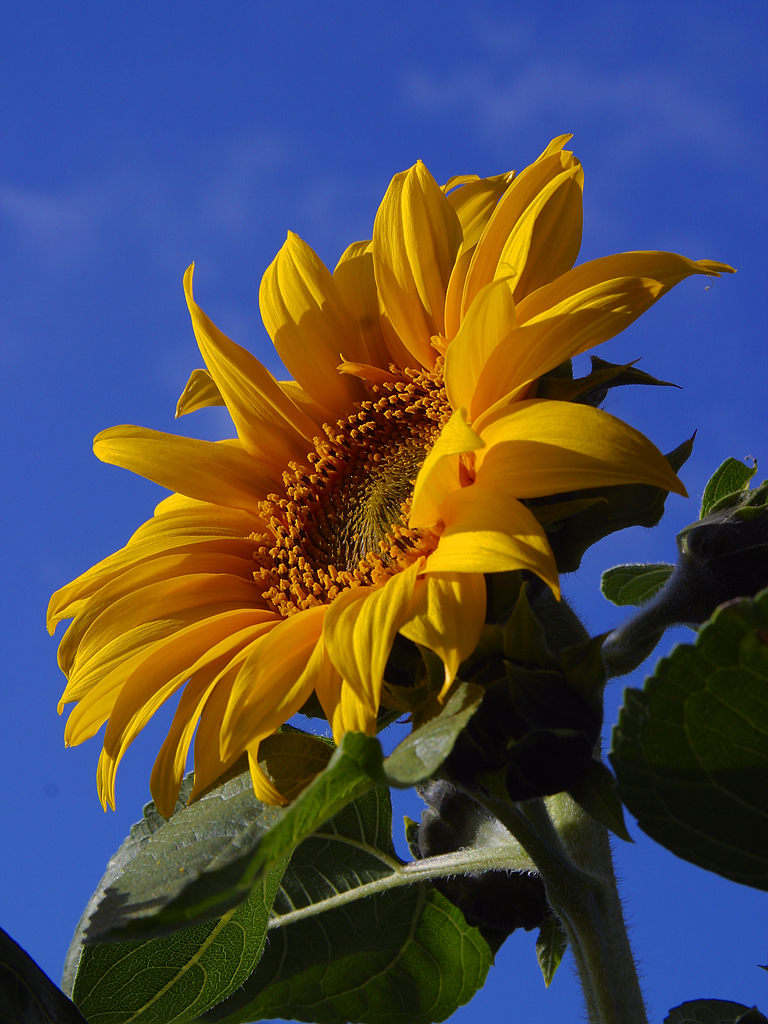 Common sunflowerHelianthus annuus
A tall annual plant grown for its large yellow flower heads and edible seeds
🇨🇦 Canada and 4 more · Wildflower
Common sunflowerHelianthus annuus
A tall annual plant grown for its large yellow flower heads and edible seeds
🇨🇦 Canada and 4 more · Wildflower
 Chrysanthemum菊花
Autumn-blooming flower with thousands of varieties, cherished in East Asia and beyond
🇨🇳 China and 6 more · Wildflower
Chrysanthemum菊花
Autumn-blooming flower with thousands of varieties, cherished in East Asia and beyond
🇨🇳 China and 6 more · Wildflower
 Asteraceae
The vast family of daisies, asters, and sunflowers with star-like flower heads
Asteraceae · Wildflower
Asteraceae
The vast family of daisies, asters, and sunflowers with star-like flower heads
Asteraceae · Wildflower
 DandelionTaraxacum
A yellow-flowered perennial found in fields, lawns, and gardens worldwide
Taraxacum · Wildflower
DandelionTaraxacum
A yellow-flowered perennial found in fields, lawns, and gardens worldwide
Taraxacum · Wildflower
More from Ecuador
All the flowers of Ecuador MarigoldTagetes
A group of bright annual and perennial flowers known worldwide as marigolds
🇲🇽 Mexico and 7 more · Wildflower
MarigoldTagetes
A group of bright annual and perennial flowers known worldwide as marigolds
🇲🇽 Mexico and 7 more · Wildflower
 BromeliadsBromeliaceae
A family of tropical flowering plants from the Americas, including the pineapple
🇨🇱 Chile and 7 more · Wildflower
BromeliadsBromeliaceae
A family of tropical flowering plants from the Americas, including the pineapple
🇨🇱 Chile and 7 more · Wildflower
 AchioteBixa orellana
Shrub with spiky red pods, source of the natural dye annatto
🇧🇷 Brazil and 9 more · Flowering shrub
AchioteBixa orellana
Shrub with spiky red pods, source of the natural dye annatto
🇧🇷 Brazil and 9 more · Flowering shrub
 Crinum moorei
A tall, fragrant lily from South Africa with white or pale pink blooms
🇿🇦 South Africa and 4 more · Wildflower
Crinum moorei
A tall, fragrant lily from South Africa with white or pale pink blooms
🇿🇦 South Africa and 4 more · Wildflower