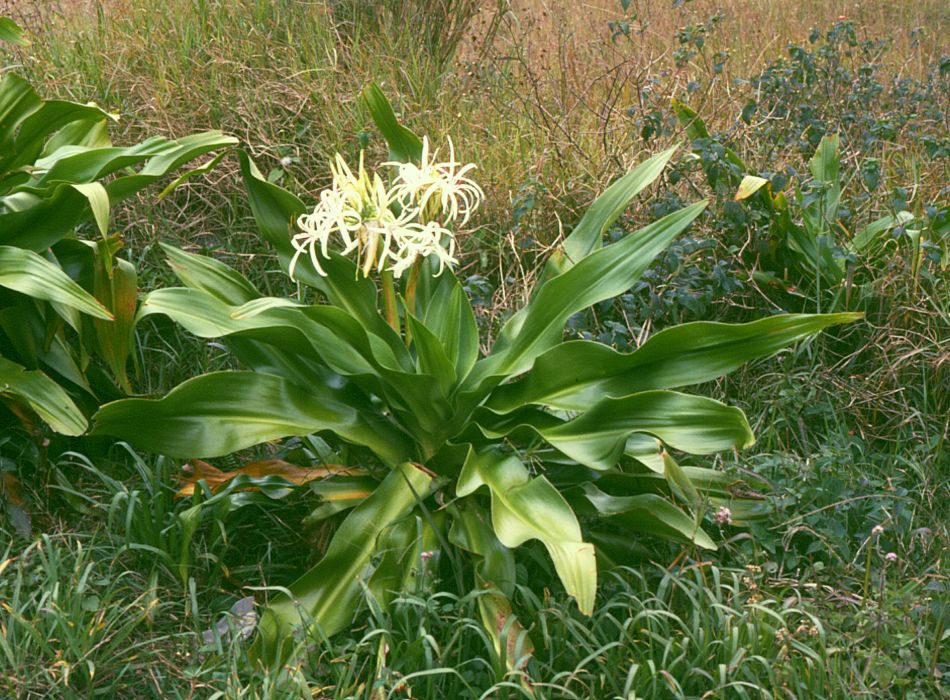
Poison bulb
Crinum asiaticum, family Amaryllidaceae
A large white-flowered lily grown in warm gardens, toxic if eaten
Poison bulb (Crinum asiaticum) is a tall, bulb-forming perennial with striking white, spider-like flowers. It grows wild from parts of Asia to Australia and is widely planted in tropical gardens, but all parts are poisonous if swallowed. Some Indigenous groups use it for fishing and as a boundary marker.
- All parts of the plant are poisonous if eaten
- Produces large, white, spider-like flowers with a strong scent
- Used by Indigenous peoples in Taiwan for fishing and marking boundaries
- Naturalized in many tropical and subtropical regions worldwide
What does Poison bulb look like?
Poison bulb is a perennial plant that can reach up to 1.2 meters in height. It grows from a rounded bulb, with long, dark green leaves that are pointed and wavy at the edges. The plant produces clusters of 10 to 24 large, white flowers with narrow, spreading petals and reddish stamens, giving them a spider-like look. The flowers are strongly scented. Its fruit is a green, rounded capsule containing large seeds with a spongy outer layer.
Where does Poison bulb come from?
This plant grows wild in regions stretching from eastern and tropical Asia through Australia and onto Pacific islands. Over time, it has been introduced and become naturalized in places such as Mexico, Madagascar, the West Indies, and the southern United States. Its popularity as an ornamental plant has led to its spread well beyond its original range.
When and how Poison bulb blooms
Crinum asiaticum grows from a bulb and thrives in warm, humid climates. It is usually planted in gardens for its showy flowers. The plant produces flower clusters on tall stems, with each flower having six narrow, white petals. It can be grown from seed or by dividing bulbs, and prefers moist, well-drained soil.


How Poison bulb is used
People often grow poison bulb in gardens for its large, attractive flowers. Among the Tao people of Taiwan's Orchid Island, slices of the stem are used as fish bait by tying them to weights. The Paiwan and Puyuma groups use the plant to mark boundaries. However, because all parts are toxic, it is not used for food or medicine.
Kinds of Poison bulb
There are four recognized varieties: the typical Crinum asiaticum var. asiaticum, var. japonicum, var. pedunculatum, and var. sinicum. These varieties may differ in subtle ways, such as size or leaf form, and are found in different parts of the plant’s broad range.
What Poison bulb means
The plant is valued for its bold flowers in tropical gardens, but is also known for its toxicity. Indigenous groups in Taiwan have traditional uses for it, such as fishing and marking territory. Its poisonous nature means it is handled with care and not used for food or medicine.
Where Poison bulb is used and seen
Questions people ask about Poison bulb
Where does poison bulb come from?
Poison bulb is native to regions from eastern and tropical Asia to Australia and Pacific islands, and has spread to other warm areas around the world.
What does Crinum asiaticum look like?
It is a tall plant with long, wavy-edged leaves and clusters of large, white, spider-like flowers that have a strong fragrance.
Is poison bulb safe to touch or eat?
All parts of the plant are poisonous if eaten, especially the bulb. The sap may also cause skin irritation in some people.
How do people use this plant?
It is mainly grown as an ornamental in gardens. Some Indigenous groups in Taiwan use it for fishing and as a boundary marker.
Are there different types of Crinum asiaticum?
Yes, four varieties are recognized: asiaticum, japonicum, pedunculatum, and sinicum, each found in different regions.
Good reading and sources
- USDA Plants DatabaseUS Department of Agriculture, Article
- Plants of the World OnlineRoyal Botanic Gardens, Kew, Plant database
- Where it has been recordedGBIF, Plant database
- Sightings and photos by naturalistsiNaturalist, Plant database
- Crinum asiaticum on WikipediaEncyclopedia
- More photos on Wikimedia CommonsPhotos
- Wikidata recordOpen data
The facts on this page come from the Wikipedia article "Crinum asiaticum", written by its contributors and used under the CC BY-SA 4.0 licence, and from its Wikidata record (CC0). Phool rewrote the text in its own words, with AI assistance, and compares every page with the article to make sure no passage is copied. It may be reused under the same CC BY-SA 4.0 licence with a link back.
It may contain mistakes. It is not medical or foraging advice: many flowers are poisonous, and traditional uses are reported, not recommended. If something is wrong, tell us. Last refreshed 2026-10-03.
Others in the family Amaryllidaceae
The whole family Narcissus
Spring-flowering bulbs with trumpet-shaped blooms in white, yellow, and orange
🇬🇧 United Kingdom and 7 more · Wildflower
Narcissus
Spring-flowering bulbs with trumpet-shaped blooms in white, yellow, and orange
🇬🇧 United Kingdom and 7 more · Wildflower
 Allium
The genus of onions, garlic, leeks, chives and their wild relatives
Allium · Wildflower
Allium
The genus of onions, garlic, leeks, chives and their wild relatives
Allium · Wildflower
 Wild GarlicAllium ursinum
A wild woodland plant with star-shaped white flowers and edible leaves
🇮🇪 Ireland · Wildflower
Wild GarlicAllium ursinum
A wild woodland plant with star-shaped white flowers and edible leaves
🇮🇪 Ireland · Wildflower
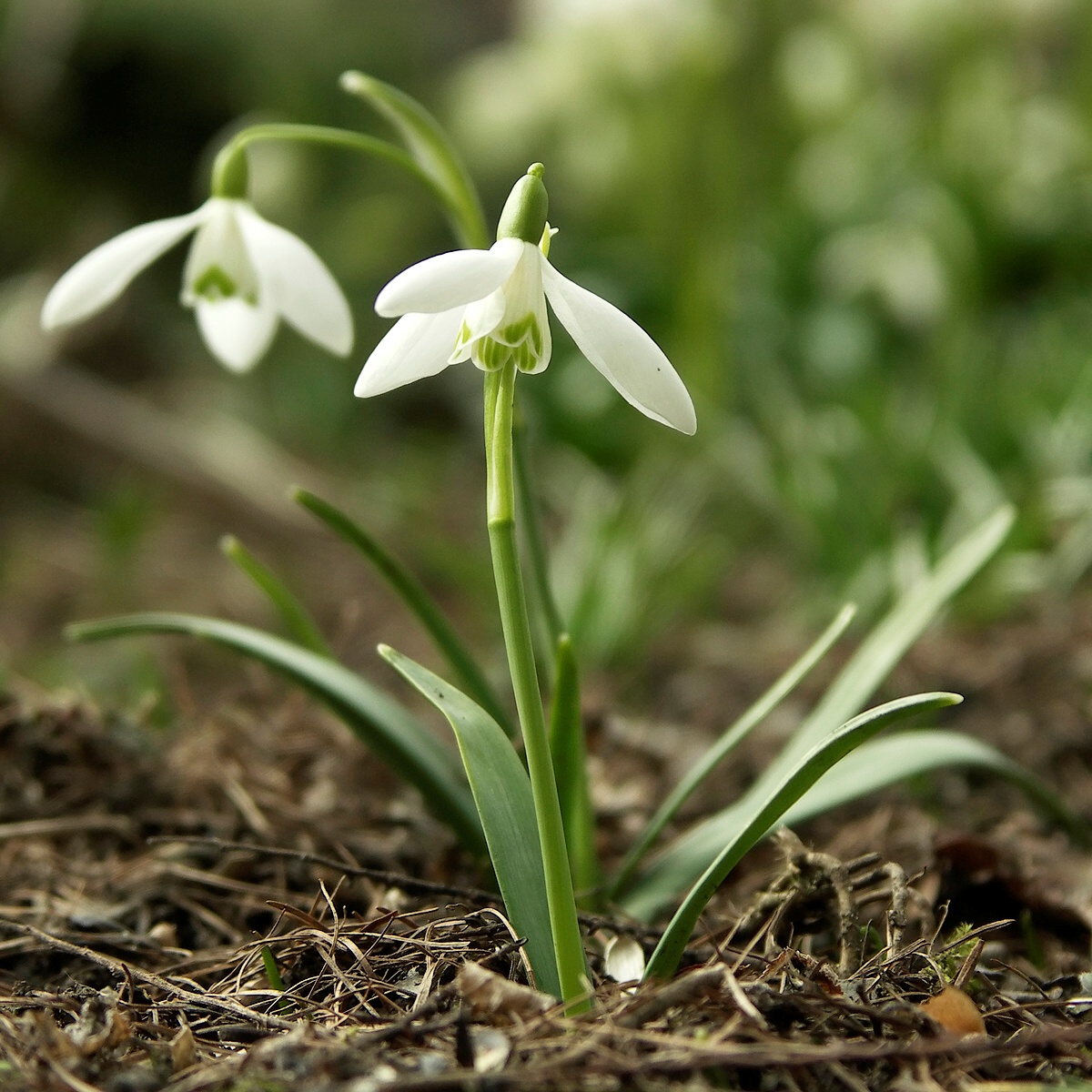 SnowdropGalanthus
White bell-shaped flowers that bloom at the end of winter
🇹🇷 Turkey and 7 more · Wildflower
SnowdropGalanthus
White bell-shaped flowers that bloom at the end of winter
🇹🇷 Turkey and 7 more · Wildflower
More from Myanmar
All the flowers of Myanmar PomegranatePunica granatum
A shrub with bright red flowers and a fruit full of edible seeds
🇮🇷 Iran and 9 more · Flowering shrub
PomegranatePunica granatum
A shrub with bright red flowers and a fruit full of edible seeds
🇮🇷 Iran and 9 more · Flowering shrub
 FennelFoeniculum vulgare
A tall, aromatic herb with feathery leaves and yellow umbels, used for food and spice
🇨🇳 China and 7 more · Herb or useful flower
FennelFoeniculum vulgare
A tall, aromatic herb with feathery leaves and yellow umbels, used for food and spice
🇨🇳 China and 7 more · Herb or useful flower
 Common flaxLinum usitatissimum
The slender blue-flowered plant grown for linen and linseed
🇨🇳 China and 7 more · Wildflower
Common flaxLinum usitatissimum
The slender blue-flowered plant grown for linen and linseed
🇨🇳 China and 7 more · Wildflower
 OleanderNerium oleander
A showy, evergreen shrub with clusters of pink, white or red flowers
🇲🇦 Morocco and 8 more · Flowering shrub
OleanderNerium oleander
A showy, evergreen shrub with clusters of pink, white or red flowers
🇲🇦 Morocco and 8 more · Flowering shrub