
Crocosmia
Sword-leaved perennials with bright red and orange summer flowers
Crocosmia is a group of perennial plants from the iris family, grown for their vivid red and orange flowers. They come from grassland regions in southern and eastern Africa and are now popular in gardens around the world, with many hybrids and cultivars.
- Crocosmia grows from chains of underground corms.
- Flowers appear in vivid red and orange from summer to autumn.
- The hybrid Crocosmia × crocosmiiflora is widely grown and sometimes invasive.
- One species is found only in Madagascar.
- Several cultivars have won garden awards.
What does Crocosmia look like?
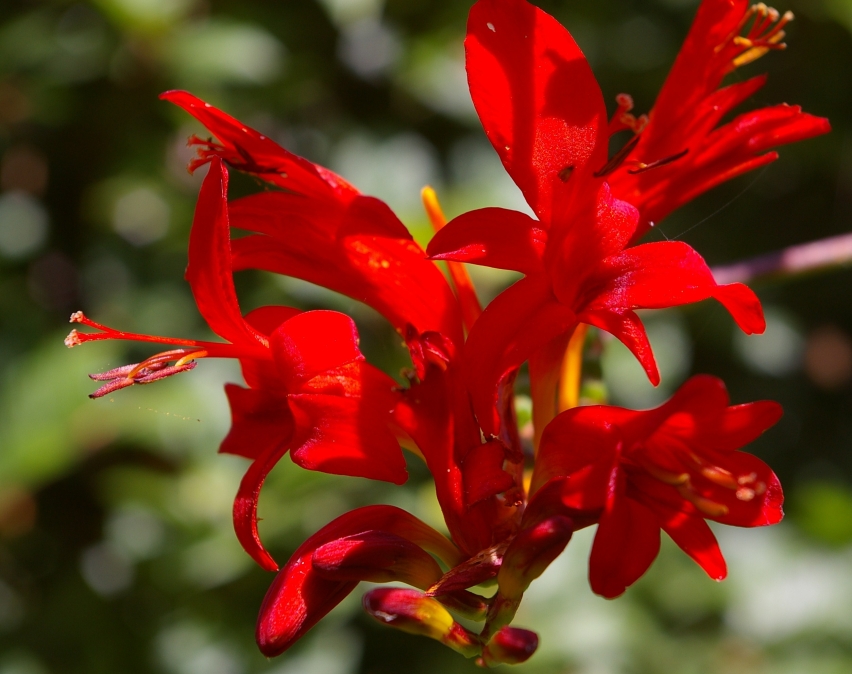
Crocosmia plants grow from underground corms and can be either evergreen or lose their leaves in winter. Their leaves are long, sword-shaped, and arranged along the stem. The flower stalks are branched and arching, carrying clusters of 4 to 20 flowers in shades of red and orange. Each flower sits directly on the stem and opens from early summer into autumn. The plants can form dense clumps and, in some places, spread rapidly.
Where does Crocosmia come from?
These plants have their roots in the grasslands and open areas of southern and eastern Africa, with one species found only in Madagascar. The name Crocosmia comes from Greek, referring to the saffron-like scent released by dried leaves in hot water. The alternative name 'montbretia' honors a French botanist and is often used for garden hybrids, especially in the British Isles.
When and how Crocosmia blooms
Crocosmia grows from chains of corms, which are underground storage organs. New corms form above older ones, and the lowest corms have roots that pull them deeper into the soil. The plants can be divided and replanted in spring. They flower from summer into autumn, producing their colorful spikes in sunny spots with well-drained soil.


How Crocosmia is used
Gardeners value Crocosmia for its bright, long-lasting flowers and easy growth. Some hybrids, especially Crocosmia × crocosmiiflora, have spread widely and can become invasive outside their native range. The plants are also grown for their ornamental leaves and are featured in garden shows, with several cultivars recognized for their quality.
Kinds of Crocosmia
The genus includes several species, such as C. aurea, C. paniculata, and C. masoniorum, each with its own range and flower form. The hybrid Crocosmia × crocosmiiflora is widely grown and has naturalized in parts of Europe and beyond. Over 400 cultivars exist, offering a range of flower sizes and colors.
What Crocosmia means
Crocosmia is a familiar sight in gardens and has become a symbol of summer in some regions. In the British Isles, the name 'montbretia' is often used for naturalized orange-flowered hybrids. Some cultivars have received awards from horticultural societies. In some areas, Crocosmia is considered invasive and is managed to prevent it from overtaking native plants.
Questions people ask about Crocosmia
Where does Crocosmia come from?
Crocosmia originates in the grasslands and open areas of southern and eastern Africa, with one species native to Madagascar.
What does Crocosmia look like?
It has sword-shaped leaves and arching stems with clusters of red and orange flowers that bloom from summer into autumn.
How is Crocosmia grown?
It is grown from corms, which can be divided and replanted. The plants thrive in sunny, well-drained spots and flower in summer and autumn.
Is Crocosmia invasive?
Some hybrids, especially Crocosmia × crocosmiiflora, have become invasive in places like the UK, Ireland, and parts of Australia and the United States.
What is Crocosmia used for?
It is mainly grown for its ornamental value in gardens, with some cultivars recognized for their quality and beauty.
Good reading and sources
- Crocosmia 'Hellfire'Royal Horticultural Society, Article
- How to grow crocosmiasBBC Gardeners' World, Article
- Plants of the World OnlineRoyal Botanic Gardens, Kew, Plant database
- Where it has been recordedGBIF, Plant database
- Sightings and photos by naturalistsiNaturalist, Plant database
The facts on this page come from the Wikipedia article "Crocosmia", written by its contributors and used under the CC BY-SA 4.0 licence, and from its Wikidata record (CC0). Phool rewrote the text in its own words, with AI assistance, and compares every page with the article to make sure no passage is copied. It may be reused under the same CC BY-SA 4.0 licence with a link back.
It may contain mistakes. It is not medical or foraging advice: many flowers are poisonous, and traditional uses are reported, not recommended. If something is wrong, tell us. Last refreshed 2026-10-03.
Others in the family Iridaceae
The whole family Gladiolus
Tall, showy flower spikes grown from corms, known as sword lilies
Gladiolus · Garden flower
Gladiolus
Tall, showy flower spikes grown from corms, known as sword lilies
Gladiolus · Garden flower
 Iris
A large group of perennial flowers with striking, six-lobed blooms
Iris · Wildflower
Iris
A large group of perennial flowers with striking, six-lobed blooms
Iris · Wildflower
 Crocus
Small corm-grown flowers in white, yellow, orange or purple
🇹🇷 Turkey and 7 more · Wildflower
Crocus
Small corm-grown flowers in white, yellow, orange or purple
🇹🇷 Turkey and 7 more · Wildflower
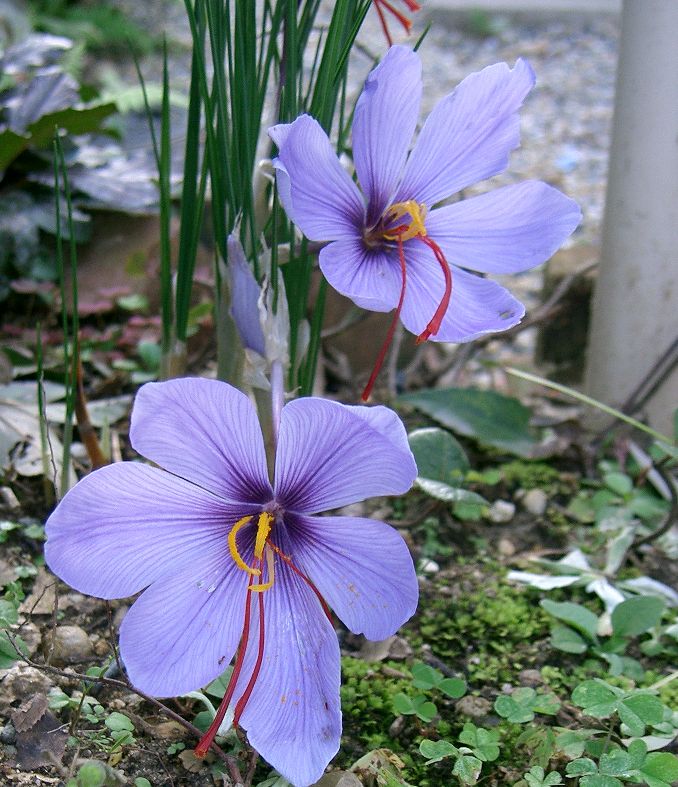 Saffron crocusCrocus sativus
The purple autumn flower whose red stigmas yield the spice saffron
🇨🇳 China and 1 more · Garden flower
Saffron crocusCrocus sativus
The purple autumn flower whose red stigmas yield the spice saffron
🇨🇳 China and 1 more · Garden flower
More from South Africa
All the flowers of South Africa Eucalyptus
The tall, aromatic trees and shrubs known as gum trees or eucalypts
🇦🇺 Australia and 7 more · Flowering tree
Eucalyptus
The tall, aromatic trees and shrubs known as gum trees or eucalypts
🇦🇺 Australia and 7 more · Flowering tree
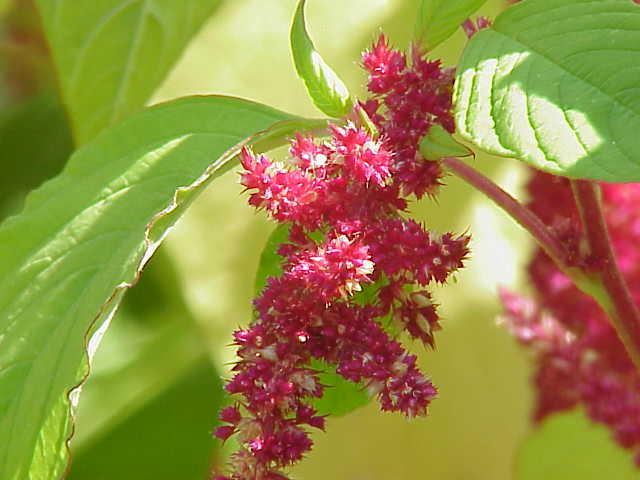 AmaranthAmaranthus
A tall, colourful plant grown for its flowers, leaves and edible seeds
🇲🇽 Mexico and 7 more · Wildflower
AmaranthAmaranthus
A tall, colourful plant grown for its flowers, leaves and edible seeds
🇲🇽 Mexico and 7 more · Wildflower
 Acacia
Shrubs and trees with golden or cream puffball flowers, native mostly to Australia
🇦🇺 Australia and 6 more · Wildflower
Acacia
Shrubs and trees with golden or cream puffball flowers, native mostly to Australia
🇦🇺 Australia and 6 more · Wildflower
 Sensitive PlantMimosa pudica
A touch-sensitive plant whose leaves fold up when disturbed
🇧🇷 Brazil and 8 more · Wildflower
Sensitive PlantMimosa pudica
A touch-sensitive plant whose leaves fold up when disturbed
🇧🇷 Brazil and 8 more · Wildflower