
Crocus ancyrensis
In its own language: Ankara çiğdemi
A small orange-yellow crocus native to North and Central Turkey
Crocus ancyrensis is a perennial crocus with orange-yellow flowers, found only in North and Central Turkey. It grows from a corm and blooms early in the year, often near rocks and pines, and its corms have been used as food in Anatolia.
- Endemic to North and Central Turkey
- Blooms from February to April
- Edible corms used in Anatolia
- Flowers are orange-yellow with orange-red stigmas
- ‘Golden Bunch’ cultivar produces up to ten flowers per corm
What does Crocus ancyrensis look like?
Crocus ancyrensis is a small perennial plant that grows 4 to 6 inches tall from an oval corm. Its flowers are orange-yellow with bright yellow throats and orange-red stigmas, about 1 inch long and half an inch wide. Each corm usually produces two or three flowers, and three or four narrow leaves appear at the same time as the blooms.
Where does Crocus ancyrensis come from?
This crocus is endemic to North and Central Turkey, meaning it grows wild only in this region. The species was first discovered in Ankara, which is reflected in its scientific name. It is typically found at elevations between 1000 and 1600 meters, often near rocks, bushes, and pine trees. The plant has a long history in Anatolia, where its corms have been eaten as a staple food.
When and how Crocus ancyrensis blooms
Crocus ancyrensis blooms from February to April, making it one of the earliest crocuses to flower. It grows from a corm, a swollen underground stem, which stores nutrients. The plant is winter hardy in a range of climates and is grown both in the wild and in gardens. It prefers rocky or bushy areas and can be grown from corms planted in suitable soil.


How Crocus ancyrensis is used
In Anatolia, the corms of Crocus ancyrensis have been a common food source due to their sugar and starch content. Gardeners value this crocus for its early and vivid blooms. The species is also grown ornamentally, especially the 'Golden Bunch' cultivar, which produces more flowers per corm.
Kinds of Crocus ancyrensis
The cultivar 'Golden Bunch' was selected for its ability to produce up to ten flowers from a single corm, compared to the usual two or three. This makes it especially popular among gardeners looking for an early burst of yellow in the spring.
What Crocus ancyrensis means
Crocus ancyrensis is closely tied to the region around Ankara, where it was first identified. Its edible corms have played a role in local diets. The plant is valued for its early spring color and is considered a sign of the changing season in its native area.
Where Crocus ancyrensis is used and seen

Questions people ask about Crocus ancyrensis
Where does Crocus ancyrensis come from?
Crocus ancyrensis is native to North and Central Turkey, where it grows wild at elevations between 1000 and 1600 meters, especially near rocks, bushes, and pine trees.
What does Crocus ancyrensis look like?
It is a small plant about 4 to 6 inches tall, with orange-yellow flowers that have bright yellow throats and orange-red stigmas. Each corm usually produces two or three flowers.
When does Crocus ancyrensis bloom?
This crocus flowers early in the year, typically from February to April in Turkey.
Is Crocus ancyrensis used for anything besides gardens?
Yes, its corms are rich in sugar and starch and have been a staple food in Anatolia.
Are there any special varieties of Crocus ancyrensis?
The 'Golden Bunch' cultivar is notable for producing up to ten flowers per corm, more than the typical species.
Good reading and sources
- Crocus ancyrensisRoyal Horticultural Society, Article
- Plants of the World OnlineRoyal Botanic Gardens, Kew, Plant database
- Where it has been recordedGBIF, Plant database
- Sightings and photos by naturalistsiNaturalist, Plant database
- Crocus ancyrensis on WikipediaEncyclopedia
- More photos on Wikimedia CommonsPhotos
- Wikidata recordOpen data
The facts on this page come from the Wikipedia article "Crocus ancyrensis", written by its contributors and used under the CC BY-SA 4.0 licence, and from its Wikidata record (CC0). Phool rewrote the text in its own words, with AI assistance, and compares every page with the article to make sure no passage is copied. It may be reused under the same CC BY-SA 4.0 licence with a link back.
It may contain mistakes. It is not medical or foraging advice: many flowers are poisonous, and traditional uses are reported, not recommended. If something is wrong, tell us. Last refreshed 2026-10-03.
Others in the family Iridaceae
The whole family Gladiolus
Tall, showy flower spikes grown from corms, known as sword lilies
Gladiolus · Garden flower
Gladiolus
Tall, showy flower spikes grown from corms, known as sword lilies
Gladiolus · Garden flower
 Iris
A large group of perennial flowers with striking, six-lobed blooms
Iris · Wildflower
Iris
A large group of perennial flowers with striking, six-lobed blooms
Iris · Wildflower
 Crocus
Small corm-grown flowers in white, yellow, orange or purple
🇹🇷 Turkey and 7 more · Wildflower
Crocus
Small corm-grown flowers in white, yellow, orange or purple
🇹🇷 Turkey and 7 more · Wildflower
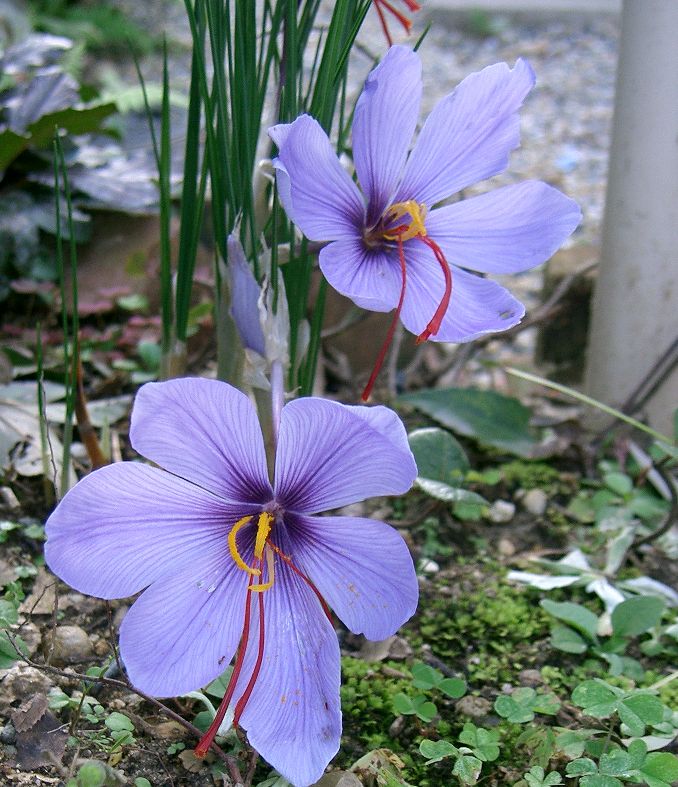 Saffron crocusCrocus sativus
The purple autumn flower whose red stigmas yield the spice saffron
🇨🇳 China and 1 more · Garden flower
Saffron crocusCrocus sativus
The purple autumn flower whose red stigmas yield the spice saffron
🇨🇳 China and 1 more · Garden flower
More from Turkey
All the flowers of Turkey PeachPrunus persica
A flowering fruit tree from China, grown for its pink blossoms and sweet fruit
🇨🇳 China and 7 more · Flowering tree
PeachPrunus persica
A flowering fruit tree from China, grown for its pink blossoms and sweet fruit
🇨🇳 China and 7 more · Flowering tree
 PomegranatePunica granatum
A shrub with bright red flowers and a fruit full of edible seeds
🇮🇷 Iran and 9 more · Flowering shrub
PomegranatePunica granatum
A shrub with bright red flowers and a fruit full of edible seeds
🇮🇷 Iran and 9 more · Flowering shrub
 TulipTulipa
Spring-blooming bulbs with showy, cup-shaped flowers in many colours
🇳🇱 Netherlands and 7 more · Wildflower
TulipTulipa
Spring-blooming bulbs with showy, cup-shaped flowers in many colours
🇳🇱 Netherlands and 7 more · Wildflower
 Sour cherryPrunus cerasus
The small, tart cherry tree grown for its sour red fruit
🇹🇷 Turkey and 7 more · Flowering tree
Sour cherryPrunus cerasus
The small, tart cherry tree grown for its sour red fruit
🇹🇷 Turkey and 7 more · Flowering tree