
Echinacea
North American wildflower with a spiny cone and drooping petals
Echinacea is a group of perennial flowering plants native to eastern and central North America. Known for their prominent cone-shaped centers and pink, purple, yellow, or white petals, these drought-tolerant plants are grown in gardens and have a history of use in traditional medicine.
- Native to eastern and central North America
- Flowers have a spiny cone and drooping petals
- Petals can be purple, pink, white, or yellow
- Used in traditional medicine by Indigenous peoples
- Some species are threatened by over-harvesting
What does Echinacea look like?
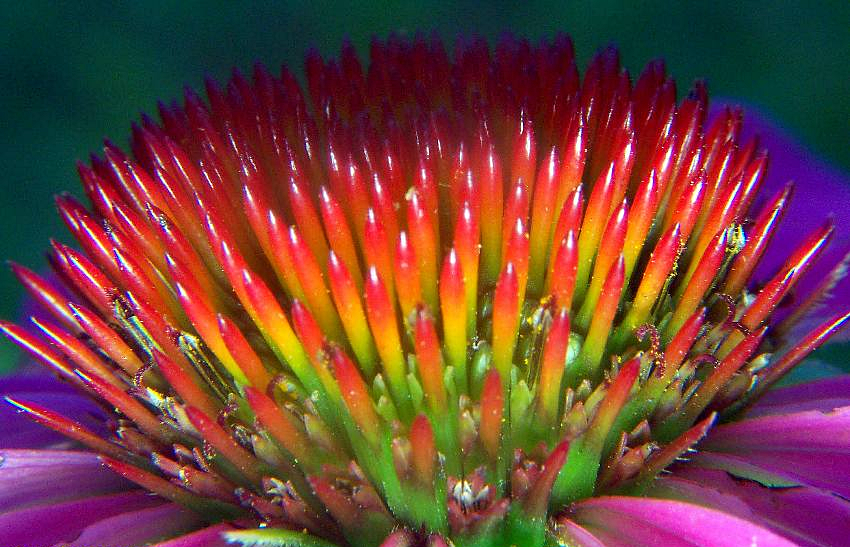
Echinacea plants are upright perennials that can reach up to 140 cm tall. Their leaves are usually rough and hairy, varying from linear to ovate shapes, and arranged alternately along the stem. The flower heads are large and rounded, with a central spiny cone surrounded by 8 to 21 narrow petals that droop downward. Petal colors range from dark purple and pink to white or yellow, depending on the species. The cone is made up of many small, fertile disc florets, giving it a prickly look.
Where does Echinacea come from?
Echinacea is native to the prairies and open woods of eastern and central North America, from Saskatchewan and the Great Plains in Canada and the United States down to Texas and Louisiana, and east to the Carolinas and Tennessee. European botanists first described the plant in the 18th century, and it was formally named Echinacea by Moench in 1794, based on its spiny cone. The genus name comes from the Greek for 'hedgehog,' reflecting the prickly flower center.
When and how Echinacea blooms
Echinacea blooms in summer, producing its distinctive flower heads at the ends of tall stems. Most species grow from taproots, while some have fibrous roots. They thrive in well-drained soils in sunny spots, often in prairies or open woods. Gardeners grow several species, especially E. purpurea, E. angustifolia, and E. pallida, for their ornamental value. Many cultivars are propagated asexually to maintain their traits.


How Echinacea is used
Echinacea has been used by Indigenous peoples of North America for treating infections, pain, and wounds. Its roots and other parts were applied to insect bites, burns, and sore throats, and sometimes chewed or brewed for coughs and headaches. Today, it is grown in gardens for its showy flowers and is also used in herbal remedies, though scientific evidence for its effectiveness is mixed. Over-harvesting for herbal products has threatened some wild populations.
Kinds of Echinacea
There are about ten species of Echinacea, including E. purpurea (purple coneflower), E. angustifolia (narrow-leaf coneflower), E. pallida (pale purple coneflower), and E. paradoxa (yellow coneflower). Some species, like E. laevigata and E. tennesseensis, have been considered threatened or endangered. Numerous cultivars exist, bred for different flower colors and forms.
What Echinacea means
Echinacea is valued as a wildflower and garden plant in North America and is widely recognized for its use in traditional medicine. It became popular in Western herbal remedies in the late 19th and 20th centuries. Conservation efforts have focused on protecting wild populations, especially those threatened by habitat loss and over-harvesting. The plant's spiny cone and drooping petals make it a recognizable symbol of North American prairies.
Questions people ask about Echinacea
Where does Echinacea come from?
Echinacea is native to eastern and central North America, growing in prairies and open woodlands from Canada to Texas and the Carolinas.
What does Echinacea look like?
Echinacea plants have tall stems topped with large, rounded flower heads. The central cone is spiny, surrounded by narrow petals that droop downward, in shades of purple, pink, white, or yellow.
How is Echinacea used?
Echinacea has been used in traditional medicine for treating infections, pain, and wounds. Today, it is grown as a garden flower and is also used in herbal remedies, though scientific support for its effectiveness is limited.
Are any Echinacea species threatened?
Yes, some species like E. laevigata and E. tennesseensis have been listed as threatened or endangered due to habitat loss and over-harvesting, though E. tennesseensis has recovered enough to be delisted.
What does Echinacea symbolize?
While the sources do not mention a specific symbolism, Echinacea is often recognized as a symbol of North American prairies and is valued for its distinctive appearance and traditional uses.
Good reading and sources
- Encyclopaedia BritannicaArticle
- USDA Plants DatabaseUS Department of Agriculture, Article
- Plants of the World OnlineRoyal Botanic Gardens, Kew, Plant database
- Where it has been recordedGBIF, Plant database
- Sightings and photos by naturalistsiNaturalist, Plant database
The facts on this page come from the Wikipedia article "Echinacea", written by its contributors and used under the CC BY-SA 4.0 licence, and from its Wikidata record (CC0). Phool rewrote the text in its own words, with AI assistance, and compares every page with the article to make sure no passage is copied. It may be reused under the same CC BY-SA 4.0 licence with a link back.
It may contain mistakes. It is not medical or foraging advice: many flowers are poisonous, and traditional uses are reported, not recommended. If something is wrong, tell us. Last refreshed 2026-10-03.
Others in the family Asteraceae
The whole family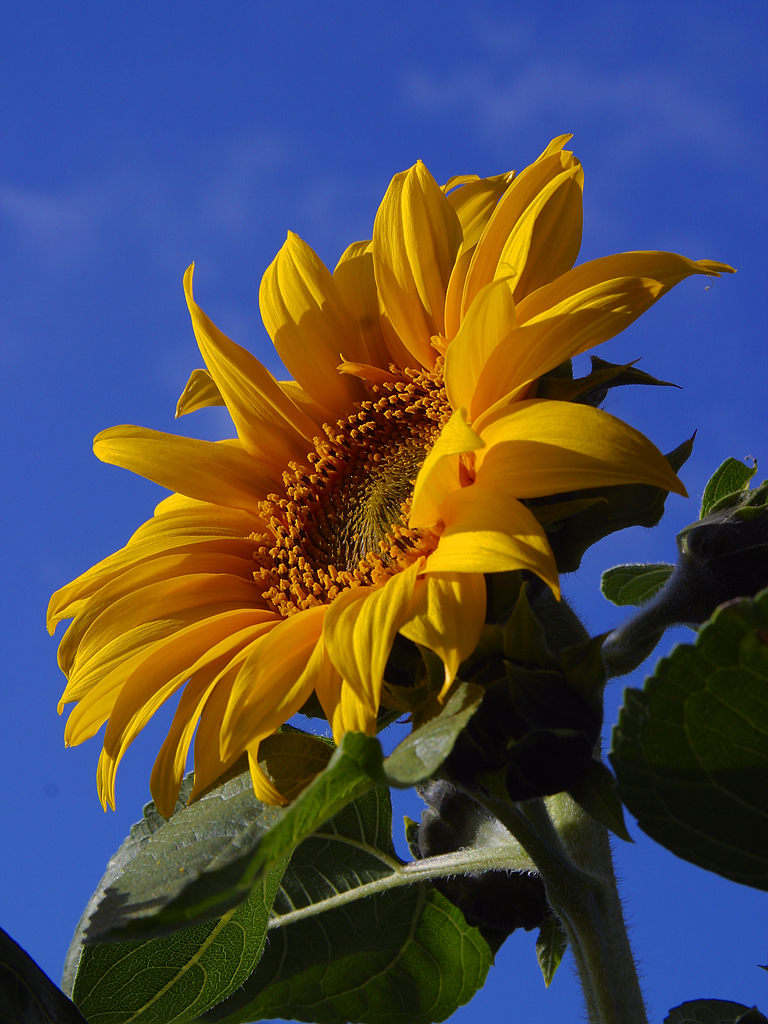 Common sunflowerHelianthus annuus
A tall annual plant grown for its large yellow flower heads and edible seeds
🇨🇦 Canada and 4 more · Wildflower
Common sunflowerHelianthus annuus
A tall annual plant grown for its large yellow flower heads and edible seeds
🇨🇦 Canada and 4 more · Wildflower
 Asteraceae
The vast family of daisies, asters, and sunflowers with star-like flower heads
Asteraceae · Wildflower
Asteraceae
The vast family of daisies, asters, and sunflowers with star-like flower heads
Asteraceae · Wildflower
 DandelionTaraxacum
A yellow-flowered perennial found in fields, lawns, and gardens worldwide
Taraxacum · Wildflower
DandelionTaraxacum
A yellow-flowered perennial found in fields, lawns, and gardens worldwide
Taraxacum · Wildflower
 Dahlia
A bushy perennial with tuberous roots and bright, star-shaped blooms
🇲🇽 Mexico and 1 more · Garden flower
Dahlia
A bushy perennial with tuberous roots and bright, star-shaped blooms
🇲🇽 Mexico and 1 more · Garden flower
More from the United States
All the flowers of the United States PeachPrunus persica
A flowering fruit tree from China, grown for its pink blossoms and sweet fruit
🇨🇳 China and 7 more · Flowering tree
PeachPrunus persica
A flowering fruit tree from China, grown for its pink blossoms and sweet fruit
🇨🇳 China and 7 more · Flowering tree
 AlmondPrunus amygdalus
A Mediterranean tree grown for its fragrant spring flowers and edible seeds
🇮🇷 Iran and 6 more · Flowering tree
AlmondPrunus amygdalus
A Mediterranean tree grown for its fragrant spring flowers and edible seeds
🇮🇷 Iran and 6 more · Flowering tree
 CactusCactaceae
Succulent plants with spines, native to the Americas
🇲🇽 Mexico and 7 more · Wildflower
CactusCactaceae
Succulent plants with spines, native to the Americas
🇲🇽 Mexico and 7 more · Wildflower
 Chrysanthemum菊花
Autumn-blooming flower with thousands of varieties, cherished in East Asia and beyond
🇨🇳 China and 6 more · Wildflower
Chrysanthemum菊花
Autumn-blooming flower with thousands of varieties, cherished in East Asia and beyond
🇨🇳 China and 6 more · Wildflower