
Indian coral tree
Erythrina variegata
A thorny tree with scarlet flowers, grown across Asia and the Pacific
Indian coral tree (Erythrina variegata) is a thorny, deciduous tree with dense clusters of scarlet or crimson flowers. Native to tropical and subtropical regions from Africa to the Pacific, it is grown for its striking blooms, used in traditional practices, and valued in agroforestry.
- Scarlet or crimson flowers bloom in dense clusters on thorny branches
- Official flower of Okinawa Prefecture, Japan
- Seeds are poisonous raw but edible when cooked
- Used in agroforestry and as livestock fodder
- Flowering marks New Year in Sri Lanka and planting season in Fiji
What does Indian coral tree look like?
The Indian coral tree is a thorny, deciduous tree that can reach up to 27 meters in height. Its leaves are divided into three large leaflets on long stalks. The tree is best known for its dense clusters of scarlet or crimson flowers, though some cultivated forms have white blooms. The flowers are rich in nectar and attract birds. Its seeds are black and the tree has a rough, spiny trunk.
Where does Indian coral tree come from?
Erythrina variegata grows wild in tropical and subtropical regions stretching from eastern Africa, through the Indian subcontinent, northern Australia, to islands in the Indian Ocean and western Pacific, including Fiji. Over time, it has been planted widely as an ornamental and shade tree. The tree is known by different names in various regions and has become part of local traditions and landscapes.
When and how Indian coral tree blooms
The Indian coral tree blooms in dense clusters, producing bright flowers before its leaves return. It is grown from seed or cuttings and thrives in warm climates. The tree is often planted in gardens, along roads, and in agroforestry systems for shade and fodder. Its adaptability allows it to grow in a range of soils.


How Indian coral tree is used
People plant the Indian coral tree for its flowers and as an ornamental shade tree. In Vietnam, its leaves are used to wrap fermented meat. In the Philippines, bark and leaves are used in traditional medicine. The seeds, though poisonous raw, can be cooked and eaten, and are also used to stun fish. The wood is carved for tools in Taiwan. Its flowering marks important times in Fiji and Sri Lanka.
Kinds of Indian coral tree
Several cultivated forms exist, including 'Alba', which has white flowers instead of the usual scarlet. The tree is known by many names in different regions, such as dapdap in the Philippines and drala or rara in Fiji. Its appearance and uses may vary slightly depending on local traditions and cultivars.
What Indian coral tree means
Erythrina variegata is the official flower of Okinawa Prefecture in Japan and is featured in local songs and crafts. In Sri Lanka, its flowering signals the New Year. In Fiji, it marks the season for planting taro. The tree is woven into local customs, music, and even cuisine, and is valued for its beauty and symbolism.
Questions people ask about Indian coral tree
Where does the Indian coral tree come from?
It is native to tropical and subtropical regions from eastern Africa, through the Indian subcontinent and northern Australia, to the islands of the Indian Ocean and western Pacific, including Fiji.
What does the Indian coral tree look like?
It is a thorny, deciduous tree that can grow up to 27 meters tall, with large, three-part leaves and dense clusters of scarlet or crimson flowers. Some cultivated forms have white flowers.
Is the Indian coral tree used for anything special?
Yes, it is planted as an ornamental and shade tree, used in agroforestry, and its leaves, bark, and seeds are used in traditional practices. Its flowering marks important times in Sri Lanka and Fiji.
Are the seeds of the Indian coral tree safe to eat?
The seeds are poisonous when raw but can be cooked and eaten. They have also been used to stun fish.
What does the Indian coral tree symbolise?
It is the official flower of Okinawa Prefecture, Japan, and its flowering is linked to the New Year in Sri Lanka and the planting season in Fiji.
Good reading and sources
- IUCN Red List of Threatened SpeciesIUCN Red List, Article
- USDA Plants DatabaseUS Department of Agriculture, Article
- Plants of the World OnlineRoyal Botanic Gardens, Kew, Plant database
- Where it has been recordedGBIF, Plant database
- Sightings and photos by naturalistsiNaturalist, Plant database
- Erythrina variegata on WikipediaEncyclopedia
- More photos on Wikimedia CommonsPhotos
- Wikidata recordOpen data
The facts on this page come from the Wikipedia article "Erythrina variegata", written by its contributors and used under the CC BY-SA 4.0 licence, and from its Wikidata record (CC0). Phool rewrote the text in its own words, with AI assistance, and compares every page with the article to make sure no passage is copied. It may be reused under the same CC BY-SA 4.0 licence with a link back.
It may contain mistakes. It is not medical or foraging advice: many flowers are poisonous, and traditional uses are reported, not recommended. If something is wrong, tell us. Last refreshed 2026-10-03.
More of the same kind
 PeachPrunus persica
A flowering fruit tree from China, grown for its pink blossoms and sweet fruit
🇨🇳 China and 7 more · Flowering tree
PeachPrunus persica
A flowering fruit tree from China, grown for its pink blossoms and sweet fruit
🇨🇳 China and 7 more · Flowering tree
 WillowSalix
Deciduous trees and shrubs with early spring catkin flowers
Salix · Wildflower
WillowSalix
Deciduous trees and shrubs with early spring catkin flowers
Salix · Wildflower
 AlmondPrunus amygdalus
A Mediterranean tree grown for its fragrant spring flowers and edible seeds
🇮🇷 Iran and 6 more · Flowering tree
AlmondPrunus amygdalus
A Mediterranean tree grown for its fragrant spring flowers and edible seeds
🇮🇷 Iran and 6 more · Flowering tree
 BirchBetula
Slender trees with papery bark found across the northern world
🇨🇳 China and 7 more · Wildflower
BirchBetula
Slender trees with papery bark found across the northern world
🇨🇳 China and 7 more · Wildflower
More from Brazil
All the flowers of Brazil CactusCactaceae
Succulent plants with spines, native to the Americas
🇲🇽 Mexico and 7 more · Wildflower
CactusCactaceae
Succulent plants with spines, native to the Americas
🇲🇽 Mexico and 7 more · Wildflower
 Eucalyptus
The tall, aromatic trees and shrubs known as gum trees or eucalypts
🇦🇺 Australia and 7 more · Flowering tree
Eucalyptus
The tall, aromatic trees and shrubs known as gum trees or eucalypts
🇦🇺 Australia and 7 more · Flowering tree
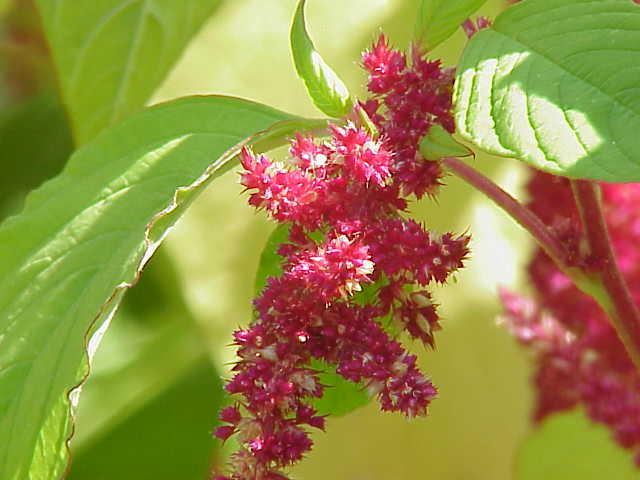 AmaranthAmaranthus
A tall, colourful plant grown for its flowers, leaves and edible seeds
🇲🇽 Mexico and 7 more · Wildflower
AmaranthAmaranthus
A tall, colourful plant grown for its flowers, leaves and edible seeds
🇲🇽 Mexico and 7 more · Wildflower
 Sensitive PlantMimosa pudica
A touch-sensitive plant whose leaves fold up when disturbed
🇧🇷 Brazil and 8 more · Wildflower
Sensitive PlantMimosa pudica
A touch-sensitive plant whose leaves fold up when disturbed
🇧🇷 Brazil and 8 more · Wildflower