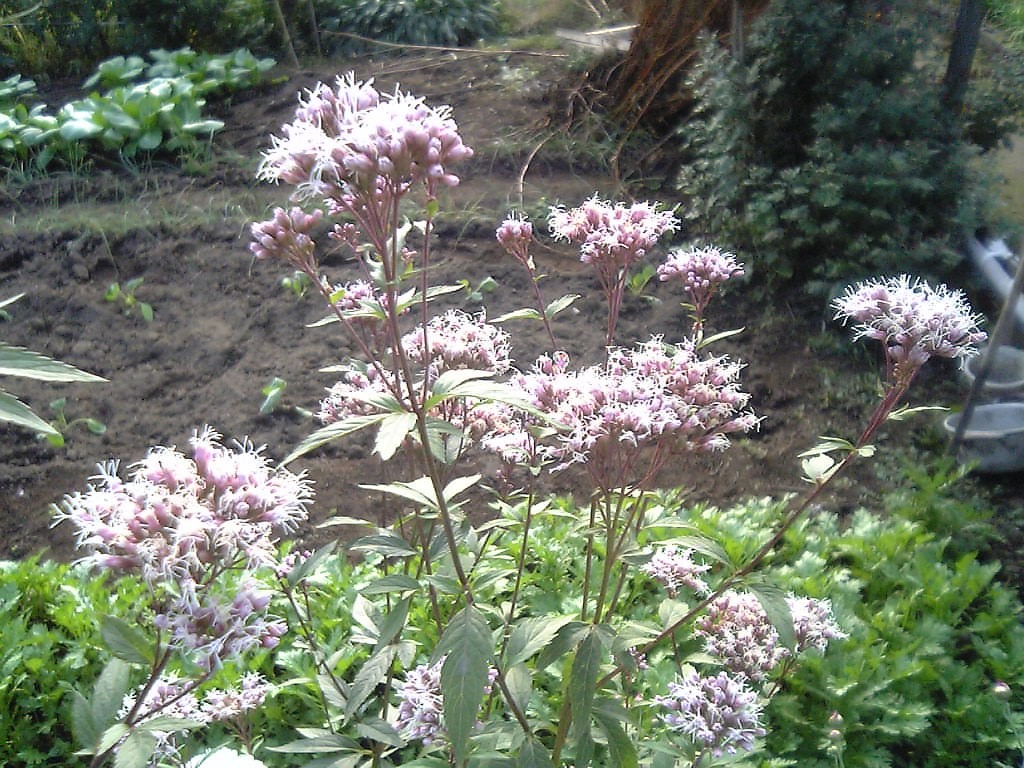
Eupatorium japonicum
In its own language: 白头婆
A tall perennial herb with corymbs of white, pink, or red-purple flowers
Eupatorium japonicum is a perennial herb native to China, Japan, and Korea. It grows upright with purplish-red stems and produces flat clusters of small white, pink, or red-purple flowers from summer to autumn. The plant is known for its distinctive leaf shapes and contains toxic pyrrolizidine alkaloids.
- Native to China, Japan, and Korea
- Flowers are white, pink, or red-purple
- Grows up to 2 meters tall
- Contains toxic pyrrolizidine alkaloids
What does Eupatorium japonicum look like?
Eupatorium japonicum is a perennial herb that can reach 50 to 200 cm in height. Its upright stems are marked with purplish red and end in flat-topped clusters of small flowers. The leaves are arranged in pairs along the stem, elliptic to lance-shaped, with coarsely serrated or sometimes three-parted edges. The flower heads are usually 3 to 6 cm wide, rarely forming larger clusters. The florets can be white, pink, or red-purple, and the plant is covered in yellow glandular hairs.
Where does Eupatorium japonicum come from?
This species is native to China, Japan, and Korea, where it grows wild. It has short rhizomes and fibrous roots, adapting well to its native regions. Eupatorium japonicum was once grouped with E. chinense by some botanists, but it is now recognized as a distinct species with two main varieties based on leaf shape.
When and how Eupatorium japonicum blooms
Eupatorium japonicum blooms and sets fruit from June to November. It grows from short rhizomes with fibrous roots, sending up upright stems each year. The plant thrives in its native climate and soils, with leaves that wither at the base before flowering. The inflorescences develop at the stem ends, producing clusters of small, colorful florets.
How Eupatorium japonicum is used
There are no traditional or ornamental uses mentioned in the sources for Eupatorium japonicum. The plant is notable for containing toxic pyrrolizidine alkaloids, which are tumorigenic. This toxicity limits its use in gardens or for human consumption.
Kinds of Eupatorium japonicum
Two varieties are recognized: Eupatorium japonicum var. japonicum, with leaves that are not three-parted, and Eupatorium japonicum var. tripartitum, which has leaves divided into three parts. These differences are mainly in the leaf shape and margin.
What Eupatorium japonicum means
Eupatorium japonicum does not have a noted role in symbolism, festivals, or religious practice according to the sources. Its main cultural note is its classification and the caution due to its toxic compounds.
Questions people ask about Eupatorium japonicum
Where does Eupatorium japonicum come from?
Eupatorium japonicum is native to China, Japan, and Korea, where it grows wild as a perennial herb.
What does Eupatorium japonicum look like?
It is a tall herb with upright purplish-red stems, paired elliptic or lance-shaped leaves, and flat clusters of small white, pink, or red-purple flowers.
Is Eupatorium japonicum poisonous?
Yes, it contains tumorigenic pyrrolizidine alkaloids, making it toxic and unsuitable for consumption.
Does Eupatorium japonicum have any traditional uses?
The sources do not mention any traditional or ornamental uses for this plant.
Are there different types of Eupatorium japonicum?
Yes, there are two varieties: one with undivided leaves and another with leaves divided into three parts.
Good reading and sources
- Plants of the World OnlineRoyal Botanic Gardens, Kew, Plant database
- Where it has been recordedGBIF, Plant database
- Sightings and photos by naturalistsiNaturalist, Plant database
- Eupatorium japonicum on WikipediaEncyclopedia
- More photos on Wikimedia CommonsPhotos
- Wikidata recordOpen data
The facts on this page come from the Wikipedia article "Eupatorium japonicum", written by its contributors and used under the CC BY-SA 4.0 licence, and from its Wikidata record (CC0). Phool rewrote the text in its own words, with AI assistance, and compares every page with the article to make sure no passage is copied. It may be reused under the same CC BY-SA 4.0 licence with a link back.
It may contain mistakes. It is not medical or foraging advice: many flowers are poisonous, and traditional uses are reported, not recommended. If something is wrong, tell us. Last refreshed 2026-10-03.
Others in the family Asteraceae
The whole family Chrysanthemum菊花
Autumn-blooming flower with thousands of varieties, cherished in East Asia and beyond
🇨🇳 China and 6 more · Wildflower
Chrysanthemum菊花
Autumn-blooming flower with thousands of varieties, cherished in East Asia and beyond
🇨🇳 China and 6 more · Wildflower
 Asteraceae
The vast family of daisies, asters, and sunflowers with star-like flower heads
Asteraceae · Wildflower
Asteraceae
The vast family of daisies, asters, and sunflowers with star-like flower heads
Asteraceae · Wildflower
 DandelionTaraxacum
A yellow-flowered perennial found in fields, lawns, and gardens worldwide
Taraxacum · Wildflower
DandelionTaraxacum
A yellow-flowered perennial found in fields, lawns, and gardens worldwide
Taraxacum · Wildflower
 Dahlia
A bushy perennial with tuberous roots and bright, star-shaped blooms
🇲🇽 Mexico and 1 more · Garden flower
Dahlia
A bushy perennial with tuberous roots and bright, star-shaped blooms
🇲🇽 Mexico and 1 more · Garden flower
More from China
All the flowers of China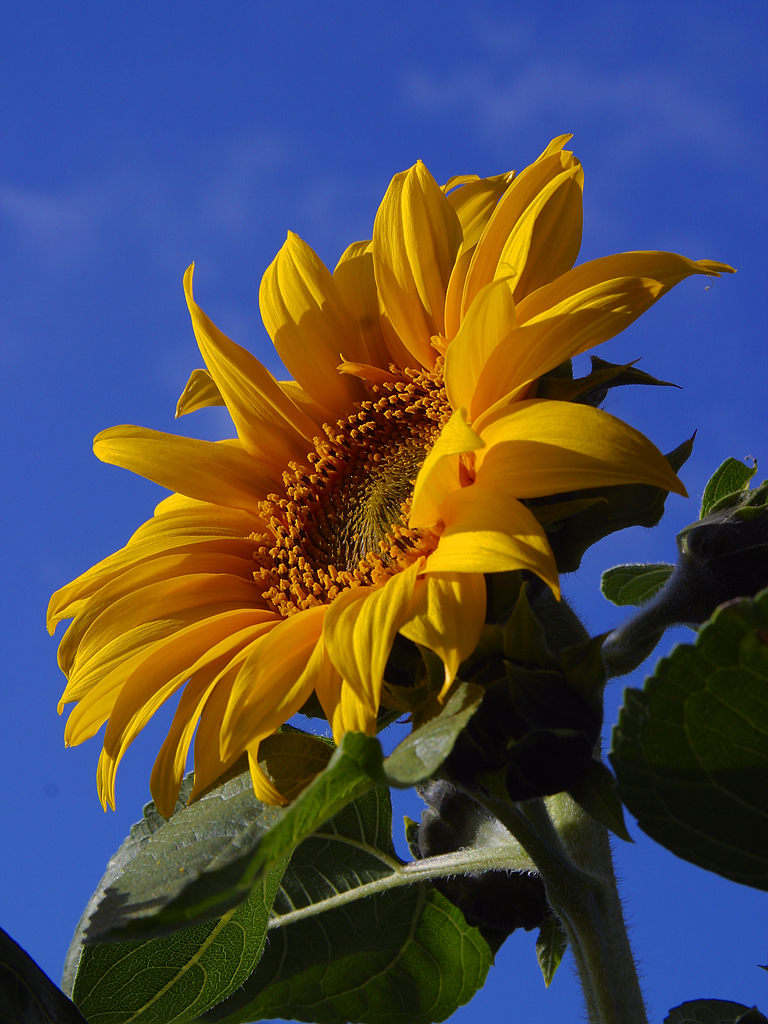 Common sunflowerHelianthus annuus
A tall annual plant grown for its large yellow flower heads and edible seeds
🇨🇦 Canada and 4 more · Wildflower
Common sunflowerHelianthus annuus
A tall annual plant grown for its large yellow flower heads and edible seeds
🇨🇦 Canada and 4 more · Wildflower
 BirchBetula
Slender trees with papery bark found across the northern world
🇨🇳 China and 7 more · Wildflower
BirchBetula
Slender trees with papery bark found across the northern world
🇨🇳 China and 7 more · Wildflower
 FennelFoeniculum vulgare
A tall, aromatic herb with feathery leaves and yellow umbels, used for food and spice
🇨🇳 China and 7 more · Herb or useful flower
FennelFoeniculum vulgare
A tall, aromatic herb with feathery leaves and yellow umbels, used for food and spice
🇨🇳 China and 7 more · Herb or useful flower
 RosemarySalvia rosmarinus
A fragrant evergreen shrub with needle-like leaves and purple, blue, or white flowers
🇪🇸 Spain and 5 more · Flowering shrub
RosemarySalvia rosmarinus
A fragrant evergreen shrub with needle-like leaves and purple, blue, or white flowers
🇪🇸 Spain and 5 more · Flowering shrub