
Rose of Sharon
Hibiscus syriacus, family Malvaceae
In its own language: 무궁화
The national flower of South Korea with short-lived summer blooms
Rose of Sharon is a hardy deciduous shrub from East Asia, known for its large, trumpet-shaped flowers that bloom daily through summer. It grows 2–4 metres tall, tolerates tough urban conditions, and holds deep cultural meaning in Korea as a symbol of endurance.
- Each flower lasts only one day but blooms continuously all summer
- National flower of South Korea, called mugunghwa ('eternal blossom')
- Tolerates pollution, drought, poor soil and urban conditions
- Named 'syriacus' after Syrian gardens where it was first collected
- Appears in the South Korean national anthem and on state emblems
What does Rose of Sharon look like?
This upright shrub grows 2 to 4 metres high with a vase-like shape. Its flowers are large, trumpet-shaped, and have five petals, ranging from white and pink to deep purple or blue, often with a contrasting throat. Each bloom lasts just one day, but new buds open daily over weeks. The stamens form a central column tipped in yellow.
Where does Rose of Sharon come from?
Though named after Syria, where early European botanists first saw it in gardens, the plant originates in East Asia. Ancient Chinese texts from centuries before Christ note its presence on the Korean Peninsula. It spread to Japan by the 700s and reached Europe by the 1500s, initially grown in pots for protection before gardeners realised its hardiness.
When and how Rose of Sharon blooms
It leafs out late, usually in May, and flowers from July to September. It thrives in full sun and well-drained, rich soil but survives drought, poor ground, heat, and city air. New stems grow straight from near the base, creating its characteristic shape unless pruned. Most modern types rarely set seed.


How Rose of Sharon is used
In South Korea, it is the national flower, called mugunghwa, meaning 'eternal blossom'. It appears in the national anthem and on official symbols, including the design of flagpole finials. Historically, Koreans used its leaves for herbal drinks and ate the flowers. Today it is widely planted in gardens across temperate regions for summer colour.
Kinds of Rose of Sharon
Many cultivated forms exist, selected for flower colour, double petals, or reduced seeding. Some have earned recognition for garden performance, though most modern varieties produce few fruits. Flower colours include solid shades and bicolors with contrasting centres.
What Rose of Sharon means
Mugunghwa embodies resilience in Korean identity, especially during periods of foreign rule. Its name suggests endless renewal, reflecting how it blooms anew each day all summer. The flower’s image reinforces national pride and is woven into civic and poetic life.
Where Rose of Sharon is used and seen
 GarlandA string or braid of flowers, leaves, or other materials for decoration or ceremony
 San Diego Botanic GardenA 37-acre garden in Encinitas with global plant collections and rare bamboos
 Jardin botanique de DeshaiesA 7-hectare botanical garden in Deshaies, Guadeloupe with global plant collections
 Mehtab BaghA Mughal riverside garden facing the Taj Mahal in Agra
 Batumi Botanical GardenA vast Black Sea garden with plants from around the world and sweeping sea views
 Allan GardensA historic Toronto park with a large public conservatory and six greenhouses
Traditions that use it
Questions people ask about Rose of Sharon
Where does Rose of Sharon originally come from?
It is native to East Asia, particularly the Korean Peninsula and parts of China, despite its scientific name referencing Syria.
Why is it important in South Korea?
It is the national flower, symbolising endurance and renewal. Its Korean name, mugunghwa, means 'eternal blossom that never fades'.
How long do the flowers last?
Each individual flower opens for just one day, but the shrub produces many buds, blooming steadily from July to September.
Is it easy to grow?
Yes, it handles frost, drought, poor soil, and city pollution. It grows best in full sun with well-drained, fertile soil.
Was it used in traditional practices?
In Korea, its leaves were once made into a herbal infusion and its flowers were eaten.
Good reading and sources
- Hibiscus syriacus [Blue Chiffon] ('Notwood3') (Chiffon Series) (d)Royal Horticultural Society, Article
- USDA Plants DatabaseUS Department of Agriculture, Article
- Plants of the World OnlineRoyal Botanic Gardens, Kew, Plant database
- Where it has been recordedGBIF, Plant database
- Sightings and photos by naturalistsiNaturalist, Plant database
- Hibiscus syriacus on WikipediaEncyclopedia
- More photos on Wikimedia CommonsPhotos
- Wikidata recordOpen data
The facts on this page come from the Wikipedia article "Hibiscus syriacus", written by its contributors and used under the CC BY-SA 4.0 licence, and from its Wikidata record (CC0). Phool rewrote the text in its own words, with AI assistance, and compares every page with the article to make sure no passage is copied. It may be reused under the same CC BY-SA 4.0 licence with a link back.
It may contain mistakes. It is not medical or foraging advice: many flowers are poisonous, and traditional uses are reported, not recommended. If something is wrong, tell us. Last refreshed 2026-10-03.
Others in the family Malvaceae
The whole family LindenTilia
Tall, broad-leaved trees with fragrant yellow flowers and heart-shaped leaves
🇨🇳 China and 7 more · Flowering tree
LindenTilia
Tall, broad-leaved trees with fragrant yellow flowers and heart-shaped leaves
🇨🇳 China and 7 more · Flowering tree
 MallowMalva
Edible and ornamental flowering plants with pink, purple or white blooms
🇮🇳 India and 6 more · Wildflower
MallowMalva
Edible and ornamental flowering plants with pink, purple or white blooms
🇮🇳 India and 6 more · Wildflower
 Small-leaved LimeTilia cordata
A tall, fragrant-flowered tree native to much of Europe
🇨🇿 Czech Republic and 6 more · Flowering tree
Small-leaved LimeTilia cordata
A tall, fragrant-flowered tree native to much of Europe
🇨🇿 Czech Republic and 6 more · Flowering tree
 Indian mallowAbutilon
A group of tropical and subtropical flowering plants called Indian mallow or velvetleaf
Abutilon · Wildflower
Indian mallowAbutilon
A group of tropical and subtropical flowering plants called Indian mallow or velvetleaf
Abutilon · Wildflower
More from South Korea
All the flowers of South Korea Hibiscus
A tropical genus with large, colourful trumpet-shaped flowers
🇮🇳 India and 7 more · Wildflower
Hibiscus
A tropical genus with large, colourful trumpet-shaped flowers
🇮🇳 India and 7 more · Wildflower
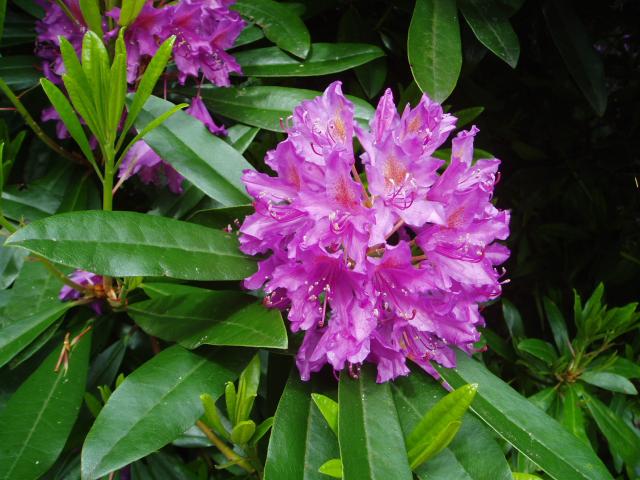 Rhododendron
A vast group of shrubs and trees with showy blooms in many colours
🇳🇵 Nepal and 4 more · Wildflower
Rhododendron
A vast group of shrubs and trees with showy blooms in many colours
🇳🇵 Nepal and 4 more · Wildflower
 Aster koraiensis벌개미취
A violet-flowered perennial native to the Korean peninsula
🇰🇷 South Korea and 1 more · Wildflower
Aster koraiensis벌개미취
A violet-flowered perennial native to the Korean peninsula
🇰🇷 South Korea and 1 more · Wildflower
 Balloon flowerPlatycodon grandiflorus
A perennial with balloon-shaped buds and bell-like blue or white flowers
🇨🇳 China and 3 more · Wildflower
Balloon flowerPlatycodon grandiflorus
A perennial with balloon-shaped buds and bell-like blue or white flowers
🇨🇳 China and 3 more · Wildflower