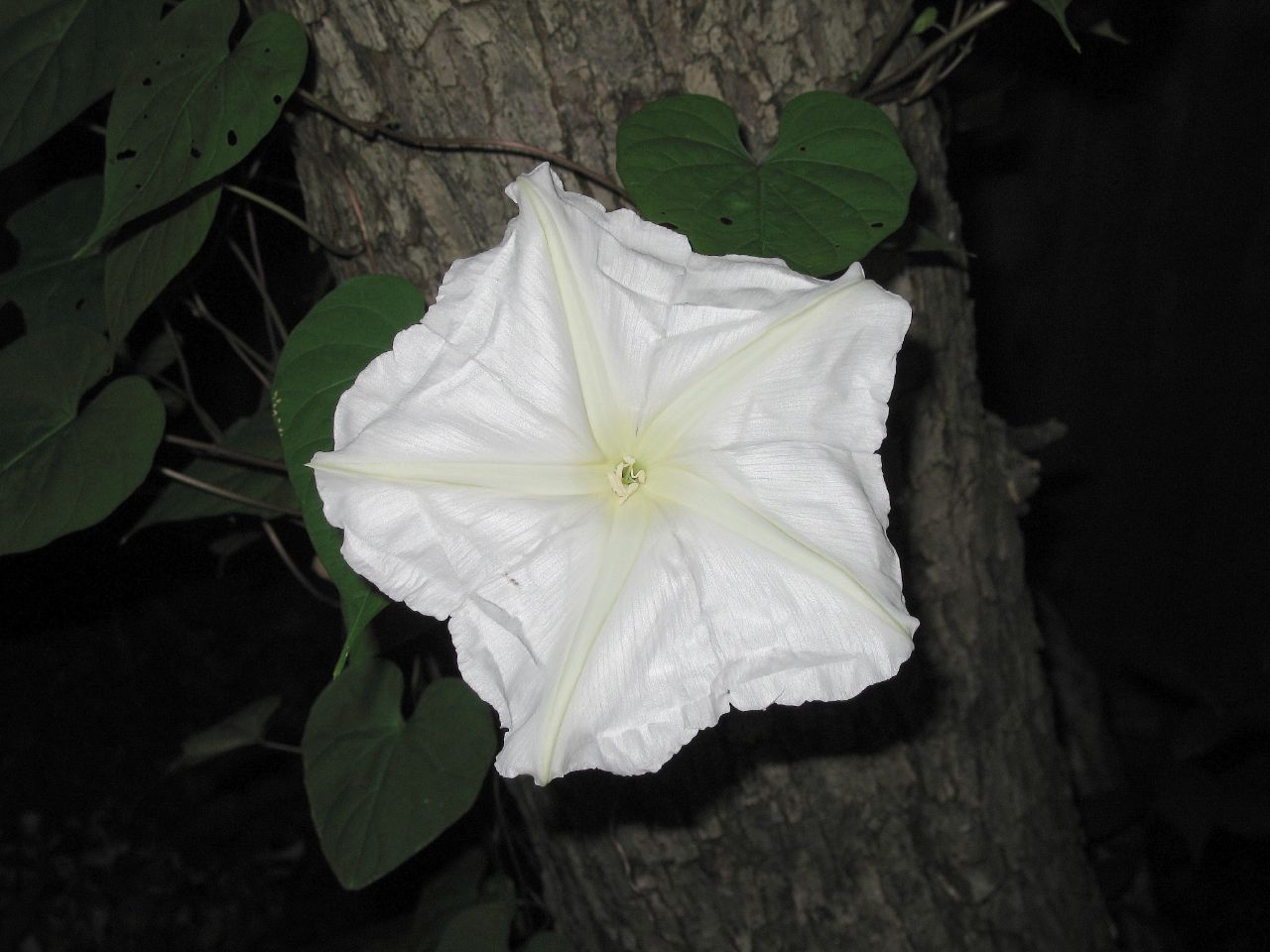
Moonflower
Ipomoea alba, family Convolvulaceae
A night-blooming vine with large white fragrant flowers
Moonflower is a climbing plant from tropical and subtropical parts of the Americas, known for its large, white, fragrant flowers that open at dusk and last through the night. It is grown as an ornamental vine and has a history of use in ancient Mesoamerica, but all parts of the plant are toxic if eaten.
- Its flowers open at dusk and last through the night.
- Ancient Mesoamericans used it to help make rubber.
- All parts of the plant are toxic if eaten.
- The vine can grow up to 30 meters tall.
- It is grown as an ornamental for its large, fragrant blooms.
What does Moonflower look like?
Moonflower is a perennial vine that can reach up to 30 meters by twisting around supports. Its leaves are either whole or divided into three parts and can be up to 15 centimeters long. The plant produces large, white or sometimes pink flowers, each about 8 to 14 centimeters wide, with a strong scent. These flowers open quickly at dusk and stay open through the night, closing when morning arrives or when touched by dew. The seeds are round, buoyant, and range from yellowish brown to nearly black.
Where does Moonflower come from?
Native to tropical and subtropical regions from Argentina north to Mexico, moonflower has also been found in places like China and Myanmar. It was once classified in a different genus but is now placed in Ipomoea. Ancient Mesoamerican peoples used this plant to help make rubber from latex, using its natural sulfur content to strengthen the material, a process that predates modern vulcanization.
When and how Moonflower blooms
Moonflower is usually grown from seed, which should be nicked and soaked before planting. It thrives in warm climates and blooms best when days are shorter, typically in late summer or early autumn in cooler regions. In colder places, it is grown as an annual since it cannot survive frost. The plant climbs by twining around supports and is often grown for its evening blooms.

How Moonflower is used
People grow moonflower mainly for its striking night-blooming flowers, which are valued in gardens for their size and scent. In the past, it played a role in making rubber in Mesoamerica. However, the plant is toxic and should not be ingested by people or animals. In some regions, it can become invasive and affect agriculture.
Kinds of Moonflower
The name 'moonflower' is sometimes used for other plants with similar night-blooming white flowers, but Ipomoea alba is the species most often meant. Its flowers may also appear in pink, though white is most common.
What Moonflower means
Moonflower is noted for its role in ancient Mesoamerican technology, where it was used to help make rubber balls. Its night-opening flowers have inspired common names and some confusion with other plants. The plant is not tied to any particular festival or religious tradition in the sources.
Questions people ask about Moonflower
Where does moonflower come from?
Moonflower is native to tropical and subtropical regions of the Americas, ranging from Argentina to northern Mexico, and has also been found in places like China and Myanmar.
What does the moonflower look like?
It is a climbing vine with large, white or sometimes pink, fragrant flowers that open at dusk. The leaves are either whole or divided into three parts, and the plant can grow very tall by twining around supports.
Is moonflower poisonous?
Yes, all parts of the moonflower plant are toxic to people and animals if eaten, including the leaves, flowers, and seeds.
How was moonflower used in the past?
In ancient Mesoamerica, moonflower was used to help make rubber from latex, taking advantage of its sulfur content to strengthen the material.
Why is it called moonflower?
The name comes from its habit of opening its large, white flowers in the evening and keeping them open through the night, resembling the glow of the moon.
Good reading and sources
- Encyclopaedia BritannicaArticle
- IUCN Red List of Threatened SpeciesIUCN Red List, Article
- Plants of the World OnlineRoyal Botanic Gardens, Kew, Plant database
- Where it has been recordedGBIF, Plant database
- Sightings and photos by naturalistsiNaturalist, Plant database
The facts on this page come from the Wikipedia article "Ipomoea alba", written by its contributors and used under the CC BY-SA 4.0 licence, and from its Wikidata record (CC0). Phool rewrote the text in its own words, with AI assistance, and compares every page with the article to make sure no passage is copied. It may be reused under the same CC BY-SA 4.0 licence with a link back.
It may contain mistakes. It is not medical or foraging advice: many flowers are poisonous, and traditional uses are reported, not recommended. If something is wrong, tell us. Last refreshed 2026-10-03.
Others in the family Convolvulaceae
The whole family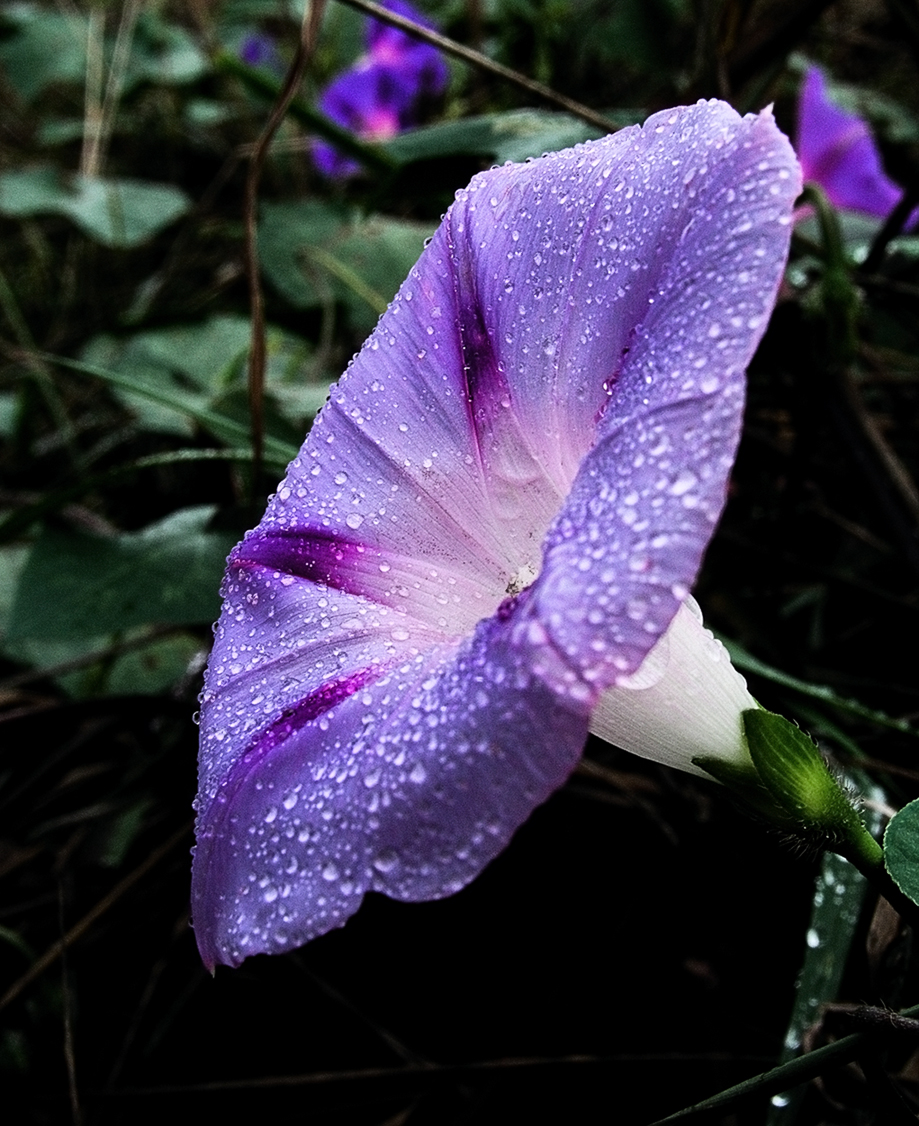 Tall morning-gloryIpomoea purpurea
A twining vine with blue, purple, or white trumpet-shaped flowers
🇨🇳 China and 1 more · Wildflower
Tall morning-gloryIpomoea purpurea
A twining vine with blue, purple, or white trumpet-shaped flowers
🇨🇳 China and 1 more · Wildflower
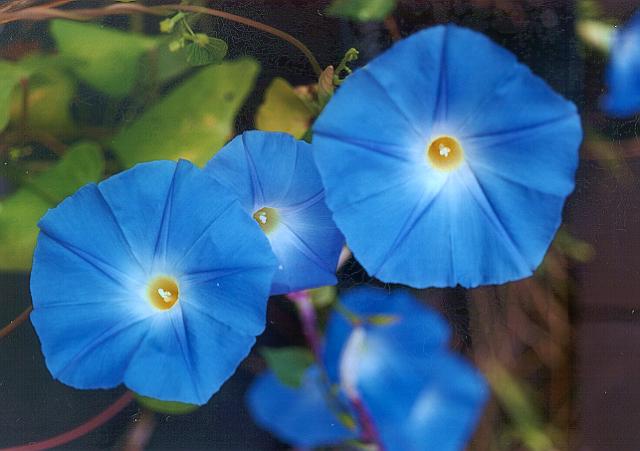 Mexican morning gloryIpomoea tricolor
A blue-flowered climber grown as an annual in gardens and fields
🇲🇽 Mexico · Garden flower
Mexican morning gloryIpomoea tricolor
A blue-flowered climber grown as an annual in gardens and fields
🇲🇽 Mexico · Garden flower
 Blue morning gloryIpomoea indica
A fast-growing vine with vivid blue funnel flowers that fade to pink by dusk
🇺🇸 United States and 7 more · Climber
Blue morning gloryIpomoea indica
A fast-growing vine with vivid blue funnel flowers that fade to pink by dusk
🇺🇸 United States and 7 more · Climber
 Elephant creeperArgyreia nervosa
A climbing vine from Asia with large leaves and psychoactive seeds
🇮🇳 India · Wildflower
Elephant creeperArgyreia nervosa
A climbing vine from Asia with large leaves and psychoactive seeds
🇮🇳 India · Wildflower
More from China
All the flowers of China PeachPrunus persica
A flowering fruit tree from China, grown for its pink blossoms and sweet fruit
🇨🇳 China and 7 more · Flowering tree
PeachPrunus persica
A flowering fruit tree from China, grown for its pink blossoms and sweet fruit
🇨🇳 China and 7 more · Flowering tree
 Common sunflowerHelianthus annuus
A tall annual plant grown for its large yellow flower heads and edible seeds
🇨🇦 Canada and 4 more · Wildflower
Common sunflowerHelianthus annuus
A tall annual plant grown for its large yellow flower heads and edible seeds
🇨🇦 Canada and 4 more · Wildflower
 PomegranatePunica granatum
A shrub with bright red flowers and a fruit full of edible seeds
🇮🇷 Iran and 9 more · Flowering shrub
PomegranatePunica granatum
A shrub with bright red flowers and a fruit full of edible seeds
🇮🇷 Iran and 9 more · Flowering shrub
 BirchBetula
Slender trees with papery bark found across the northern world
🇨🇳 China and 7 more · Wildflower
BirchBetula
Slender trees with papery bark found across the northern world
🇨🇳 China and 7 more · Wildflower