
Blue morning glory
Ipomoea indica, family Convolvulaceae
In its own language: Koali ‘awa
A fast-growing vine with vivid blue funnel flowers that fade to pink by dusk
Blue morning glory is a vigorous climbing vine with heart-shaped leaves and large blue to purple funnel-shaped blooms that shift colour through the day. Native to parts of the Americas and some Pacific islands, it is grown ornamentally but has become invasive in many warm regions worldwide.
- Flowers shift from blue at dawn to deep pink by dusk
- Can live up to 25 years in suitable climates
- Listed as an unwanted organism in New Zealand
- Produces abundant seeds easily spread by water and humans
- Thrives in disturbed areas like roadsides and forest edges
What does Blue morning glory look like?
This vine produces large funnel-shaped flowers 5–8 cm across that open bright blue at dawn, deepen through the day, and turn pink by evening. Its leaves are heart-shaped or sometimes three-lobed, green above and softly hairy underneath. Stems climb by twining and can root at the nodes.
Where does Blue morning glory come from?
Though long cultivated across the tropics, its true wild home is likely the Neotropics, from the southeastern United States through Central America and into South America, as well as islands like Hawaii, Palau, and parts of Micronesia. The name 'indica' misleadingly points to India but probably refers to the West Indies.
When and how Blue morning glory blooms
It thrives in warm climates year-round, flowering most heavily from late spring to autumn. In cooler zones it needs protection below 7°C. It grows quickly in light, fertile, moist soil and climbs over structures or other plants using twining stems that may take root where they touch ground.


How Blue morning glory is used
Grown mainly for its showy blooms in gardens and on trellises, it also supports beekeeping because it flowers nearly all year. Despite its beauty, it is banned in places like New Zealand due to its aggressive spread and impact on native vegetation.
What Blue morning glory means
In Hawaii it is known as koali ‘awa and regarded as part of the native flora. Elsewhere, especially in temperate and island ecosystems, it is treated as a serious environmental weed because it smothers trees and undergrowth and lacks natural pests to keep it in check.
Questions people ask about Blue morning glory
Where does blue morning glory come from?
It is native to the Neotropics, from Florida through Central America and the Caribbean into South America, and also to Pacific islands including Hawaii, Palau, and Micronesia.
Why do the flowers change colour?
Each bloom opens bright blue in the morning, turns darker blue by midday, then lavender, and finally deep pink by the end of the day.
Is it harmful to the environment?
Yes. It is invasive in many countries, forming dense mats that block light and outcompete native plants. In New Zealand it is illegal to sell or spread it.
How is it used by people?
It is grown as an ornamental vine for its vivid flowers and valued by beekeepers because it blooms nearly all year, providing nectar for honey production.
Can it survive cold weather?
No. It cannot tolerate temperatures below 7°C (45°F) and must be grown under glass in temperate regions.
Good reading and sources
- Ipomoea indicaRoyal Horticultural Society, Article
- USDA Plants DatabaseUS Department of Agriculture, Article
- Plants of the World OnlineRoyal Botanic Gardens, Kew, Plant database
- Where it has been recordedGBIF, Plant database
- Sightings and photos by naturalistsiNaturalist, Plant database
- Ipomoea indica on WikipediaEncyclopedia
- More photos on Wikimedia CommonsPhotos
- Wikidata recordOpen data
The facts on this page come from the Wikipedia article "Ipomoea indica", written by its contributors and used under the CC BY-SA 4.0 licence, and from its Wikidata record (CC0). Phool rewrote the text in its own words, with AI assistance, and compares every page with the article to make sure no passage is copied. It may be reused under the same CC BY-SA 4.0 licence with a link back.
It may contain mistakes. It is not medical or foraging advice: many flowers are poisonous, and traditional uses are reported, not recommended. If something is wrong, tell us. Last refreshed 2026-10-03.
Others in the family Convolvulaceae
The whole family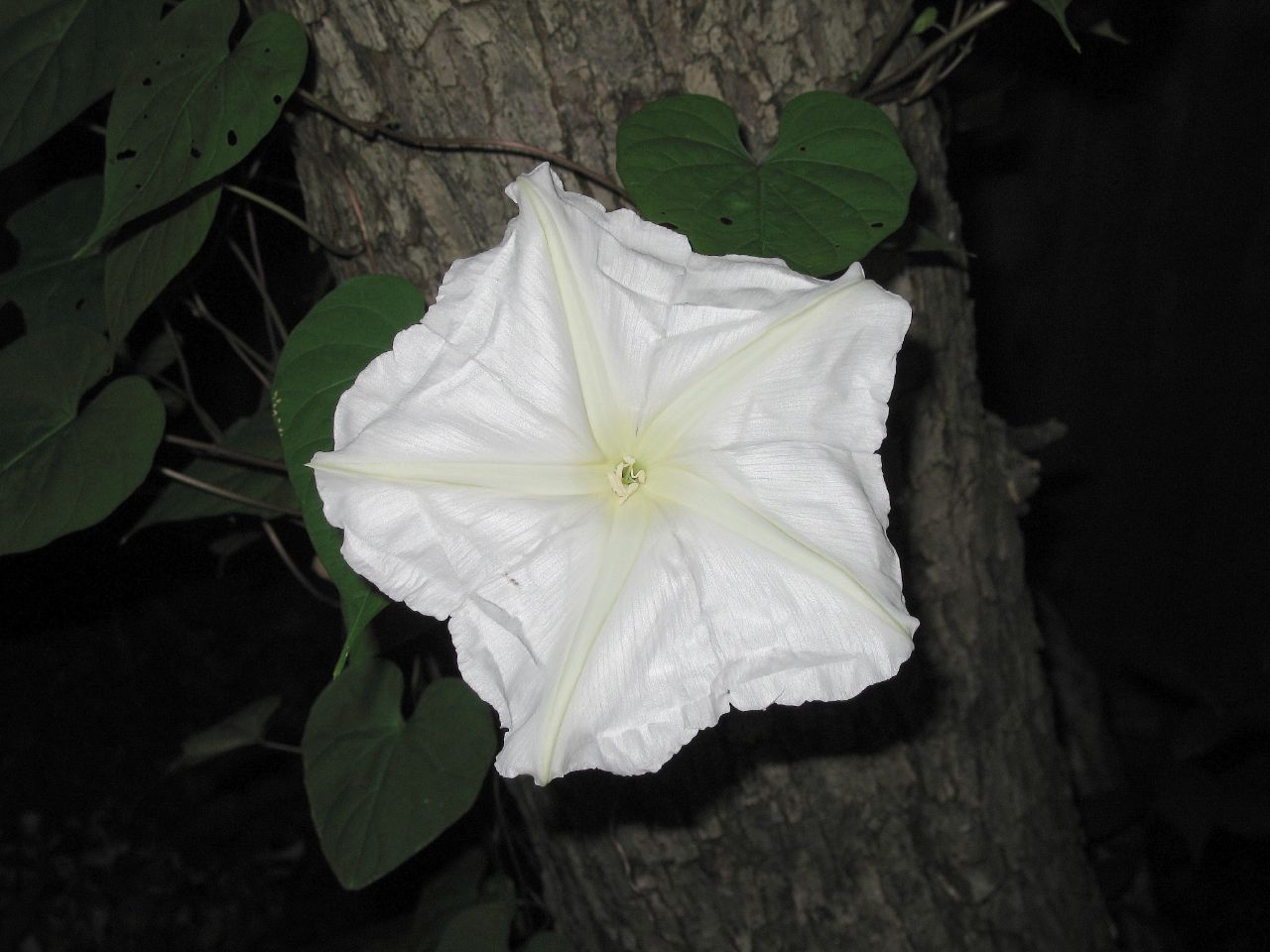 MoonflowerIpomoea alba
A night-blooming vine with large white fragrant flowers
🇨🇳 China and 4 more · Wildflower
MoonflowerIpomoea alba
A night-blooming vine with large white fragrant flowers
🇨🇳 China and 4 more · Wildflower
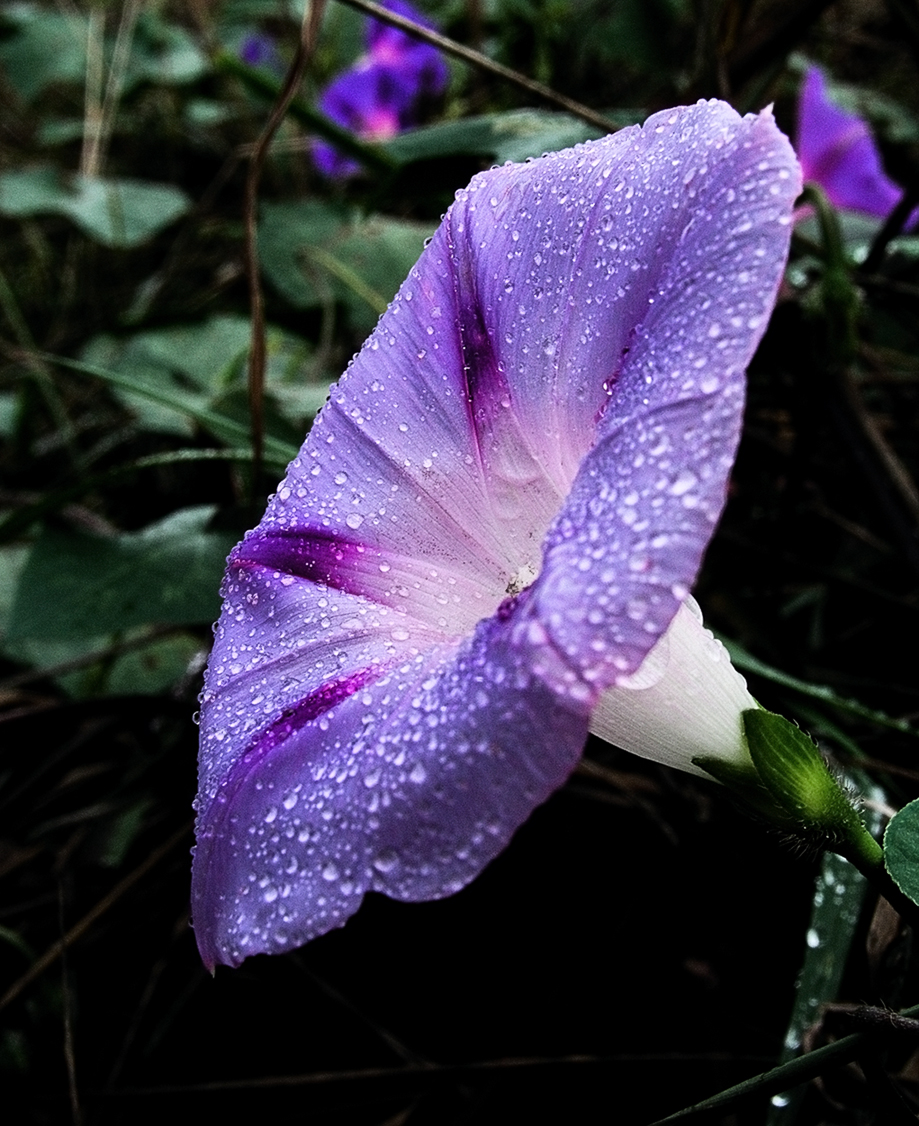 Tall morning-gloryIpomoea purpurea
A twining vine with blue, purple, or white trumpet-shaped flowers
🇨🇳 China and 1 more · Wildflower
Tall morning-gloryIpomoea purpurea
A twining vine with blue, purple, or white trumpet-shaped flowers
🇨🇳 China and 1 more · Wildflower
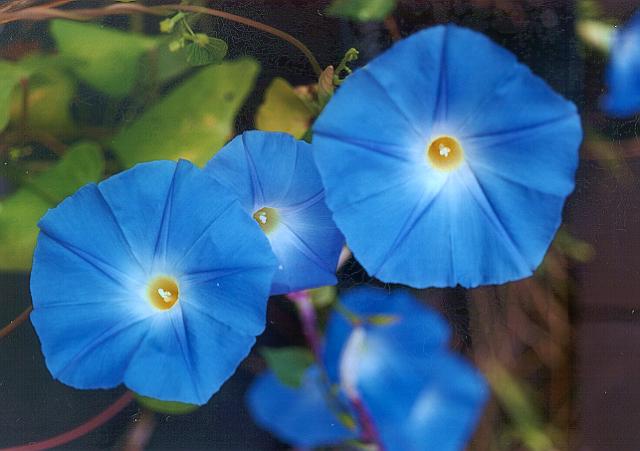 Mexican morning gloryIpomoea tricolor
A blue-flowered climber grown as an annual in gardens and fields
🇲🇽 Mexico · Garden flower
Mexican morning gloryIpomoea tricolor
A blue-flowered climber grown as an annual in gardens and fields
🇲🇽 Mexico · Garden flower
 Elephant creeperArgyreia nervosa
A climbing vine from Asia with large leaves and psychoactive seeds
🇮🇳 India · Wildflower
Elephant creeperArgyreia nervosa
A climbing vine from Asia with large leaves and psychoactive seeds
🇮🇳 India · Wildflower
More from the United States
All the flowers of the United States PeachPrunus persica
A flowering fruit tree from China, grown for its pink blossoms and sweet fruit
🇨🇳 China and 7 more · Flowering tree
PeachPrunus persica
A flowering fruit tree from China, grown for its pink blossoms and sweet fruit
🇨🇳 China and 7 more · Flowering tree
 AlmondPrunus amygdalus
A Mediterranean tree grown for its fragrant spring flowers and edible seeds
🇮🇷 Iran and 6 more · Flowering tree
AlmondPrunus amygdalus
A Mediterranean tree grown for its fragrant spring flowers and edible seeds
🇮🇷 Iran and 6 more · Flowering tree
 CactusCactaceae
Succulent plants with spines, native to the Americas
🇲🇽 Mexico and 7 more · Wildflower
CactusCactaceae
Succulent plants with spines, native to the Americas
🇲🇽 Mexico and 7 more · Wildflower
 Chrysanthemum菊花
Autumn-blooming flower with thousands of varieties, cherished in East Asia and beyond
🇨🇳 China and 6 more · Wildflower
Chrysanthemum菊花
Autumn-blooming flower with thousands of varieties, cherished in East Asia and beyond
🇨🇳 China and 6 more · Wildflower