
Lavandula pedunculata
A wild lavender with purple bracts, native to Iberia, Morocco and western Turkey
Lavandula pedunculata is a perennial shrub in the mint family, found in Iberia, Morocco and western Turkey. Its flower heads are topped with purple bracts that resemble butterfly wings, and its aromatic leaves are grey-green. This species is grown for its unusual blooms and scent.
- Native to Iberia, Morocco and western Turkey
- Flower heads have purple bracts like butterfly wings
- Leaves are aromatic and grey-green
- There are five subspecies in the wild
What does Lavandula pedunculata look like?
This lavender grows as a dense shrub with upright stems. Its leaves are slender, grey-green and release a strong scent when touched. The flower heads are compact and carried on long stalks. At the top of each head, two or three bright purple bracts stand out, giving the flower a look similar to butterfly wings. The actual flowers are small and dark purple, nestled beneath these showy bracts.
Where does Lavandula pedunculata come from?
Lavandula pedunculata is native to the western Mediterranean, including the Iberian Peninsula, Morocco, and parts of western Turkey. It grows wild in these regions, often in dry, open landscapes. The species belongs to the Lavandula genus, which includes several types of lavender valued for their fragrance and ornamental qualities. Over time, it has been cultivated in gardens outside its native range for its striking appearance and aromatic foliage.
When and how Lavandula pedunculata blooms
This lavender thrives in sunny, well-drained spots and is often grown from seed or cuttings. It prefers soils that do not hold too much water and can tolerate dry conditions. The plant keeps its leaves year-round and produces its distinctive flower heads in the warmer months. Gardeners value it for both its scent and its unusual bracts.
How Lavandula pedunculata is used
People grow Lavandula pedunculata mainly for its decorative flowers and aromatic leaves. The plant is popular in gardens, especially in areas with a Mediterranean climate. Its strong fragrance makes it a choice for scented gardens and for cutting to use in arrangements or potpourri. It is not mentioned as a traditional offering or emblem in the sources.
Kinds of Lavandula pedunculata
There are five recognized subspecies of Lavandula pedunculata: atlantica, cariensis, lusitanica, pedunculata, and sampaiana. These subspecies are found in different parts of the plant's native range and may vary slightly in appearance or habitat preference.
What Lavandula pedunculata means
Lavandula pedunculata is known for its ornamental value and fragrance. While other lavenders have strong ties to symbolism and tradition, the sources do not mention this species as a national emblem or religious symbol. Its unusual flower bracts make it a favorite among gardeners and plant collectors.
Questions people ask about Lavandula pedunculata
Where does Lavandula pedunculata come from?
This species is native to the Iberian Peninsula, Morocco, and western Turkey, where it grows wild in dry, open areas.
What does Lavandula pedunculata look like?
It is a shrub with narrow, grey-green leaves and dense flower heads topped by two or three large purple bracts that resemble butterfly wings.
What is Lavandula pedunculata used for?
It is grown mainly for its decorative flowers and strong scent, often used in gardens and for its aromatic leaves.
Are there different types of Lavandula pedunculata?
Yes, there are five subspecies: atlantica, cariensis, lusitanica, pedunculata, and sampaiana.
Good reading and sources
- Plants of the World OnlineRoyal Botanic Gardens, Kew, Plant database
- Where it has been recordedGBIF, Plant database
- Sightings and photos by naturalistsiNaturalist, Plant database
- Lavandula pedunculata on WikipediaEncyclopedia
- More photos on Wikimedia CommonsPhotos
- Wikidata recordOpen data
The facts on this page come from the Wikipedia article "Lavandula pedunculata", written by its contributors and used under the CC BY-SA 4.0 licence, and from its Wikidata record (CC0). Phool rewrote the text in its own words, with AI assistance, and compares every page with the article to make sure no passage is copied. It may be reused under the same CC BY-SA 4.0 licence with a link back.
It may contain mistakes. It is not medical or foraging advice: many flowers are poisonous, and traditional uses are reported, not recommended. If something is wrong, tell us. Last refreshed 2026-10-03.
Others in the family Lamiaceae
The whole family RosemarySalvia rosmarinus
A fragrant evergreen shrub with needle-like leaves and purple, blue, or white flowers
🇪🇸 Spain and 5 more · Flowering shrub
RosemarySalvia rosmarinus
A fragrant evergreen shrub with needle-like leaves and purple, blue, or white flowers
🇪🇸 Spain and 5 more · Flowering shrub
 Salvia
A vast group of aromatic herbs and shrubs known for their flowers and uses
Salvia · Wildflower
Salvia
A vast group of aromatic herbs and shrubs known for their flowers and uses
Salvia · Wildflower
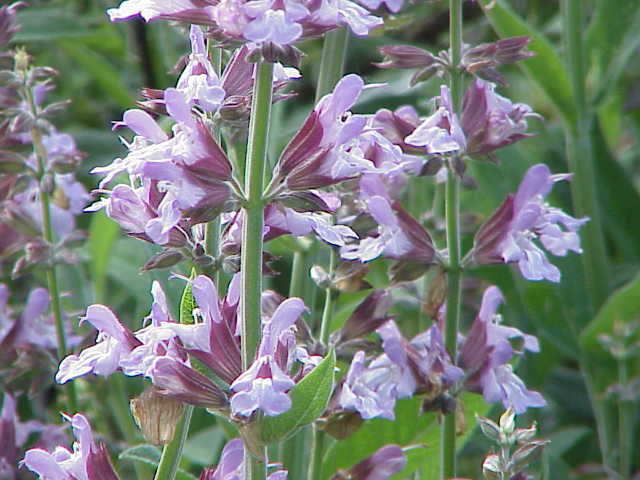 Common sageSalvia officinalis
A Mediterranean herb with grey-green leaves and blue to purple flowers
🇨🇳 China and 1 more · Herb or useful flower
Common sageSalvia officinalis
A Mediterranean herb with grey-green leaves and blue to purple flowers
🇨🇳 China and 1 more · Herb or useful flower
 Holy basilOcimum tenuiflorum
A fragrant herb central to Hindu worship and Southeast Asian cooking
🇲🇲 Myanmar and 6 more · Herb or useful flower
Holy basilOcimum tenuiflorum
A fragrant herb central to Hindu worship and Southeast Asian cooking
🇲🇲 Myanmar and 6 more · Herb or useful flower
More from Morocco
All the flowers of Morocco Wild cherryPrunus avium
A tall flowering tree native to Europe, grown for its sweet fruit and spring blossom
🇮🇹 Italy and 6 more · Flowering tree
Wild cherryPrunus avium
A tall flowering tree native to Europe, grown for its sweet fruit and spring blossom
🇮🇹 Italy and 6 more · Flowering tree
 Narcissus
Spring-flowering bulbs with trumpet-shaped blooms in white, yellow, and orange
🇬🇧 United Kingdom and 7 more · Wildflower
Narcissus
Spring-flowering bulbs with trumpet-shaped blooms in white, yellow, and orange
🇬🇧 United Kingdom and 7 more · Wildflower
 OleanderNerium oleander
A showy, evergreen shrub with clusters of pink, white or red flowers
🇲🇦 Morocco and 8 more · Flowering shrub
OleanderNerium oleander
A showy, evergreen shrub with clusters of pink, white or red flowers
🇲🇦 Morocco and 8 more · Flowering shrub
 Bay laurelLaurus nobilis
Evergreen tree with aromatic leaves used as bay leaf in cooking
🇬🇷 Greece and 9 more · Flowering tree
Bay laurelLaurus nobilis
Evergreen tree with aromatic leaves used as bay leaf in cooking
🇬🇷 Greece and 9 more · Flowering tree