
Thumbai
Leucas aspera, family Lamiaceae
A small white-flowered weed of Indian fields, used in food and medicine
An annual herb of the mint family, growing 15 to 60 cm tall, with narrow opposite leaves and small white flowers held in dense rings around the stem. It is a common weed across India and the Philippines and is used to scent food, as an insecticide, and in traditional medicine.
- An annual herb of the mint family, growing 15 to 60 cm tall
- Small white flowers sit in dense whorls around the stem
- A very common weed of dry, sandy waste ground in India and the Philippines
- Used to scent food, as an insecticide, and in traditional medicine
- In the Philippines it is used traditionally against snake bites
What does Thumbai look like?
Leucas aspera is an annual herb or undershrub, an undershrub being a woody plant smaller than a shrub. It grows 15 to 60 cm tall, about 6 to 24 inches, with four-sided, much-branched stems. The narrow leaves sit opposite one another on short stalks and can reach 8 cm long. The small white flowers are gathered in dense rings around the stem, a pattern called a verticillaster, so they appear to sit straight on the plant with no stalk of their own. Each flower is about 1 cm long and two-lipped, the upper lip standing upright and covered in dense white wool. The fruit is a small brown nutlet, smooth and oblong.
Where does Thumbai come from?
The plant grows wild through India and the Philippines, where it is a very common weed, and on the plains of Mauritius, Reunion Island and Java. One record also places it in Guangdong. It likes dry, open, sandy soil and is abundant on waste ground. It belongs to the genus Leucas, in the mint family Lamiaceae. Because it differs from district to district, it carries many local common names, and in English it is best known as Thumbai or Thumba.
When and how Thumbai blooms
It is an annual, so it comes up from seed, flowers and dies within the year. It suits dry, open, sandy ground and appears readily on waste land, which is where it is usually found. The flowers are carried in whorls around the stem or in dense clusters at the tips, with bracts about 6 mm long that match the calyx and bear long slender hairs. The calyx is ribbed, hairy and toothed; the corolla is white, woolly outside and about a centimetre long. Small brown nutlets follow.


How Thumbai is used
People use the herb to give fragrance to food. In traditional medicine it has been credited with antifungal, antioxidant, antimicrobial, antinociceptive and cytotoxic actions, among others, and in the Philippines it is used against snake bites. It is also taken as an antipyretic, meaning a fever reducer. Some traditions inhale the steam from crushed samoolam, the flowers, seeds, roots, bark and leaves together, and the juice of the flowers is used for intestinal worms in children. It is a common insecticide as well, and it has a place in witchcraft.
Kinds of Thumbai
The plant varies in form across its wide range, which is part of why it has so many names in different regions. The sources do not describe named varieties or cultivars. It is one species among many in the genus Leucas, all of them in the mint family. Telling it apart means looking at small details: the four-sided stem, the narrow opposite leaves, the white flowers in rings, and the two-lipped corolla with its woolly upper lip.
What Thumbai means
Leucas aspera holds no emblem or festival in these sources. Its standing comes from usefulness. It is a plant of medicine and agriculture, gathered from waste ground rather than cultivated, and it is known by a different name in nearly every district. It also appears in witchcraft. Its conservation status is not recorded, and since it thrives on disturbed land it is not treated as a rarity.
Traditions that use it
Where to see Thumbai

Questions people ask about Thumbai
Where does Leucas aspera come from?
It grows wild across India and the Philippines, where it is a very common weed, and also on the plains of Mauritius, Reunion Island and Java. One record places it in Guangdong. It favours dry, open, sandy soil and is abundant on waste ground.
What does the plant look like?
It is an annual herb or undershrub, 15 to 60 cm tall, with four-sided branching stems and narrow opposite leaves up to 8 cm long. The small white flowers grow in dense rings around the stem, each with a two-lipped corolla about a centimetre long.
What is it used for?
It is added to food for fragrance, used as an insecticide, and used in traditional medicine. Reported actions include antifungal, antimicrobial, antioxidant and fever-reducing effects, and the juice of the flowers is used for intestinal worms in children.
Is it a weed or a garden plant?
The sources describe it as a very common weed of India and the Philippines, growing on dry, open, sandy soil and abundant on waste ground. Nothing in them describes it as a garden plant.
Does it have other names?
Yes. It is best known as Thumbai or Thumba, and it carries many different common names depending on the region where it grows, so the name changes from place to place.
Good reading and sources
- Plants of the World OnlineRoyal Botanic Gardens, Kew, Plant database
- Where it has been recordedGBIF, Plant database
- Sightings and photos by naturalistsiNaturalist, Plant database
- Leucas aspera on WikipediaEncyclopedia
- More photos on Wikimedia CommonsPhotos
- Wikidata recordOpen data
The facts on this page come from the Wikipedia article "Leucas aspera", written by its contributors and used under the CC BY-SA 4.0 licence, and from its Wikidata record (CC0). Phool rewrote the text in its own words, with AI assistance, and compares every page with the article to make sure no passage is copied. It may be reused under the same CC BY-SA 4.0 licence with a link back.
It may contain mistakes. It is not medical or foraging advice: many flowers are poisonous, and traditional uses are reported, not recommended. If something is wrong, tell us. Last refreshed 2026-10-03.
Others in the family Lamiaceae
The whole family RosemarySalvia rosmarinus
A fragrant evergreen shrub with needle-like leaves and purple, blue, or white flowers
🇪🇸 Spain and 5 more · Flowering shrub
RosemarySalvia rosmarinus
A fragrant evergreen shrub with needle-like leaves and purple, blue, or white flowers
🇪🇸 Spain and 5 more · Flowering shrub
 Salvia
A vast group of aromatic herbs and shrubs known for their flowers and uses
Salvia · Wildflower
Salvia
A vast group of aromatic herbs and shrubs known for their flowers and uses
Salvia · Wildflower
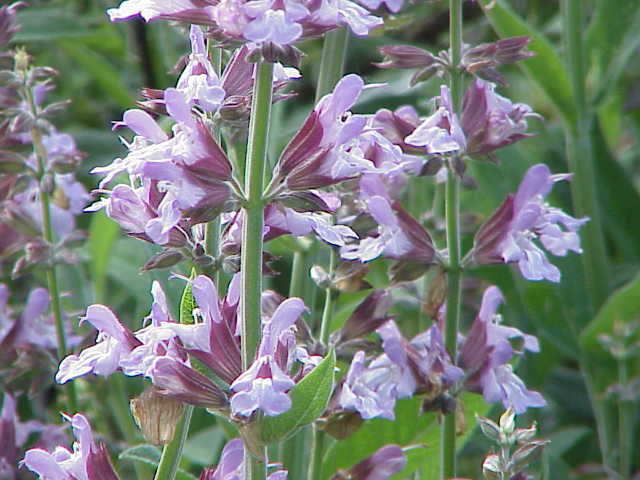 Common sageSalvia officinalis
A Mediterranean herb with grey-green leaves and blue to purple flowers
🇨🇳 China and 1 more · Herb or useful flower
Common sageSalvia officinalis
A Mediterranean herb with grey-green leaves and blue to purple flowers
🇨🇳 China and 1 more · Herb or useful flower
 Holy basilOcimum tenuiflorum
A fragrant herb central to Hindu worship and Southeast Asian cooking
🇲🇲 Myanmar and 6 more · Herb or useful flower
Holy basilOcimum tenuiflorum
A fragrant herb central to Hindu worship and Southeast Asian cooking
🇲🇲 Myanmar and 6 more · Herb or useful flower
More from India
All the flowers of India FennelFoeniculum vulgare
A tall, aromatic herb with feathery leaves and yellow umbels, used for food and spice
🇨🇳 China and 7 more · Herb or useful flower
FennelFoeniculum vulgare
A tall, aromatic herb with feathery leaves and yellow umbels, used for food and spice
🇨🇳 China and 7 more · Herb or useful flower
 TulipTulipa
Spring-blooming bulbs with showy, cup-shaped flowers in many colours
🇳🇱 Netherlands and 7 more · Wildflower
TulipTulipa
Spring-blooming bulbs with showy, cup-shaped flowers in many colours
🇳🇱 Netherlands and 7 more · Wildflower
 Common flaxLinum usitatissimum
The slender blue-flowered plant grown for linen and linseed
🇨🇳 China and 7 more · Wildflower
Common flaxLinum usitatissimum
The slender blue-flowered plant grown for linen and linseed
🇨🇳 China and 7 more · Wildflower
 Eucalyptus
The tall, aromatic trees and shrubs known as gum trees or eucalypts
🇦🇺 Australia and 7 more · Flowering tree
Eucalyptus
The tall, aromatic trees and shrubs known as gum trees or eucalypts
🇦🇺 Australia and 7 more · Flowering tree