
Veitch's Masdevallia
Masdevallia veitchiana, family Orchidaceae
In its own language: gallo-gallo
A large orange Andean orchid with iridescent purple hairs
Veitch's Masdevallia is a cool-growing orchid from the high Andes of Peru, known for its striking orange flowers patterned with tiny purple hairs that shimmer in sunlight. It grows on rocky slopes near Machu Picchu and has been linked to Inca cultivation.
- Grows at 2,000–4,000 metres in the Peruvian Andes
- Flowers have iridescent purple hairs over orange petals
- Named after Harry Veitch of Veitch Nurseries
- Locally known as gallo-gallo, meaning 'rooster'
- Used to breed many orange-flowered orchid hybrids
What does Veitch's Masdevallia look like?
This orchid produces one large flower per stem, about 5 by 15 cm, held well above its thick, narrow leaves. The bloom is orange and covered in fine purple hairs that create a shimmering effect when moved by the wind. The sepals carry these hairs unevenly, giving the flower a prismatic look.
Where does Veitch's Masdevallia come from?
Found wild in the Peruvian Andes around Machu Picchu, it was first collected in 1866 by plant hunter Pearce and introduced to cultivation by the Veitch Nurseries. Named after Harry Veitch, it is sometimes called waqanki, a name tied to legends of Inca cultivation.
When and how Veitch's Masdevallia blooms
It grows as a clump from a rhizome, forming tufts of upright leaves. Flowering occurs in spring and early summer on tall stems that rise above the foliage. It thrives at elevations between 2,000 and 4,000 metres in full sun, often among grasses on steep rocky ground.


How Veitch's Masdevallia is used
Valued as a national treasure in Peru, it is grown by orchid enthusiasts for its dramatic blooms. It adapts well to cultivation and is used in hybrid breeding for its vivid orange colour and hardiness in cool conditions.
Kinds of Veitch's Masdevallia
A notable form, grandiflora, has larger flowers with dense purple papillae on the upper sepal and only on the outer half of the side sepals, leaving the inner parts bright orange-scarlet and smooth.
What Veitch's Masdevallia means
Locally called gallo-gallo for its resemblance to a rooster’s comb, it holds cultural significance in Peru. Though not officially a national emblem, it is regarded as a national treasure and appears in stories linking it to the Incas.
Questions people ask about Veitch's Masdevallia
Where does Veitch's Masdevallia come from?
It is native to the high Andes of Peru, especially around Machu Picchu, growing on sunny rocky slopes at 2,000 to 4,000 metres elevation.
What does the flower look like?
It has a single large orange bloom, about 5 by 15 cm, covered in tiny purple hairs that shimmer in the light, giving it an iridescent appearance.
Why is it called gallo-gallo?
In Peru, its flower resembles a rooster’s comb and wattles, so locals named it gallo-gallo, which means 'rooster' in Spanish.
Is it hard to grow?
No, it grows vigorously and is suitable for beginners if given cool temperatures, good light, and protection from frost.
Was it really grown by the Incas?
There are rumours it was cultivated by the Incas, who may have called it waqanki, but this is not confirmed by historical evidence.
Good reading and sources
- Masdevallia veitchianaRoyal Horticultural Society, Article
- Plants of the World OnlineRoyal Botanic Gardens, Kew, Plant database
- Where it has been recordedGBIF, Plant database
- Sightings and photos by naturalistsiNaturalist, Plant database
- Masdevallia veitchiana on WikipediaEncyclopedia
- More photos on Wikimedia CommonsPhotos
- Wikidata recordOpen data
The facts on this page come from the Wikipedia article "Masdevallia veitchiana", written by its contributors and used under the CC BY-SA 4.0 licence, and from its Wikidata record (CC0). Phool rewrote the text in its own words, with AI assistance, and compares every page with the article to make sure no passage is copied. It may be reused under the same CC BY-SA 4.0 licence with a link back.
It may contain mistakes. It is not medical or foraging advice: many flowers are poisonous, and traditional uses are reported, not recommended. If something is wrong, tell us. Last refreshed 2026-10-03.
Others in the family Orchidaceae
The whole family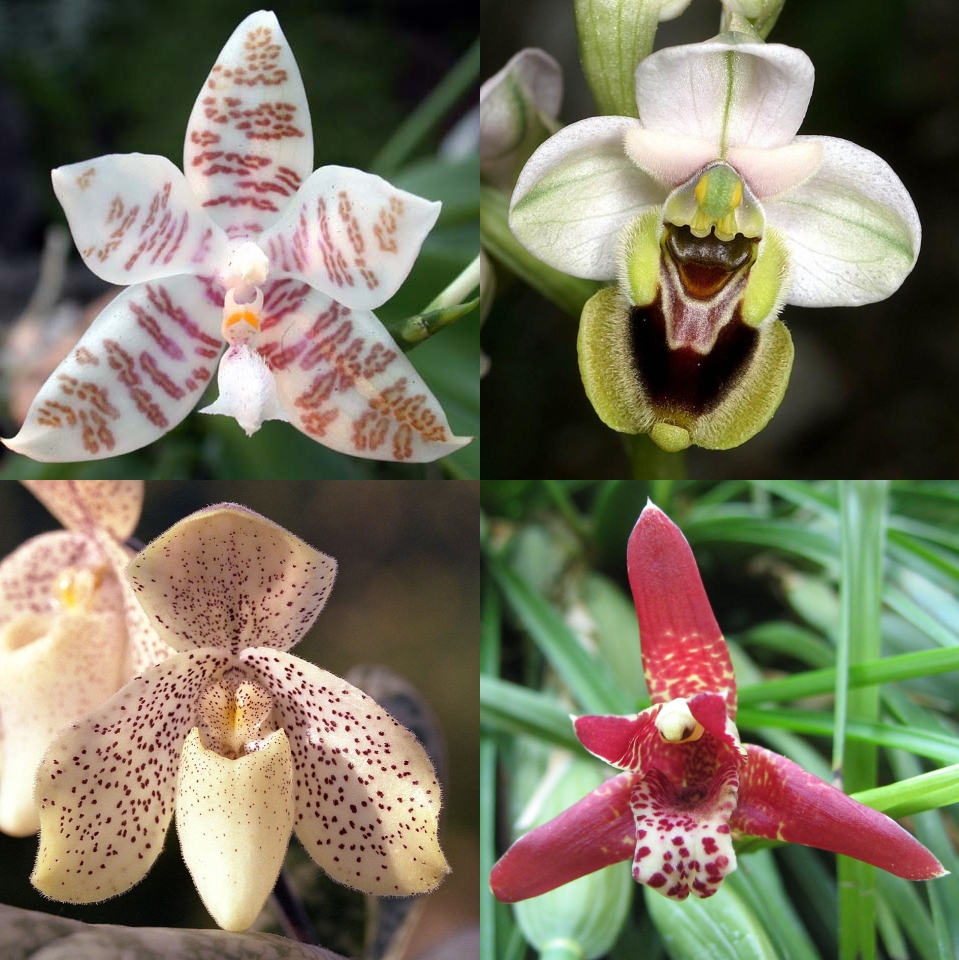 OrchidOrchidaceae
A vast family of colourful, often fragrant flowers found almost everywhere on earth
Orchidaceae · Wildflower
OrchidOrchidaceae
A vast family of colourful, often fragrant flowers found almost everywhere on earth
Orchidaceae · Wildflower
 Vanilla
Climbing orchids with pods used for the world’s most popular flavor
🇲🇽 Mexico and 7 more · Wildflower
Vanilla
Climbing orchids with pods used for the world’s most popular flavor
🇲🇽 Mexico and 7 more · Wildflower
 Orchis
A group of wild orchids with tuberous roots from Europe, North Africa and Asia
🇹🇷 Turkey and 7 more · Wildflower
Orchis
A group of wild orchids with tuberous roots from Europe, North Africa and Asia
🇹🇷 Turkey and 7 more · Wildflower
 Pansy orchidMiltoniopsis
An orchid with flowers that resemble garden pansies
🇨🇷 Costa Rica and 5 more · Orchid
Pansy orchidMiltoniopsis
An orchid with flowers that resemble garden pansies
🇨🇷 Costa Rica and 5 more · Orchid
More from Peru
All the flowers of Peru Dracula
A genus of orchids with strange, long-tailed flowers from Central and South America
🇲🇽 Mexico and 6 more · Wildflower
Dracula
A genus of orchids with strange, long-tailed flowers from Central and South America
🇲🇽 Mexico and 6 more · Wildflower
 Epidendrum secundum
A South American orchid with dense clusters of colorful flowers
🇧🇷 Brazil and 3 more · Wildflower
Epidendrum secundum
A South American orchid with dense clusters of colorful flowers
🇧🇷 Brazil and 3 more · Wildflower
 Masdevallia
A large group of cool-growing orchids from the high Andes
🇲🇽 Mexico and 5 more · Wildflower
Masdevallia
A large group of cool-growing orchids from the high Andes
🇲🇽 Mexico and 5 more · Wildflower
 Tulip orchidsAnguloa
Large, cinnamon-scented orchids from the Andes with tulip-shaped blooms
🇻🇪 Venezuela and 4 more · Wildflower
Tulip orchidsAnguloa
Large, cinnamon-scented orchids from the Andes with tulip-shaped blooms
🇻🇪 Venezuela and 4 more · Wildflower