
Moth orchid
Phalaenopsis, family Orchidaceae
Long-lasting flat orchid flowers that resemble moths in flight
Moth orchids are epiphytic or lithophytic orchids with leathery leaves and flat, often fragrant flowers on branching stems. Native to tropical Asia, New Guinea and Australia, they are widely grown as potted houseplants for their ease of care and long bloom time.
- Flowers can last 2–3 months indoors
- Name means 'moth-like' in Greek
- Petals of some species turn green and photosynthesize after pollination
- Among the easiest orchids for beginners to grow
- Native from India to northern Australia and New Guinea
What does Moth orchid look like?
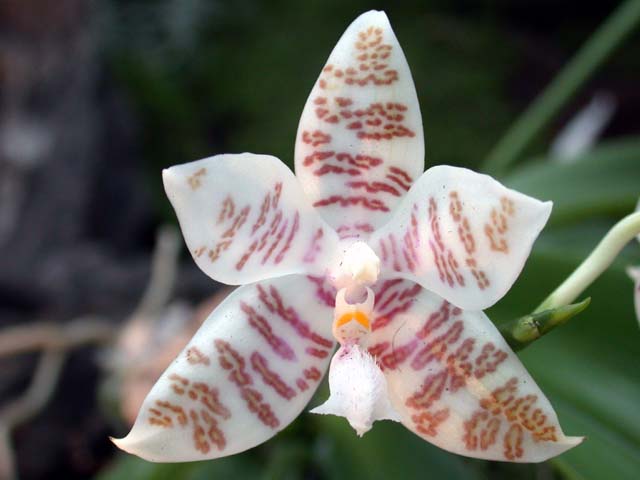
Moth orchids have short leafy stems hidden by overlapping bases and long, coarse roots. Their leaves grow in two rows and are large, leathery, and sometimes succulent. The flowers are flat, long-lasting, and often fragrant, with widely spread sepals and petals. The lip has three lobes, and the side lobes stand upright.
Where does Moth orchid come from?
The genus Phalaenopsis was first described in 1825 by Carl Ludwig Blume from plants in what was then the Dutch East Indies. Its name comes from Greek words meaning 'moth-like', referring to the flower’s appearance. Species are native across tropical Asia, New Guinea, and northern Australia, with highest diversity in Indonesia and the Philippines.
When and how Moth orchid blooms
In nature, moth orchids grow on trees (as epiphytes) or rocks (as lithophytes) in warm, humid forests. They thrive at 20–35°C but adapt well to home conditions. Flower spikes emerge near leaf bases and take about three months to develop buds. Blooming is triggered by daytime temperatures below 27°C, not by cool nights as once thought.


![[Miyazaki, Japan / 宮崎県] SUBGENUS Hygrochilus ( .mw-parser-output .smallcaps{font-variant:small-caps} Pfitzer ) Kocyan & Schuit. , Phytotaxa 161 (2014) Japanese Name: ナゴラン, 名護蘭 Distribution: China (W. Yunnan, Zhejiang), K](https://thumb.wikimedia.org/wikipedia/commons/thumb/6/65/Phalaenopsis_japonica_%27-2003%27_%28Rchb.f.%29_Kocyan_%26_Schuit.%2C_Phytotaxa_161_67_%282014%29_%2849842657636%29.jpg/960px-Phalaenopsis_japonica_%27-2003%27_%28Rchb.f.%29_Kocyan_%26_Schuit.%2C_Phytotaxa_161_67_%282014%29_%2849842657636%29.jpg)
How Moth orchid is used
Moth orchids are among the most popular potted orchids sold worldwide. Their flowers can last two to three months indoors. They became common in Victorian collections and are now mass-produced due to easy propagation. Healthy plants may carry ten or more leaves and rebloom with proper care.
Kinds of Moth orchid
The genus includes about seventy species and several subgenera, such as Polychilos and Hygrochilus. Former genera like Ornithochilus and Hygrochilus have been merged into Phalaenopsis based on modern classification. Some species, like P. violacea, have petals that turn green and photosynthesize after pollination.
What Moth orchid means
Many Phalaenopsis species are threatened in the wild. P. lindenii is endangered, P. violacea is vulnerable, and P. micholitzii is critically endangered. One species, P. javanica, may already be extinct in nature. Despite this, cultivated hybrids are widely available and have received awards like the RHS Award of Garden Merit.
Traditions that use it
Where to see Moth orchid


Questions people ask about Moth orchid
Where do moth orchids come from?
They are native to tropical Asia, New Guinea, and Australia, with most species found in Indonesia and the Philippines.
Why are they called moth orchids?
Their scientific name Phalaenopsis comes from Greek words meaning 'moth-like', because the flat, spreading flowers resemble moths in flight.
How long do the flowers last?
In home conditions, the blooms typically last two to three months before the plant rests and prepares for new growth.
Are they hard to grow?
No, they are among the easiest orchids for beginners, adapting well to typical indoor temperatures and humidity levels.
Do they have a scent?
Many species are fragrant; for example, Phalaenopsis bellina produces a strong morning scent made of about 79 compounds.
Good reading and sources
- Encyclopaedia BritannicaArticle
- Phalaenopsis Brother Pico Sweetheart gxRoyal Horticultural Society, Article
- IUCN Red List of Threatened SpeciesIUCN Red List, Article
- FactsheetAustralian National Botanic Gardens, Article
- Plants of the World OnlineRoyal Botanic Gardens, Kew, Plant database
- Where it has been recordedGBIF, Plant database
- Sightings and photos by naturalistsiNaturalist, Plant database
The facts on this page come from the Wikipedia article "Phalaenopsis", written by its contributors and used under the CC BY-SA 4.0 licence, and from its Wikidata record (CC0). EveryPhool rewrote the text in its own words, with AI assistance, and compares every page with the article to make sure no passage is copied. It may be reused under the same CC BY-SA 4.0 licence with a link back.
It may contain mistakes. It is not medical or foraging advice: many flowers are poisonous, and traditional uses are reported, not recommended. If something is wrong, tell us. Last refreshed 2026-10-04.
Others in the family Orchidaceae
The whole family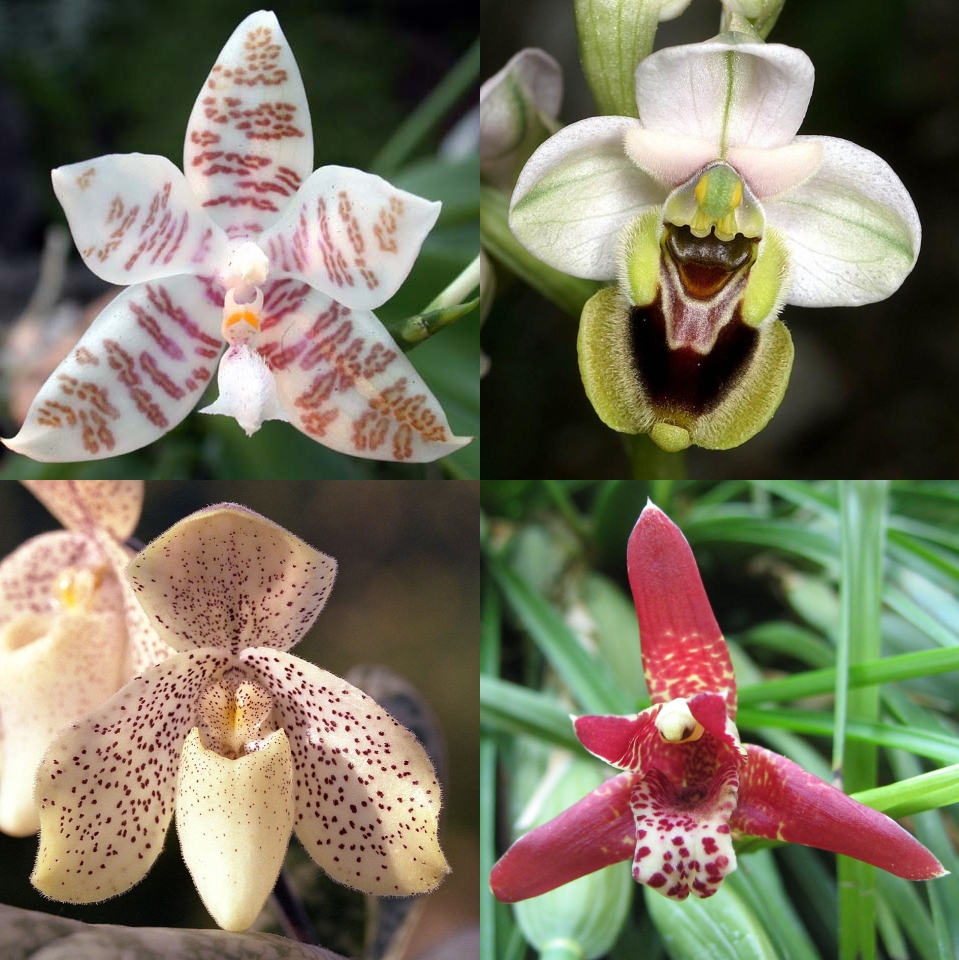 OrchidOrchidaceae
A vast family of colourful, often fragrant flowers found almost everywhere on earth
Orchidaceae · Wildflower
OrchidOrchidaceae
A vast family of colourful, often fragrant flowers found almost everywhere on earth
Orchidaceae · Wildflower
 Vanilla
Climbing orchids with pods used for the world’s most popular flavor
🇲🇽 Mexico and 7 more · Wildflower
Vanilla
Climbing orchids with pods used for the world’s most popular flavor
🇲🇽 Mexico and 7 more · Wildflower
 Orchis
A group of wild orchids with tuberous roots from Europe, North Africa and Asia
🇹🇷 Turkey and 7 more · Wildflower
Orchis
A group of wild orchids with tuberous roots from Europe, North Africa and Asia
🇹🇷 Turkey and 7 more · Wildflower
 Ghost orchidDendrophylax lindenii
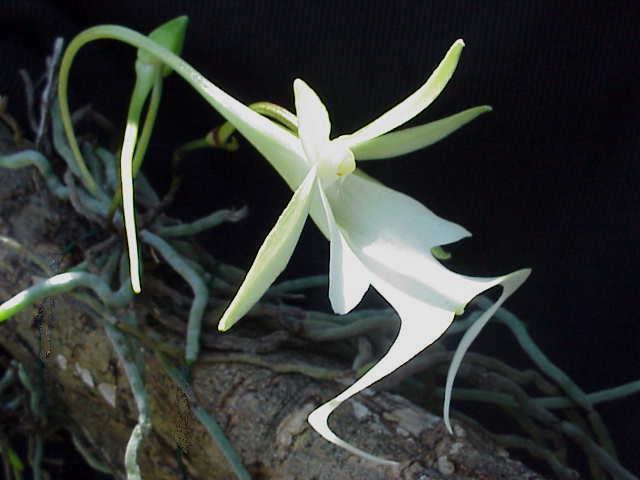
A rare leafless orchid with white flowers that seem to float in air
🇨🇺 Cuba · Wildflower
Ghost orchidDendrophylax lindenii
A rare leafless orchid with white flowers that seem to float in air
🇨🇺 Cuba · Wildflower
More from China
All the flowers of China Grammatophyllum
A group of rainforest orchids with striking green and purple-marked blooms
🇮🇩 Indonesia and 4 more · Wildflower
Grammatophyllum
A group of rainforest orchids with striking green and purple-marked blooms
🇮🇩 Indonesia and 4 more · Wildflower
 Calanthe
A genus of terrestrial orchids with showy pink, white, yellow or orange blooms
🇮🇳 India and 4 more · Orchid
Calanthe
A genus of terrestrial orchids with showy pink, white, yellow or orange blooms
🇮🇳 India and 4 more · Orchid
 Blue orchidVanda coerulea
A rare orchid with long-lasting bluish purple flowers from Northeast India and Yunnan
🇮🇳 India and 2 more · Orchid
Blue orchidVanda coerulea
A rare orchid with long-lasting bluish purple flowers from Northeast India and Yunnan
🇮🇳 India and 2 more · Orchid
 Coelogyne
A group of orchids with showy flowers from Asia and the Pacific
🇮🇳 India and 3 more · Wildflower
Coelogyne
A group of orchids with showy flowers from Asia and the Pacific
🇮🇳 India and 3 more · Wildflower