
Satsuki azalea
Rhododendron indicum, family Ericaceae
A Japanese azalea with many cultivated forms
Satsuki azalea is a type of Rhododendron native to southern and western Japan, including Honshu, Shikoku, Kyushu, and Yakushima. It is known for its many cultivated varieties, which are grown for their attractive flowers and are especially popular in Japanese gardens.
- Native to southern and western Japan
- First described in Japan in 1712
- Many cultivated forms are known as Satsuki azaleas
- Type species for the Tsutsusi section of Rhododendron
What does Satsuki azalea look like?
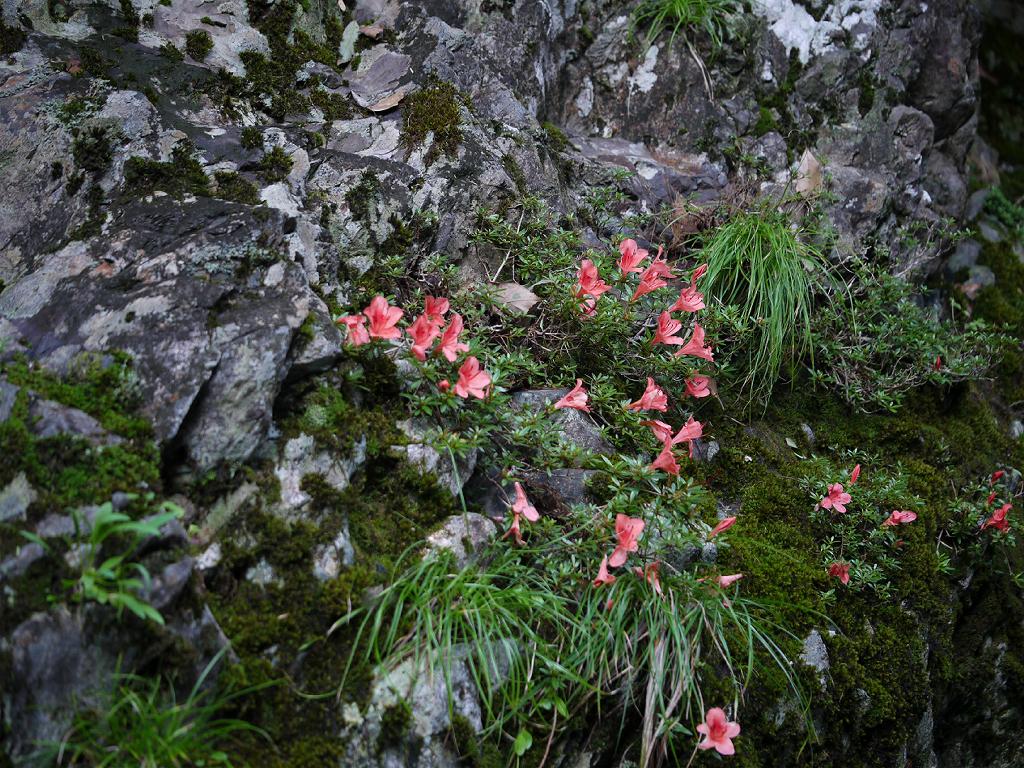
Satsuki azalea is a shrub belonging to the Rhododendron group, with many cultivated forms. Its flowers are grown for their beauty and are often seen in Japanese gardens. The plant varies in size and shape depending on the cultivar, and is valued for its ornamental qualities. The flowers are a key feature, but the sources do not specify their exact colors or scent.
Where does Satsuki azalea come from?
Rhododendron indicum is native to southern and western Japan, including Honshu, Shikoku, Kyushu, and Yakushima. It was first described in Japan by Engelbert Kaempfer in 1712, who recorded its Japanese name as Kirishima-tsutsuji. The species is the type for the Tsutsusi section and subsection of Rhododendron. Its cultivation has a long history in Japan, where many forms have been developed.
When and how Satsuki azalea blooms
Satsuki azaleas are grown in gardens, with many different cultivars available. They are typically propagated and selected for their ornamental flowers. The sources do not detail the exact growing conditions or methods, but the plant is widely cultivated in Japan for decorative use.


How Satsuki azalea is used
The Satsuki azalea is mainly used as an ornamental shrub in gardens, especially in Japan. Its many cultivars are popular for home gardens and public spaces. The plant also serves as an emblem in some contexts, reflecting its cultural importance in Japanese horticulture.
Kinds of Satsuki azalea
There are many cultivars of Satsuki azalea, developed for garden use. These cultivated forms differ in flower appearance and plant habit. The Satsuki group is especially well known among azalea enthusiasts and gardeners in Japan.
What Satsuki azalea means
Satsuki azalea holds a special place in Japanese gardening, with a tradition of selecting and cultivating many forms. It was first described in the West from Japan, and its Japanese name, Kirishima-tsutsuji, reflects its origins. The plant is also the type species for its section within the Rhododendron genus.
Where Satsuki azalea is used and seen
 Parc Floral de la SourceA large public garden in Orléans built around the source of the Loiret river
 Rhododendron-Park BremenA vast park in Bremen with the world’s largest rhododendron and azalea collection
 Botanical Garden of the University of ViennaA historic 8-hectare plant collection next to Vienna’s Belvedere gardens
 Kórnik ArboretumPoland’s oldest and largest collection of trees and shrubs, near Kórnik Castle
 VanDusen Botanical GardenA public garden in Vancouver with global and native plant collections
 Abkhazi GardenA one-acre garden in Victoria, British Columbia, created by Prince and Princess Abkhazi
 Holden ArboretumA vast botanical garden and arboretum in Kirtland, Ohio
 Parc floral de ParisA botanical garden and flower park in the Bois de Vincennes, Paris
Traditions that use it
Questions people ask about Satsuki azalea
Where does the Satsuki azalea come from?
Satsuki azalea, or Rhododendron indicum, is native to southern and western Japan, including Honshu, Shikoku, Kyushu, and Yakushima.
What is special about Satsuki azalea?
It is known for its many cultivated varieties, which are widely grown in Japanese gardens for their ornamental flowers.
How is Satsuki azalea used?
It is mainly used as a decorative shrub in gardens and public spaces, and is an emblematic plant in Japanese horticulture.
What does the name Satsuki azalea mean?
The name refers to a group of cultivated forms of Rhododendron indicum, with a tradition of selection and gardening in Japan.
Good reading and sources
- Plants of the World OnlineRoyal Botanic Gardens, Kew, Plant database
- Where it has been recordedGBIF, Plant database
- Sightings and photos by naturalistsiNaturalist, Plant database
- Rhododendron indicum on WikipediaEncyclopedia
- More photos on Wikimedia CommonsPhotos
- Wikidata recordOpen data
The facts on this page come from the Wikipedia article "Rhododendron indicum", written by its contributors and used under the CC BY-SA 4.0 licence, and from its Wikidata record (CC0). Phool rewrote the text in its own words, with AI assistance, and compares every page with the article to make sure no passage is copied. It may be reused under the same CC BY-SA 4.0 licence with a link back.
It may contain mistakes. It is not medical or foraging advice: many flowers are poisonous, and traditional uses are reported, not recommended. If something is wrong, tell us. Last refreshed 2026-10-03.
Others in the family Ericaceae
The whole family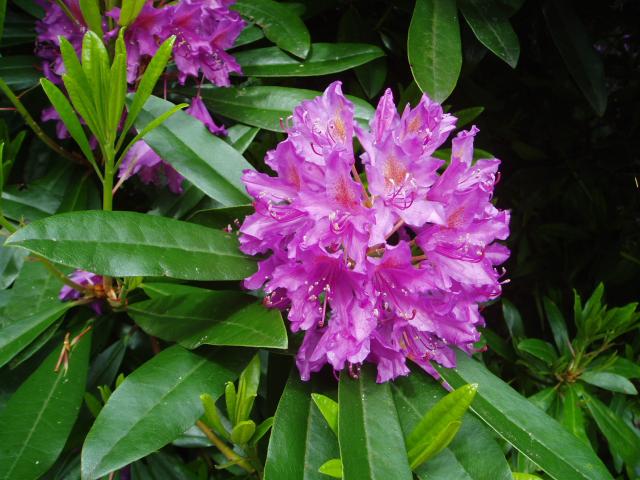 Rhododendron
A vast group of shrubs and trees with showy blooms in many colours
🇳🇵 Nepal and 4 more · Wildflower
Rhododendron
A vast group of shrubs and trees with showy blooms in many colours
🇳🇵 Nepal and 4 more · Wildflower
 Erica
Evergreen shrubs with tiny needle leaves and nodding flowers, known as heaths or heathers
🇿🇦 South Africa and 1 more · Wildflower
Erica
Evergreen shrubs with tiny needle leaves and nodding flowers, known as heaths or heathers
🇿🇦 South Africa and 1 more · Wildflower
 Catawba rosebayRhododendron catawbiense
A spring-flowering rhododendron native to the southern Appalachian Mountains
🇺🇸 United States · Wildflower
Catawba rosebayRhododendron catawbiense
A spring-flowering rhododendron native to the southern Appalachian Mountains
🇺🇸 United States · Wildflower
 Common rhododendronRhododendron ponticum
A dense evergreen shrub with violet-purple flowers from Europe and the Caucasus
🇵🇹 Portugal and 6 more · Flowering shrub
Common rhododendronRhododendron ponticum
A dense evergreen shrub with violet-purple flowers from Europe and the Caucasus
🇵🇹 Portugal and 6 more · Flowering shrub
More from Japan
All the flowers of Japan PeachPrunus persica
A flowering fruit tree from China, grown for its pink blossoms and sweet fruit
🇨🇳 China and 7 more · Flowering tree
PeachPrunus persica
A flowering fruit tree from China, grown for its pink blossoms and sweet fruit
🇨🇳 China and 7 more · Flowering tree
 Chrysanthemum菊花
Autumn-blooming flower with thousands of varieties, cherished in East Asia and beyond
🇨🇳 China and 6 more · Wildflower
Chrysanthemum菊花
Autumn-blooming flower with thousands of varieties, cherished in East Asia and beyond
🇨🇳 China and 6 more · Wildflower
 Sacred lotusNelumbo nucifera
The pink aquatic flower sacred in Asia and grown for food, worship and beauty
🇮🇳 India and 7 more · Water flower
Sacred lotusNelumbo nucifera
The pink aquatic flower sacred in Asia and grown for food, worship and beauty
🇮🇳 India and 7 more · Water flower
 Wild cherryPrunus avium
A tall flowering tree native to Europe, grown for its sweet fruit and spring blossom
🇮🇹 Italy and 6 more · Flowering tree
Wild cherryPrunus avium
A tall flowering tree native to Europe, grown for its sweet fruit and spring blossom
🇮🇹 Italy and 6 more · Flowering tree