
New England aster
Symphyotrichum novae-angliae, family Asteraceae
A late-blooming purple wildflower of North American meadows and gardens
New England aster is a perennial wildflower native to central and eastern North America. It grows in clumps with stout, hairy stems and produces deep purple, daisy-like flowers with yellow centers from late summer into autumn. The plant thrives in moist meadows and marshes, supports pollinators, and is grown in gardens worldwide.
- Blooms from August to November with deep purple, daisy-like flowers
- Native to central and eastern North America, now naturalized in Europe and New Zealand
- Supports bees, butterflies, and birds with nectar and seeds
- Used in traditional medicine by several indigenous peoples
- Around 50 cultivars are grown in gardens worldwide
What does New England aster look like?
New England aster is a clump-forming perennial that usually stands 30 to 120 cm tall, though it can reach up to 240 cm. Its stems are stout and hairy, with lance-shaped leaves that clasp the stem. The plant produces large, daisy-like flower heads, typically deep purple but sometimes pink or white, each with a yellow center that turns purple with age. The flower heads can be up to 5 cm across and are crowded at the ends of branches. The plant's overall look is bushy and upright, with many blooms appearing late in the growing season.
Where does New England aster come from?
This species is native to central and eastern parts of the United States and southeastern Canada, from Manitoba to Louisiana and east to Maine. It grows wild in moist meadows, marshes, prairies, and forest edges, but can also tolerate drier soils. Due to cultivation, it has spread to other parts of North America and has become naturalized in Europe, Central Asia, Hispaniola, and New Zealand. The name 'New England aster' refers to its presence in the New England region, while 'Michaelmas daisy' comes from its tendency to flower around the Feast of St. Michael in late September.
When and how New England aster blooms
New England aster blooms from August to November, depending on location. It grows from thick roots or short rhizomes, forming clumps of erect stems. The plant prefers moist, calcareous soils but can adapt to drier or sandy sites. It is grown from seed or by dividing clumps, and once established, it spreads both by seed and vegetatively. Flowers are produced at the tips of branches in crowded clusters, attracting bees and butterflies.


How New England aster is used
This aster is valued in gardens for its late-season color and ability to attract pollinators. Its seeds and nectar feed birds, bees, and butterflies. Indigenous peoples, including the Cherokee, Haudenosaunee, and Potawatomi, used parts of the plant in traditional medicine for various ailments. The plant is also sometimes used as a regional emblem and is appreciated for its resilience in wild and cultivated settings.
Kinds of New England aster
There are around 50 cultivars of New England aster, some of which have won horticultural awards. Notable cultivars include 'Brunswick', 'Helen Picton', and 'James Ritchie', each selected for flower color or garden performance. The species can hybridize with white heath aster (Symphyotrichum ericoides) to produce the amethyst aster (Symphyotrichum × amethystinum), which shows intermediate traits.
What New England aster means
The name 'Michaelmas daisy' is linked to its bloom time near the Feast of St. Michael on September 29. The star-like shape of the flower is reflected in its scientific and common names, derived from Greek and Latin words for 'star.' The plant is important for wildlife and is considered secure in conservation terms. Its late flowering makes it a symbol of autumn in North American gardens and landscapes.
Questions people ask about New England aster
Where does New England aster come from?
New England aster is native to central and eastern North America, including most of the United States and southeastern Canada. It has also been introduced and naturalized in parts of Europe, Central Asia, Hispaniola, and New Zealand.
What does New England aster look like?
It is a clump-forming perennial with stout, hairy stems and lance-shaped leaves. The plant produces large, daisy-like flower heads that are usually deep purple with yellow centers, though pink and white forms occur.
When does New England aster flower?
It blooms from late summer through autumn, typically from August to November, depending on the region.
How is New England aster used?
It is grown in gardens for its late-season blooms and to attract pollinators. Indigenous peoples have used it in traditional medicine, and it serves as a food source for birds and insects.
What does New England aster symbolize?
The plant is associated with autumn and is called 'Michaelmas daisy' because it flowers around the Feast of St. Michael. Its star-shaped flowers have given rise to names that mean 'star' in Greek and Latin.
Good reading and sources
- Lady Bird Johnson Wildflower CenterLady Bird Johnson Wildflower Center, Article
- Symphyotrichum novae-angliae 'Brunswick'Royal Horticultural Society, Article
- Plants of the World OnlineRoyal Botanic Gardens, Kew, Plant database
- Where it has been recordedGBIF, Plant database
- Sightings and photos by naturalistsiNaturalist, Plant database
- Symphyotrichum novae-angliae on WikipediaEncyclopedia
- More photos on Wikimedia CommonsPhotos
- Wikidata recordOpen data
The facts on this page come from the Wikipedia article "Symphyotrichum novae-angliae", written by its contributors and used under the CC BY-SA 4.0 licence, and from its Wikidata record (CC0). Phool rewrote the text in its own words, with AI assistance, and compares every page with the article to make sure no passage is copied. It may be reused under the same CC BY-SA 4.0 licence with a link back.
It may contain mistakes. It is not medical or foraging advice: many flowers are poisonous, and traditional uses are reported, not recommended. If something is wrong, tell us. Last refreshed 2026-10-03.
Others in the family Asteraceae
The whole family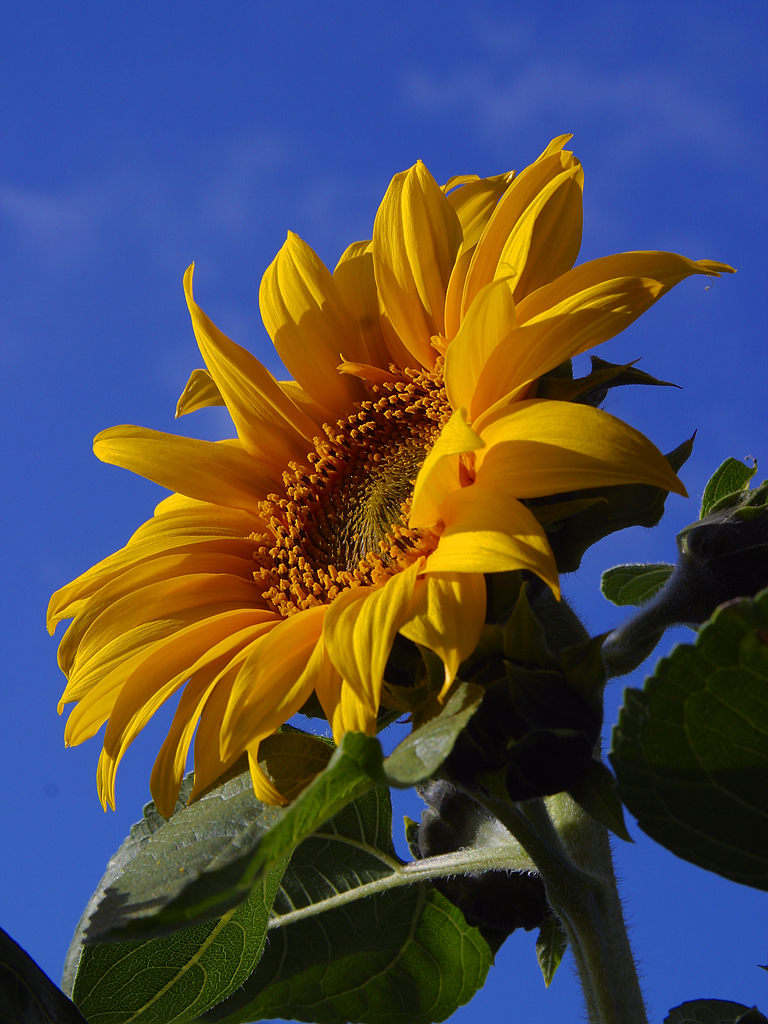 Common sunflowerHelianthus annuus
A tall annual plant grown for its large yellow flower heads and edible seeds
🇨🇦 Canada and 4 more · Wildflower
Common sunflowerHelianthus annuus
A tall annual plant grown for its large yellow flower heads and edible seeds
🇨🇦 Canada and 4 more · Wildflower
 Asteraceae
The vast family of daisies, asters, and sunflowers with star-like flower heads
Asteraceae · Wildflower
Asteraceae
The vast family of daisies, asters, and sunflowers with star-like flower heads
Asteraceae · Wildflower
 DandelionTaraxacum
A yellow-flowered perennial found in fields, lawns, and gardens worldwide
Taraxacum · Wildflower
DandelionTaraxacum
A yellow-flowered perennial found in fields, lawns, and gardens worldwide
Taraxacum · Wildflower
 Dahlia
A bushy perennial with tuberous roots and bright, star-shaped blooms
🇲🇽 Mexico and 1 more · Garden flower
Dahlia
A bushy perennial with tuberous roots and bright, star-shaped blooms
🇲🇽 Mexico and 1 more · Garden flower
More from the United States
All the flowers of the United States PeachPrunus persica
A flowering fruit tree from China, grown for its pink blossoms and sweet fruit
🇨🇳 China and 7 more · Flowering tree
PeachPrunus persica
A flowering fruit tree from China, grown for its pink blossoms and sweet fruit
🇨🇳 China and 7 more · Flowering tree
 AlmondPrunus amygdalus
A Mediterranean tree grown for its fragrant spring flowers and edible seeds
🇮🇷 Iran and 6 more · Flowering tree
AlmondPrunus amygdalus
A Mediterranean tree grown for its fragrant spring flowers and edible seeds
🇮🇷 Iran and 6 more · Flowering tree
 CactusCactaceae
Succulent plants with spines, native to the Americas
🇲🇽 Mexico and 7 more · Wildflower
CactusCactaceae
Succulent plants with spines, native to the Americas
🇲🇽 Mexico and 7 more · Wildflower
 Chrysanthemum菊花
Autumn-blooming flower with thousands of varieties, cherished in East Asia and beyond
🇨🇳 China and 6 more · Wildflower
Chrysanthemum菊花
Autumn-blooming flower with thousands of varieties, cherished in East Asia and beyond
🇨🇳 China and 6 more · Wildflower