
Stemless four-nerve daisy
Tetraneuris acaulis, family Asteraceae
A bright yellow daisy of North American prairies and mountains, growing close to the ground
Stemless four-nerve daisy is a perennial plant native to western North America, found from Canada to Mexico. Its bright yellow flowers grow on leafless stalks close to the ground, and it thrives in prairies, foothills, and rocky slopes. Gardeners value it for rock gardens and dry landscapes, and it has traditional uses among the Hopi people.
- Native to prairies and mountains from Canada to Mexico
- Bright yellow flowers bloom from spring to autumn
- Leaves grow in a tight clump at ground level, with no true stem
- Used in traditional Hopi medicine for pain relief
- Highly drought-tolerant and suited to rock gardens
What does Stemless four-nerve daisy look like?
The stemless four-nerve daisy is a perennial herb with leaves packed tightly at ground level, forming a low clump. Its leaves are spoon-shaped or narrow, sometimes hairy or smooth. Each flower stalk rises directly from the base, usually holding a single bright yellow daisy-like head. The flower heads have a ring of 8 to 21 broad yellow petals and a dense cluster of tiny yellow disc florets in the center. The whole plant can be just 2 cm tall or reach up to 30 cm when flowering. The foliage has a light, aromatic scent.
Where does Stemless four-nerve daisy come from?
This daisy is native to western North America, growing wild from the prairies of Alberta and Saskatchewan in Canada, through the Rocky Mountains and Great Plains of the United States, and into northern Mexico. It thrives in open, sunny places—prairies, foothills, badlands, and subalpine meadows. The species was first described in 1813, and its current scientific name was established in 1898. Its name refers to the four veins on each petal and its stemless habit.
When and how Stemless four-nerve daisy blooms
The plant blooms from spring through autumn, with the exact season depending on the variety and location. It grows from a large taproot and prefers full sun and dry, lean soils. Gardeners often plant it in rock gardens or dry slopes, as it tolerates drought and poor soils. Seeds germinate quickly in warm conditions, but the plant does not spread easily from seed in gardens.


How Stemless four-nerve daisy is used
Gardeners use stemless four-nerve daisy in rock gardens and dry landscapes for its bright yellow flowers and low water needs. The Hopi people have used it in traditional medicine, making poultices for hip and back pain in pregnancy and preparing a stimulating drink. Native bees are attracted to its blooms. The plant is not widely used for cut flowers but is valued for its resilience and beauty in naturalistic plantings.
Kinds of Stemless four-nerve daisy
There are four accepted varieties: var. acaulis (woolly leaves, mainly east of the Rockies), var. arizonica (glandular, mostly in the desert southwest), var. caespitosa (hairy, with short flower stalks, found in high mountains), and var. epunctata (smooth leaves, found in Colorado, Utah, and Wyoming). Each variety differs in leaf hairiness, presence of glands, and flowering season.
What Stemless four-nerve daisy means
The stemless four-nerve daisy is considered secure and common in most of its range, though it is less common in some Canadian provinces. Its name and common names reflect its distinctive four-veined petals and stemless growth. The plant is important for native bees and is appreciated in gardens for its drought tolerance. It does not have a strong symbolic meaning but is noted in traditional Hopi medicine.
Questions people ask about Stemless four-nerve daisy
Where does the stemless four-nerve daisy come from?
It is native to western North America, found in the prairies and mountains from Alberta and Saskatchewan in Canada through much of the western United States and into northern Mexico.
What does the stemless four-nerve daisy look like?
It forms a low clump of leaves at ground level, with each flower stalk holding a single bright yellow daisy-like flower. The petals have four visible veins, and the plant can be very short or up to 30 cm tall in bloom.
How is the stemless four-nerve daisy used?
Gardeners grow it in rock gardens and dry landscapes for its bright flowers and drought tolerance. The Hopi people have used it in traditional medicine for pain relief and as a stimulating drink.
When does the stemless four-nerve daisy bloom?
It can flower from April to October, depending on the variety and location. Most often, it blooms in late spring or early summer.
Is the stemless four-nerve daisy endangered?
No, it is considered globally secure and common in most of its range, though it is less common in some parts of Canada.
Good reading and sources
- Lady Bird Johnson Wildflower CenterLady Bird Johnson Wildflower Center, Article
- USDA Plants DatabaseUS Department of Agriculture, Article
- Plants of the World OnlineRoyal Botanic Gardens, Kew, Plant database
- Where it has been recordedGBIF, Plant database
- Sightings and photos by naturalistsiNaturalist, Plant database
- Tetraneuris acaulis on WikipediaEncyclopedia
- More photos on Wikimedia CommonsPhotos
- Wikidata recordOpen data
The facts on this page come from the Wikipedia article "Tetraneuris acaulis", written by its contributors and used under the CC BY-SA 4.0 licence, and from its Wikidata record (CC0). Phool rewrote the text in its own words, with AI assistance, and compares every page with the article to make sure no passage is copied. It may be reused under the same CC BY-SA 4.0 licence with a link back.
It may contain mistakes. It is not medical or foraging advice: many flowers are poisonous, and traditional uses are reported, not recommended. If something is wrong, tell us. Last refreshed 2026-10-03.
Others in the family Asteraceae
The whole family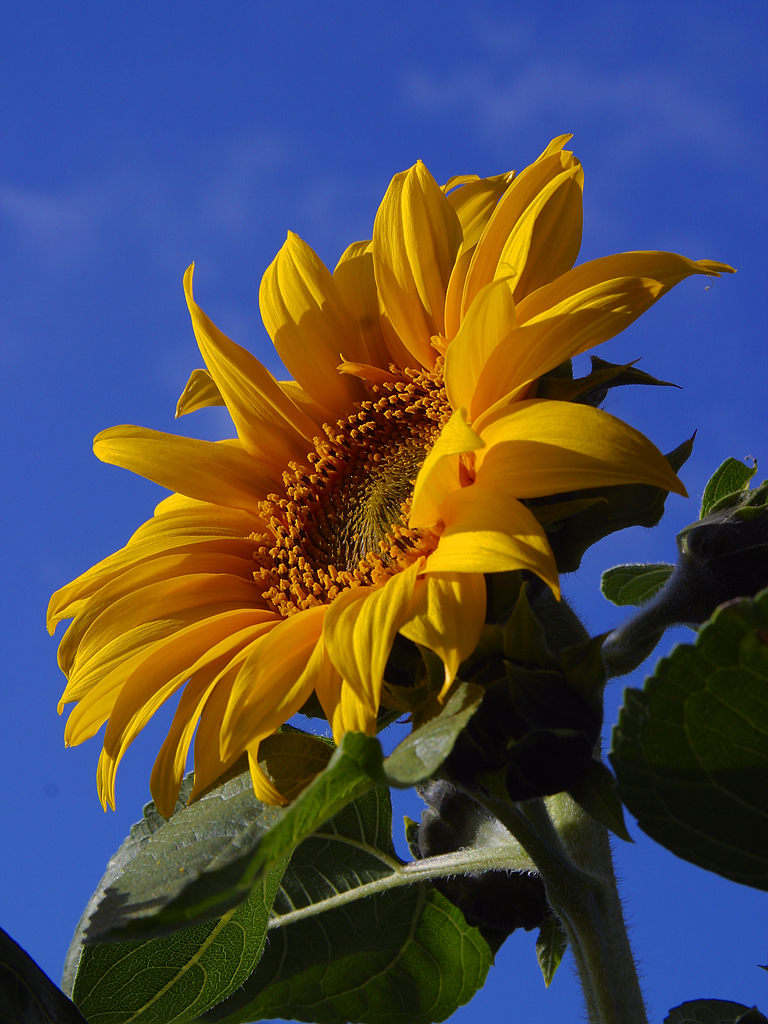 Common sunflowerHelianthus annuus
A tall annual plant grown for its large yellow flower heads and edible seeds
🇨🇦 Canada and 4 more · Wildflower
Common sunflowerHelianthus annuus
A tall annual plant grown for its large yellow flower heads and edible seeds
🇨🇦 Canada and 4 more · Wildflower
 Asteraceae
The vast family of daisies, asters, and sunflowers with star-like flower heads
Asteraceae · Wildflower
Asteraceae
The vast family of daisies, asters, and sunflowers with star-like flower heads
Asteraceae · Wildflower
 DandelionTaraxacum
A yellow-flowered perennial found in fields, lawns, and gardens worldwide
Taraxacum · Wildflower
DandelionTaraxacum
A yellow-flowered perennial found in fields, lawns, and gardens worldwide
Taraxacum · Wildflower
 Dahlia
A bushy perennial with tuberous roots and bright, star-shaped blooms
🇲🇽 Mexico and 1 more · Garden flower
Dahlia
A bushy perennial with tuberous roots and bright, star-shaped blooms
🇲🇽 Mexico and 1 more · Garden flower
More from the United States
All the flowers of the United States PeachPrunus persica
A flowering fruit tree from China, grown for its pink blossoms and sweet fruit
🇨🇳 China and 7 more · Flowering tree
PeachPrunus persica
A flowering fruit tree from China, grown for its pink blossoms and sweet fruit
🇨🇳 China and 7 more · Flowering tree
 AlmondPrunus amygdalus
A Mediterranean tree grown for its fragrant spring flowers and edible seeds
🇮🇷 Iran and 6 more · Flowering tree
AlmondPrunus amygdalus
A Mediterranean tree grown for its fragrant spring flowers and edible seeds
🇮🇷 Iran and 6 more · Flowering tree
 CactusCactaceae
Succulent plants with spines, native to the Americas
🇲🇽 Mexico and 7 more · Wildflower
CactusCactaceae
Succulent plants with spines, native to the Americas
🇲🇽 Mexico and 7 more · Wildflower
 Chrysanthemum菊花
Autumn-blooming flower with thousands of varieties, cherished in East Asia and beyond
🇨🇳 China and 6 more · Wildflower
Chrysanthemum菊花
Autumn-blooming flower with thousands of varieties, cherished in East Asia and beyond
🇨🇳 China and 6 more · Wildflower