
Banmi Shofu-ryū
In its own language: 晩美生風流
A modern school of Japanese Ikebana known for its use of driftwood
Banmi Shofu-ryū is a school of Ikebana, the Japanese art of flower arrangement, founded by Bessie Yoneko Banmi Fooks in the 20th century. This school is recognized for blending traditional Ikebana forms with the distinctive use of driftwood, emphasizing natural forms and storytelling in floral design. Banmi Shofu-ryū arrangements are taught and exhibited internationally.
- Banmi Shofu-ryū is known for using driftwood in Ikebana arrangements.
- Founded by Bessie Yoneko Banmi Fooks in the 20th century.
- Arrangements follow three main branches: Shin, Soe, and Uke.
- The school teaches both classic and modern Ikebana styles.
- Etiquette and meditation are central to the practice.
What is Banmi Shofu-ryū?
Banmi Shofu-ryū is a school of Ikebana, the Japanese art of arranging flowers. Its arrangements are known for their natural, effortless forms and the prominent use of driftwood, which serves as a central element connecting the flowers with a sense of living spirit. Arrangements may include a variety of seasonal flowers, branches, and line materials, often displayed in shallow or tall containers. The designs emphasize space, balance, and three-dimensional structure, with every composition telling a story through the careful placement of stems and natural materials.
Where does Banmi Shofu-ryū come from?
Banmi Shofu-ryū traces its roots to Ikenobo, the earliest Ikebana school in Japan. Ikebana itself began as a Buddhist ritual of offering flowers, evolving over centuries into an art form. Bessie Yoneko Banmi Fooks established Banmi Shofu-ryū in the 20th century after studying and teaching Ikebana in Japan and Taiwan. She was known for her natural style and for incorporating driftwood into arrangements. The school’s curriculum was later formalized by Dr. Ricardo Bansho Carrasco, who became the second headmaster, and expanded through publications and international workshops.
How Banmi Shofu-ryū is made
Arrangements in Banmi Shofu-ryū start with three main branches: Shin (the tallest), Soe (secondary), and Uke (supporting), each measured in proportion to the container. Driftwood is selected to harmonize with the chosen flowers and to create a sense of movement or narrative. Various holders such as kenzan (pinpoint holder), kame-dome (turtle holder), and others are used to secure stems. The artist considers stem length, angle, intentional space, and the number of sections in the container. Designs range from classic forms like Moribana and Nageire to modern expressions introduced by the school.


When and where Banmi Shofu-ryū is used
Banmi Shofu-ryū arrangements are created for home decoration, tea ceremonies, festivals, and as gifts. The process is meditative, with etiquette emphasizing respect for the teacher (sensei) and fellow students. Classes begin with meditation and follow strict rules to maintain focus and quiet. Arrangements may be displayed in various settings, from tearooms to public exhibitions, and are often used to mark seasonal changes or special occasions.
Forms of Banmi Shofu-ryū
The school teaches several classic and modern design styles. Moribana uses shallow containers to evoke natural pond scenes, while Nageire features spontaneous, upright forms in tall vases. Chabana is the style for tea ceremonies, using a single flower and driftwood in a simple container. Modern styles like Hashibana, introduced by Ric Bansho, explore new shapes such as spherical or tall-narrow forms. Each style has its own rules for materials, container, and composition.
What Banmi Shofu-ryū means
Ikebana, including Banmi Shofu-ryū, is deeply connected to Japanese culture and spirituality, rooted in Buddhist and Shinto traditions. Arranging flowers is seen as a meditative practice that brings calm and focus. Banmi Shofu-ryū is known for its storytelling approach, often expressing themes of friendship, nature, or the seasons. The school’s influence extends internationally through exhibitions, books, and workshops, helping to preserve and share the art of Japanese flower arrangement.
The flowers of Banmi Shofu-ryū
 CamelliaEvergreen shrubs and trees with showy blooms, best known for tea and garden flowers
 Camellia reticulataTall pink-flowered camellia from Yunnan, grown for gardens and tea oil
 Camellia amplexicaulisA pink-flowered camellia tree once found in Vietnam’s forests
 Magnolia sieboldiiA summer-blooming magnolia with white, cup-shaped flowers from East Asia
 Hong Kong CamelliaA rare camellia tree from Hong Kong with red flowers
 Magnolia liliifloraA small Chinese magnolia with large pink-purple spring flowers
 Saucer magnoliaA spring-flowering magnolia with large pink, white, or purple blooms
 Houpu MagnoliaA Chinese mountain magnolia valued for its fragrant white flowers and aromatic bark
Questions people ask about Banmi Shofu-ryū
What is Banmi Shofu-ryū?
Banmi Shofu-ryū is a school of Ikebana, the Japanese art of flower arrangement, recognized for its use of driftwood and natural forms. It was founded by Bessie Yoneko Banmi Fooks and formalized by Dr. Ricardo Bansho Carrasco.
Where did Banmi Shofu-ryū originate?
Banmi Shofu-ryū originated in Japan, with its founder teaching and exhibiting in Taiwan and the United States. Its roots are in the Ikenobo school, the oldest Ikebana tradition.
What makes Banmi Shofu-ryū arrangements unique?
The school is especially known for incorporating driftwood as a central element, along with seasonal flowers and branches. Arrangements emphasize natural lines, space, and storytelling.
What are the main styles taught in Banmi Shofu-ryū?
Classic styles include Moribana, Nageire, and Chabana, each with its own rules for materials and containers. Modern styles such as Hashibana have also been developed within the school.
Is there a spiritual aspect to Banmi Shofu-ryū?
Yes, the practice is rooted in Buddhist and Shinto traditions, and emphasizes meditation, respect, and mindfulness during the creation of arrangements.
Good reading and sources
- Banmi Shōfū-ryū on WikipediaEncyclopedia
- More photos on Wikimedia CommonsPhotos
- Wikidata recordOpen data
The facts on this page come from the Wikipedia article "Banmi Shōfū-ryū", written by its contributors and used under the CC BY-SA 4.0 licence, and from its Wikidata record (CC0). Phool rewrote the text in its own words, with AI assistance, and compares every page with the article to make sure no passage is copied. It may be reused under the same CC BY-SA 4.0 licence with a link back.
It may contain mistakes. If something is wrong, tell us. Last refreshed 2026-10-03.
More of the same kind
 Decoration
Bouquet
A creative arrangement of flowers, given or displayed for many occasions
🇨🇳 China and 1 more · Arrangement
Decoration
Bouquet
A creative arrangement of flowers, given or displayed for many occasions
🇨🇳 China and 1 more · Arrangement
 Decoration
Vase
An open container for holding and displaying cut flowers
Arrangement
Decoration
Vase
An open container for holding and displaying cut flowers
Arrangement
 Decoration
Floriculture
The science and business of growing flowers and ornamental plants
Arrangement
Decoration
Floriculture
The science and business of growing flowers and ornamental plants
Arrangement
 Decoration
Nageirebana抛入花
A free-form ikebana style using tall vases and no flower holders
Arrangement
Decoration
Nageirebana抛入花
A free-form ikebana style using tall vases and no flower holders
Arrangement
More from Japan
All the flowers of Japan Decoration
Bonsai盆栽
The Japanese art of shaping miniature trees in shallow pots
🇯🇵 Japan and 7 more · Art or design
Decoration
Bonsai盆栽
The Japanese art of shaping miniature trees in shallow pots
🇯🇵 Japan and 7 more · Art or design
 Decoration
Tokonoma床の間
A Japanese alcove for displaying scrolls and flower arrangements
🇯🇵 Japan · Arrangement
Decoration
Tokonoma床の間
A Japanese alcove for displaying scrolls and flower arrangements
🇯🇵 Japan · Arrangement
 Decoration
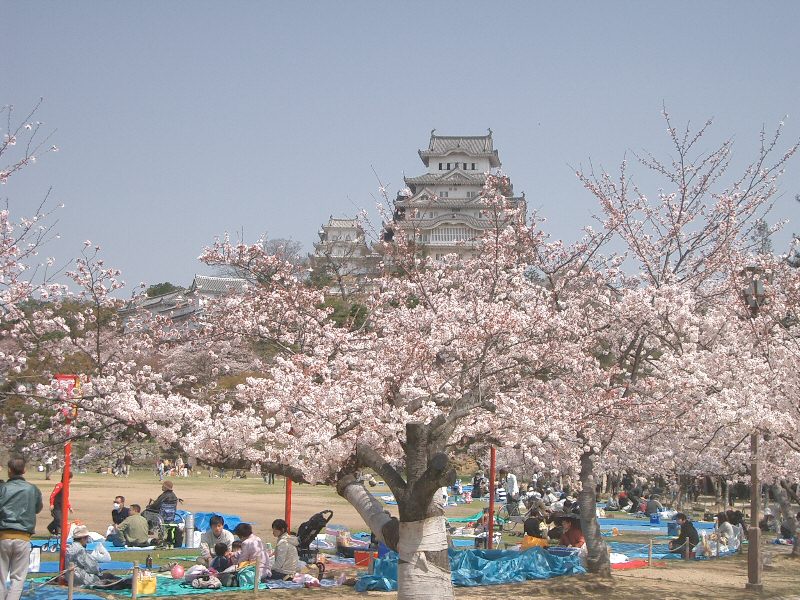
Hanami花見
The Japanese tradition of gathering to enjoy cherry blossoms in spring
🇯🇵 Japan and 7 more · Custom, Jan to May
Decoration
Hanami花見
The Japanese tradition of gathering to enjoy cherry blossoms in spring
🇯🇵 Japan and 7 more · Custom, Jan to May
 Decoration
Sōgetsu草月流
A modern school of Japanese ikebana open to all materials and styles
🇯🇵 Japan · Arrangement
Decoration
Sōgetsu草月流
A modern school of Japanese ikebana open to all materials and styles
🇯🇵 Japan · Arrangement