
Cosmos
Tall daisy-like flowers grown in gardens and meadows
Cosmos is a group of flowering plants in the daisy family, found wild from the United States to Argentina and widely grown as ornamentals. These annual or perennial herbs have feathery leaves and daisy-like flower heads in a range of colors. Some species are also eaten in salads in Southeast Asia.
- Cosmos flowers are native from the United States to northern Argentina.
- Some species are eaten raw in salads in Southeast Asia.
- Cosmos was introduced to South Africa during the Anglo-Boer War.
- The genus includes over 35 species and many garden cultivars.
What does Cosmos look like?
Cosmos plants are annual or perennial herbs that grow between 0.3 and 2 metres tall. Their leaves are either simple or finely divided, arranged in pairs on the stem. The flowers form a central disc surrounded by a ring of broad petals, much like a daisy. The color of the flowers varies widely across the different species and cultivated varieties, making them popular in gardens for their bright, jewel-like appearance.
Where does Cosmos come from?
Cosmos is native to scrub and meadowland throughout the Americas, stretching from Colorado and Missouri in the United States, through Mexico (where most species are found), Central America, and as far south as northern Argentina. The genus was later introduced to other regions, such as the high plains of eastern South Africa, where it spread after contaminated horsefeed was brought during the Anglo-Boer War.
When and how Cosmos blooms
Cosmos flowers grow from seed and thrive in open, sunny spots with well-drained soil. They bloom in a variety of climates, depending on the species, and are often grown as annuals in gardens. The plants produce their daisy-like flower heads on tall, slender stems, and many hybrids and cultivars have been developed for ornamental use.


How Cosmos is used
Cosmos is widely planted as an ornamental in gardens for its attractive flowers. In Maritime Southeast Asia, especially in Malay and Sundanese cuisine, the leaves and young shoots of Cosmos caudatus and C. sulphureus are eaten raw in salads called ulam and lalab, served as appetizers. Some species have also become part of the wild flora in places where they have been introduced.
Kinds of Cosmos
There are at least 35 species of Cosmos, with the highest diversity in Mexico. Gardeners have selected many hybrids and cultivars for their varied flower colors and forms. Some species, like Cosmos bipinnatus, have become naturalized outside their native range, especially in North America and South Africa.
What Cosmos means
The name Cosmos comes from Greek, possibly referring to the orderly arrangement of the flower parts or to their jewel-like colors. While not tied to a particular symbolism in the sources, Cosmos is valued for its beauty in gardens and its use as an edible herb in Southeast Asian salads. Its spread to new continents is linked to historical events such as the Anglo-Boer War.
Questions people ask about Cosmos
Where does Cosmos come from?
Cosmos is native to the Americas, ranging from the United States through Mexico and Central America to northern Argentina. It has also been introduced to other regions, such as South Africa.
What does a Cosmos flower look like?
Cosmos flowers have a central disc surrounded by a ring of broad petals, similar to daisies. The plants are tall and slender, with leaves that can be simple or finely divided.
Are Cosmos flowers edible?
Yes, the leaves and young shoots of Cosmos caudatus and C. sulphureus are eaten raw in salads in Maritime Southeast Asia, such as in Malay ulam and Sundanese lalab.
How is Cosmos used in gardens?
Cosmos is widely grown as an ornamental plant for its bright, daisy-like flowers. Many hybrids and cultivars are available for garden use.
Does Cosmos have any special meaning or symbolism?
The sources do not mention any particular symbolism, but the name comes from Greek, possibly referring to the flower's orderly structure or jewel-like colors.
Good reading and sources
- Encyclopaedia BritannicaArticle
- USDA Plants DatabaseUS Department of Agriculture, Article
- Plants of the World OnlineRoyal Botanic Gardens, Kew, Plant database
- Where it has been recordedGBIF, Plant database
- Sightings and photos by naturalistsiNaturalist, Plant database
- Cosmos (plant) on WikipediaEncyclopedia
- More photos on Wikimedia CommonsPhotos
- Wikidata recordOpen data
The facts on this page come from the Wikipedia article "Cosmos (plant)", written by its contributors and used under the CC BY-SA 4.0 licence, and from its Wikidata record (CC0). Phool rewrote the text in its own words, with AI assistance, and compares every page with the article to make sure no passage is copied. It may be reused under the same CC BY-SA 4.0 licence with a link back.
It may contain mistakes. It is not medical or foraging advice: many flowers are poisonous, and traditional uses are reported, not recommended. If something is wrong, tell us. Last refreshed 2026-10-03.
Others in the family Asteraceae
The whole family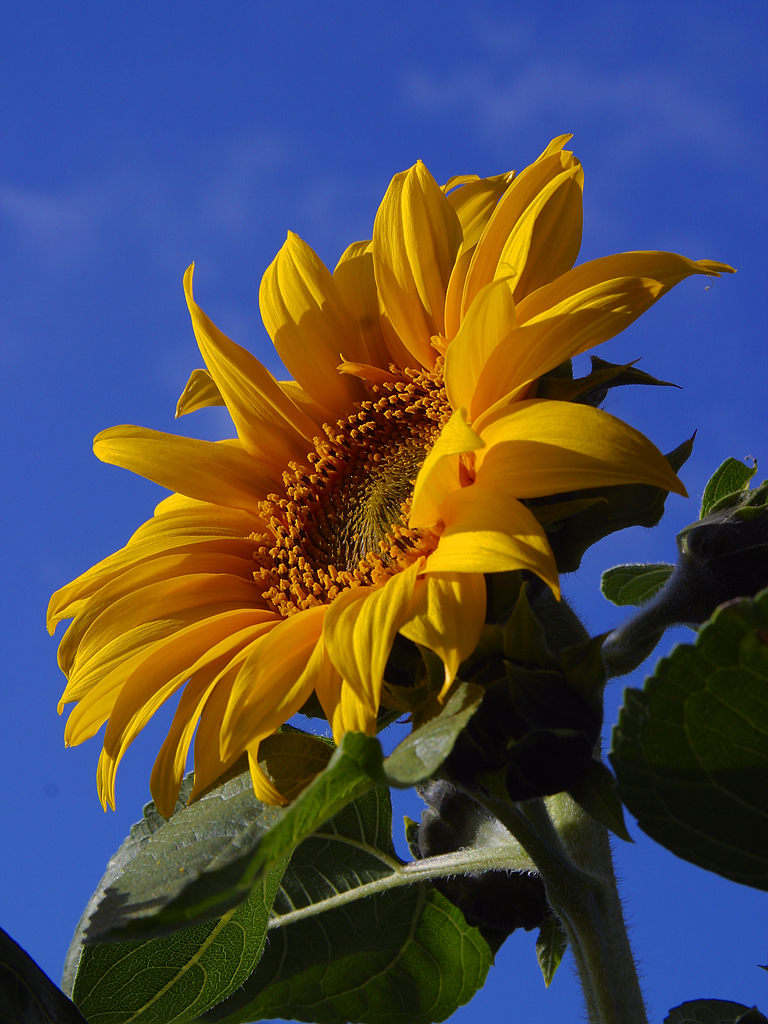 Common sunflowerHelianthus annuus
A tall annual plant grown for its large yellow flower heads and edible seeds
🇨🇦 Canada and 4 more · Wildflower
Common sunflowerHelianthus annuus
A tall annual plant grown for its large yellow flower heads and edible seeds
🇨🇦 Canada and 4 more · Wildflower
 Asteraceae
The vast family of daisies, asters, and sunflowers with star-like flower heads
Asteraceae · Wildflower
Asteraceae
The vast family of daisies, asters, and sunflowers with star-like flower heads
Asteraceae · Wildflower
 DandelionTaraxacum
A yellow-flowered perennial found in fields, lawns, and gardens worldwide
Taraxacum · Wildflower
DandelionTaraxacum
A yellow-flowered perennial found in fields, lawns, and gardens worldwide
Taraxacum · Wildflower
 Dahlia
A bushy perennial with tuberous roots and bright, star-shaped blooms
🇲🇽 Mexico and 1 more · Garden flower
Dahlia
A bushy perennial with tuberous roots and bright, star-shaped blooms
🇲🇽 Mexico and 1 more · Garden flower
More from the United States
All the flowers of the United States PeachPrunus persica
A flowering fruit tree from China, grown for its pink blossoms and sweet fruit
🇨🇳 China and 7 more · Flowering tree
PeachPrunus persica
A flowering fruit tree from China, grown for its pink blossoms and sweet fruit
🇨🇳 China and 7 more · Flowering tree
 AlmondPrunus amygdalus
A Mediterranean tree grown for its fragrant spring flowers and edible seeds
🇮🇷 Iran and 6 more · Flowering tree
AlmondPrunus amygdalus
A Mediterranean tree grown for its fragrant spring flowers and edible seeds
🇮🇷 Iran and 6 more · Flowering tree
 CactusCactaceae
Succulent plants with spines, native to the Americas
🇲🇽 Mexico and 7 more · Wildflower
CactusCactaceae
Succulent plants with spines, native to the Americas
🇲🇽 Mexico and 7 more · Wildflower
 Chrysanthemum菊花
Autumn-blooming flower with thousands of varieties, cherished in East Asia and beyond
🇨🇳 China and 6 more · Wildflower
Chrysanthemum菊花
Autumn-blooming flower with thousands of varieties, cherished in East Asia and beyond
🇨🇳 China and 6 more · Wildflower