
Crocus alatavicus
A white-flowered crocus from the mountains of Central Asia and Xinjiang
Crocus alatavicus is a perennial plant from the crocus family, native to mountain regions of Kazakhstan, Kyrgyzstan, Tajikistan, Uzbekistan, and Xinjiang. It grows from a corm and produces white flowers with gray to black-violet spots and yellow throats, blooming from late winter to spring.
- Native to mountain regions of Central Asia and Xinjiang
- White flowers with gray to black-violet spots and yellow throats
- Blooms from February to May depending on altitude
- Grows from a corm and is winter hardy
- Often found among stones and scrub in the wild
What does Crocus alatavicus look like?
Crocus alatavicus is a small perennial plant that grows from a rounded corm, a swollen underground stem. Its narrow leaves, up to 20 per plant, are short when the plant is in flower. The flowers are white with gray to black-violet spots on the outer petals. The throat and anthers are yellow, and the stigma ranges from yellow to orange. This crocus blooms in late winter or early spring, often while snow is still on the ground.
Where does Crocus alatavicus come from?
This crocus is native to the mountainous regions of Central Asia, including Kazakhstan, Kyrgyzstan, Tajikistan, Uzbekistan, and the Xinjiang region of China. It grows wild among stones and in scrubby areas, sometimes alongside Colchicum luteum. The species is adapted to cold winters and dry summers, which is typical of its native mountain habitats.
When and how Crocus alatavicus blooms
Crocus alatavicus flowers from February to May, depending on the altitude where it grows. It emerges from a corm, which stores energy underground. The plant prefers well-drained soil and requires dry conditions during the summer. In cultivation, it is often grown in bulb frames to protect it from excess moisture, and it is hardy in cold climates.

How Crocus alatavicus is used
There are no traditional or cultural uses reported for Crocus alatavicus in the sources. It is sometimes grown by gardeners who collect crocus species, valued for its early flowering and ability to survive cold winters.
Kinds of Crocus alatavicus
No named varieties or cultivars are mentioned in the sources. The species is notable for its spotted outer petals and the yellow to orange stigma, which can vary in shade.
What Crocus alatavicus means
The sources do not mention any symbolism, emblem status, or cultural associations for Crocus alatavicus. Its main significance is as a wildflower of Central Asian mountains and as a hardy species for specialist gardeners.
Where Crocus alatavicus is used and seen

Questions people ask about Crocus alatavicus
Where does Crocus alatavicus come from?
Crocus alatavicus is native to the mountains of Kazakhstan, Kyrgyzstan, Tajikistan, Uzbekistan, and the Xinjiang region of China.
What does Crocus alatavicus look like?
It has white flowers with gray to black-violet spots on the outside, yellow throats and anthers, and a yellow to orange stigma. The leaves are narrow and short during flowering.
When does Crocus alatavicus flower?
It flowers from February to May, depending on the altitude where it grows.
Is Crocus alatavicus used for anything?
The sources do not mention any traditional or cultural uses. It is grown by gardeners for its early blooms and hardiness.
How hardy is Crocus alatavicus?
It is winter hardy to USDA zone 4 and can survive cold mountain winters, provided the soil is dry in summer.
Good reading and sources
- Plants of the World OnlineRoyal Botanic Gardens, Kew, Plant database
- Where it has been recordedGBIF, Plant database
- Sightings and photos by naturalistsiNaturalist, Plant database
- Crocus alatavicus on WikipediaEncyclopedia
- More photos on Wikimedia CommonsPhotos
- Wikidata recordOpen data
The facts on this page come from the Wikipedia article "Crocus alatavicus", written by its contributors and used under the CC BY-SA 4.0 licence, and from its Wikidata record (CC0). Phool rewrote the text in its own words, with AI assistance, and compares every page with the article to make sure no passage is copied. It may be reused under the same CC BY-SA 4.0 licence with a link back.
It may contain mistakes. It is not medical or foraging advice: many flowers are poisonous, and traditional uses are reported, not recommended. If something is wrong, tell us. Last refreshed 2026-10-03.
Others in the family Iridaceae
The whole family Gladiolus
Tall, showy flower spikes grown from corms, known as sword lilies
Gladiolus · Garden flower
Gladiolus
Tall, showy flower spikes grown from corms, known as sword lilies
Gladiolus · Garden flower
 Iris
A large group of perennial flowers with striking, six-lobed blooms
Iris · Wildflower
Iris
A large group of perennial flowers with striking, six-lobed blooms
Iris · Wildflower
 Crocus
Small corm-grown flowers in white, yellow, orange or purple
🇹🇷 Turkey and 7 more · Wildflower
Crocus
Small corm-grown flowers in white, yellow, orange or purple
🇹🇷 Turkey and 7 more · Wildflower
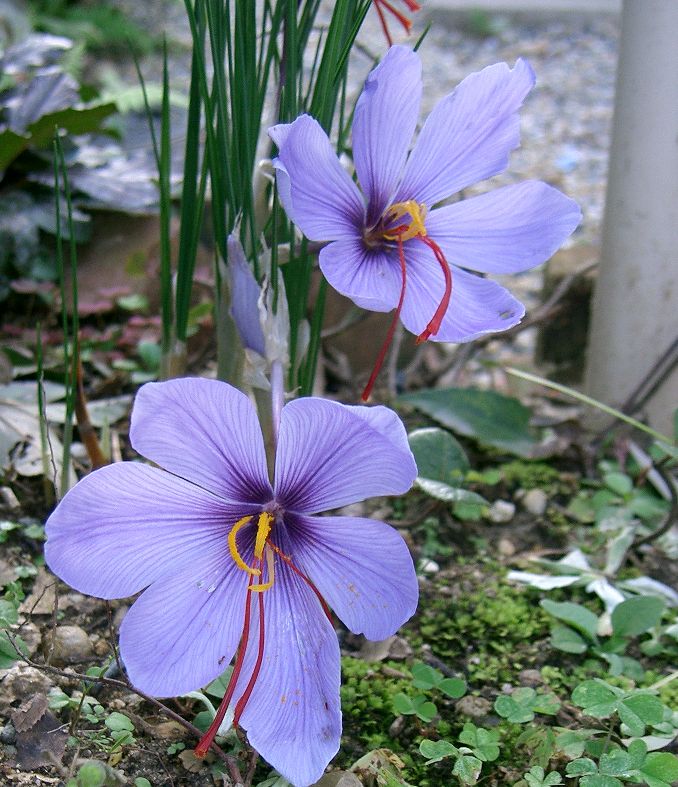 Saffron crocusCrocus sativus
The purple autumn flower whose red stigmas yield the spice saffron
🇨🇳 China and 1 more · Garden flower
Saffron crocusCrocus sativus
The purple autumn flower whose red stigmas yield the spice saffron
🇨🇳 China and 1 more · Garden flower
More from Kazakhstan
All the flowers of Kazakhstan BirchBetula
Slender trees with papery bark found across the northern world
🇨🇳 China and 7 more · Wildflower
BirchBetula
Slender trees with papery bark found across the northern world
🇨🇳 China and 7 more · Wildflower
 ApricotPrunus armeniaca
A small fruit tree with early white to pink blossoms and golden-orange fruit
🇨🇳 China and 6 more · Flowering tree
ApricotPrunus armeniaca
A small fruit tree with early white to pink blossoms and golden-orange fruit
🇨🇳 China and 6 more · Flowering tree
 SafflowerCarthamus tinctorius
A thistle-like annual grown for oil, dye, and as a saffron substitute
🇨🇳 China and 7 more · Wildflower
SafflowerCarthamus tinctorius
A thistle-like annual grown for oil, dye, and as a saffron substitute
🇨🇳 China and 7 more · Wildflower
 Sweet VioletViola odorata
A scented violet with edible leaves and flowers, native to Eurasia
🇨🇳 China and 7 more · Wildflower
Sweet VioletViola odorata
A scented violet with edible leaves and flowers, native to Eurasia
🇨🇳 China and 7 more · Wildflower