
Echinopsis
South American cacti with large, showy flowers and spiny stems
Echinopsis is a group of cacti from South America, known for their large, beautiful flowers that grow on mostly small, rounded stems covered in dense spines. These cacti can range from small, ball-shaped plants to larger, tree-like forms, and are often grown for their striking blooms.
- Native to South America, including Argentina and Bolivia
- Known for large, beautiful flowers on spiny stems
- Includes about 80 accepted species
- Grows in desert grasslands and rocky hillsides
- Many hybrids exist between closely related species
What does Echinopsis look like?
Echinopsis cacti are known for their striking appearance, with most species forming small, rounded or slightly elongated stems densely covered in spines. Some types grow much larger and take on a tree-like shape. Their flowers are large and often considered beautiful, growing from the tops or sides of the stems. The plant's name refers to its hedgehog or sea-urchin-like look, thanks to the spiny covering.
Where does Echinopsis come from?
Echinopsis is native to South America, found in countries such as Argentina, Bolivia, Peru, Brazil, Paraguay, Uruguay, and Chile. These cacti grow wild in desert grasslands, shrublands, and rocky hillsides with sandy or gravelly soil. Over time, the genus has absorbed several other groups of cacti, leading to changes in its classification. The name Echinopsis comes from Greek words meaning 'hedgehog' or 'sea urchin' and 'appearance.'
When and how Echinopsis blooms
Echinopsis cacti grow best in well-drained, sandy or gravelly soils, often on hillsides or in rocky crevices. They do well in pots with light loam mixed with leaf mould and some limestone to keep the soil open. The plants have a growing season and a resting season, similar to other cacti. Many hybrids exist, created by crossing closely related species.


How Echinopsis is used
People often grow Echinopsis as ornamental plants, both indoors and outdoors, for their large and attractive flowers. Their unusual shapes and spiny forms make them popular in succulent collections and gardens. They are not known for use in ceremonies or as emblems, but are valued for their decorative qualities.
Kinds of Echinopsis
There are about 80 accepted species of Echinopsis, ranging from small, globular forms to large, columnar or tree-like types. The genus has absorbed several others, such as Trichocereus and Lobivia, and many hybrids are available, often bred for their flowers. Some species have been reclassified over time as genetic studies have clarified their relationships.
What Echinopsis means
Echinopsis does not have a strong role in symbolism or tradition, but it is well known among cactus enthusiasts for its impressive flowers and wide variety of forms. The genus has been subject to much taxonomic debate, with many changes in classification due to similarities in appearance and pollination. It is a staple in cactus collections and gardens.
Questions people ask about Echinopsis
Where does Echinopsis come from?
Echinopsis is native to South America, found in countries such as Argentina, Bolivia, Peru, Brazil, Paraguay, Uruguay, and Chile. It grows in desert grasslands, shrublands, and rocky areas.
What does Echinopsis look like?
Most Echinopsis species have small, rounded or slightly elongated stems covered in dense spines. Some grow larger and become tree-like. They are best known for their large, showy flowers.
How is Echinopsis used?
Echinopsis is mainly grown as an ornamental plant for its striking flowers and unusual shapes. It is popular in succulent collections and gardens.
Are there different types of Echinopsis?
Yes, there are about 80 accepted species, ranging from small, globular cacti to larger, columnar or tree-like forms. Many hybrids have also been developed.
What does Echinopsis mean?
The name Echinopsis comes from Greek words for 'hedgehog' or 'sea urchin' and 'appearance,' referring to the plant's spiny look.
Good reading and sources
- Encyclopaedia BritannicaArticle
- USDA Plants DatabaseUS Department of Agriculture, Article
- Plants of the World OnlineRoyal Botanic Gardens, Kew, Plant database
- Where it has been recordedGBIF, Plant database
- Sightings and photos by naturalistsiNaturalist, Plant database
The facts on this page come from the Wikipedia article "Echinopsis", written by its contributors and used under the CC BY-SA 4.0 licence, and from its Wikidata record (CC0). Phool rewrote the text in its own words, with AI assistance, and compares every page with the article to make sure no passage is copied. It may be reused under the same CC BY-SA 4.0 licence with a link back.
It may contain mistakes. It is not medical or foraging advice: many flowers are poisonous, and traditional uses are reported, not recommended. If something is wrong, tell us. Last refreshed 2026-10-03.
Others in the family Cactaceae
The whole family Prickly pearOpuntia
Cactus with flat pads and edible fruit, native to the Americas
🇲🇽 Mexico and 7 more · Wildflower
Indian fig opuntiaOpuntia ficus-indica
A large, spiny cactus grown for its sweet fruit and edible pads
🇲🇽 Mexico and 7 more · Wildflower
Prickly pearOpuntia
Cactus with flat pads and edible fruit, native to the Americas
🇲🇽 Mexico and 7 more · Wildflower
Indian fig opuntiaOpuntia ficus-indica
A large, spiny cactus grown for its sweet fruit and edible pads
🇲🇽 Mexico and 7 more · Wildflower
 Mammillaria
A diverse group of small, rounded cacti with funnel-shaped flowers
🇲🇽 Mexico and 5 more · Wildflower
Mammillaria
A diverse group of small, rounded cacti with funnel-shaped flowers
🇲🇽 Mexico and 5 more · Wildflower
 Disocactus ackermannii
A scarlet-flowered epiphytic cactus from southern Mexico's cloud forests
🇲🇽 Mexico and 1 more · Wildflower
Disocactus ackermannii
A scarlet-flowered epiphytic cactus from southern Mexico's cloud forests
🇲🇽 Mexico and 1 more · Wildflower
More from Argentina
All the flowers of Argentina CactusCactaceae
Succulent plants with spines, native to the Americas
🇲🇽 Mexico and 7 more · Wildflower
CactusCactaceae
Succulent plants with spines, native to the Americas
🇲🇽 Mexico and 7 more · Wildflower
 Eucalyptus
The tall, aromatic trees and shrubs known as gum trees or eucalypts
🇦🇺 Australia and 7 more · Flowering tree
Eucalyptus
The tall, aromatic trees and shrubs known as gum trees or eucalypts
🇦🇺 Australia and 7 more · Flowering tree
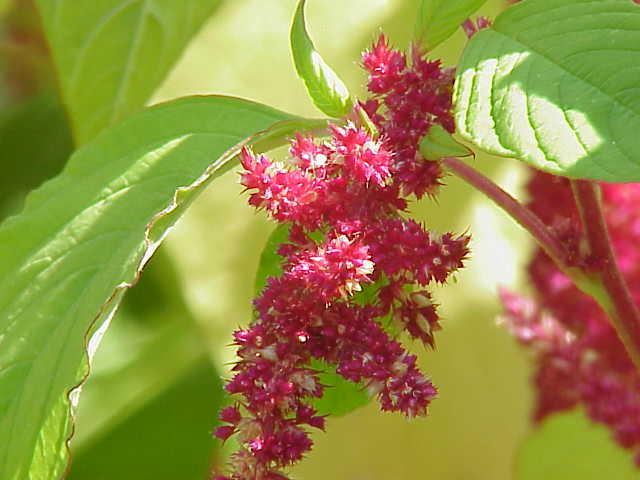 AmaranthAmaranthus
A tall, colourful plant grown for its flowers, leaves and edible seeds
🇲🇽 Mexico and 7 more · Wildflower
AmaranthAmaranthus
A tall, colourful plant grown for its flowers, leaves and edible seeds
🇲🇽 Mexico and 7 more · Wildflower
 Passion fruitPassiflora edulis
A tropical vine grown for its sweet-sour, aromatic fruit
🇧🇷 Brazil and 6 more · Climber
Passion fruitPassiflora edulis
A tropical vine grown for its sweet-sour, aromatic fruit
🇧🇷 Brazil and 6 more · Climber