
Freesia
A fragrant corm-grown flower with funnel-shaped blooms in many colours
Freesia is a genus of herbaceous perennials that grow from corms and produce slender stems with one-sided spikes of six-petalled flowers. Native to parts of eastern and southern Africa, its cultivated hybrids are prized for their strong scent and vivid colours, and are widely used in wedding bouquets and floristry.
- Named after German botanist Friedrich Freese
- Grows from a corm, not a true bulb
- Hybrid freesias come from 19th-century crosses
- Scent used in 1984’s Antonia’s Flowers perfume
- Former genus Anomatheca now part of Freesia
What does Freesia look like?
Freesias grow from small conical corms and send up narrow leaves and slender stems. Their flowers have six petals and form loose, one-sided spikes. Most cultivated types have narrowly funnel-shaped, strongly scented blooms, though some species like Freesia laxa bear flat, unscented flowers.
Where does Freesia come from?
The genus Freesia was first described in 1866 and named after German physician Friedrich Freese. It originates in Africa, with most wild species found in South Africa’s Cape Provinces. Several species once classified under Anomatheca are now included in Freesia.
When and how Freesia blooms
Garden freesias are mostly hybrids developed in the 1800s from Freesia refracta and Freesia leichtlinii, later improved with genes from Freesia corymbosa. They grow from corms and can also be raised from seed. Professional production today centers in the Netherlands.


How Freesia is used
Their intensely fragrant flowers are popular in wedding bouquets and as cut flowers. Because the scent cannot be captured by traditional solvent extraction, modern perfumery used headspace analysis of live blooms to recreate it, first appearing in Antonia’s Flowers (1984).
Kinds of Freesia
Wild species vary in form: Freesia grandiflora grows across central and southern Africa, while Freesia laxa has flat red or pink flowers and has naturalized in places like Australia and Argentina. Cultivated types are mostly tetraploid hybrids with larger, upright, fragrant blooms.
What Freesia means
Though not tied to specific religious rites, freesias are valued in Western floral culture for their perfume and colour range. They symbolize trust and innocence in some traditions and remain a staple of the international cut-flower trade.
Where Freesia is used and seen


Where to see Freesia

Questions people ask about Freesia
Where do freesias originally come from?
Freesias are native to eastern and southern Africa, especially the Cape Provinces of South Africa, with some species ranging as far north as Kenya and Tanzania.
Why are freesias so fragrant?
Many cultivated freesias have a strong, sweet scent because they descend from naturally fragrant species like Freesia refracta and Freesia leichtlinii.
Are all freesias the same shape?
No. Most garden freesias have funnel-shaped flowers, but species like Freesia laxa have flat, open blooms and little or no scent.
How are freesia scents used in perfumes?
Their fragrance cannot be extracted chemically, so in the 1980s scientists analyzed live blooms using headspace technology to replicate the scent for perfumery.
What are freesias used for?
They are mainly used in wedding bouquets, as cut flowers, and in home decoration. Their scent has also been recreated for use in fine fragrance.
Good reading and sources
- Encyclopaedia BritannicaArticle
- USDA Plants DatabaseUS Department of Agriculture, Article
- Plants of the World OnlineRoyal Botanic Gardens, Kew, Plant database
- Where it has been recordedGBIF, Plant database
- Sightings and photos by naturalistsiNaturalist, Plant database
The facts on this page come from the Wikipedia article "Freesia", written by its contributors and used under the CC BY-SA 4.0 licence, and from its Wikidata record (CC0). Phool rewrote the text in its own words, with AI assistance, and compares every page with the article to make sure no passage is copied. It may be reused under the same CC BY-SA 4.0 licence with a link back.
It may contain mistakes. It is not medical or foraging advice: many flowers are poisonous, and traditional uses are reported, not recommended. If something is wrong, tell us. Last refreshed 2026-10-03.
Others in the family Iridaceae
The whole family Gladiolus
Tall, showy flower spikes grown from corms, known as sword lilies
Gladiolus · Garden flower
Gladiolus
Tall, showy flower spikes grown from corms, known as sword lilies
Gladiolus · Garden flower
 Iris
A large group of perennial flowers with striking, six-lobed blooms
Iris · Wildflower
Iris
A large group of perennial flowers with striking, six-lobed blooms
Iris · Wildflower
 Crocus
Small corm-grown flowers in white, yellow, orange or purple
🇹🇷 Turkey and 7 more · Wildflower
Crocus
Small corm-grown flowers in white, yellow, orange or purple
🇹🇷 Turkey and 7 more · Wildflower
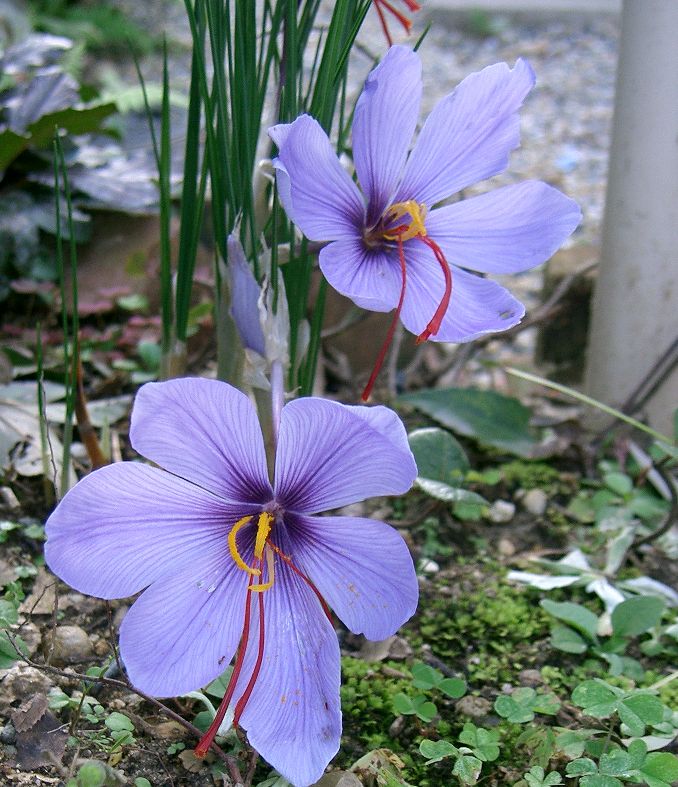 Saffron crocusCrocus sativus
The purple autumn flower whose red stigmas yield the spice saffron
🇨🇳 China and 1 more · Garden flower
Saffron crocusCrocus sativus
The purple autumn flower whose red stigmas yield the spice saffron
🇨🇳 China and 1 more · Garden flower
More from South Africa
All the flowers of South Africa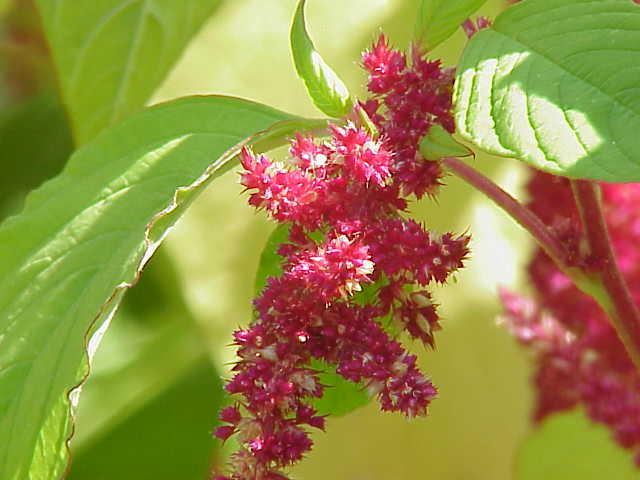 AmaranthAmaranthus
A tall, colourful plant grown for its flowers, leaves and edible seeds
🇲🇽 Mexico and 7 more · Wildflower
AmaranthAmaranthus
A tall, colourful plant grown for its flowers, leaves and edible seeds
🇲🇽 Mexico and 7 more · Wildflower
 Acacia
Shrubs and trees with golden or cream puffball flowers, native mostly to Australia
🇦🇺 Australia and 6 more · Wildflower
Acacia
Shrubs and trees with golden or cream puffball flowers, native mostly to Australia
🇦🇺 Australia and 6 more · Wildflower
 Sensitive PlantMimosa pudica
A touch-sensitive plant whose leaves fold up when disturbed
🇧🇷 Brazil and 8 more · Wildflower
Sensitive PlantMimosa pudica
A touch-sensitive plant whose leaves fold up when disturbed
🇧🇷 Brazil and 8 more · Wildflower
 Prickly pearOpuntia
Cactus with flat pads and edible fruit, native to the Americas
🇲🇽 Mexico and 7 more · Wildflower
Prickly pearOpuntia
Cactus with flat pads and edible fruit, native to the Americas
🇲🇽 Mexico and 7 more · Wildflower