
Chilean mitre flower
Mitraria coccinea, family Gesneriaceae
A scarlet-orange tubular-flowered climber from southern South America
This woody vine climbs trees or scrambles on the ground in cool, damp climates. Native to central and southern Chile and parts of Argentina, it bears vivid scarlet-orange tubular blooms in late spring and summer and is grown in gardens like Arduaine in Scotland.
- Only species in the genus Mitraria
- Tubular scarlet-orange flowers
- Climbs trees up to 7.6 m tall
- Native to Chile and Argentina
- Blooms in late spring and summer
What does Chilean mitre flower look like?
Chilean mitre flower is a woody vine with bright scarlet-orange tubular blossoms. The flowers appear in clusters and have a narrow, elongated shape typical of many nectar-feeding pollinator plants. It grows by climbing tree trunks or spreading along the ground in shaded, moist spots.
Where does Chilean mitre flower come from?
It grows wild in the temperate forests of central and southern Chile and extends into southern Argentina. Though native to this region, it has been introduced to gardens in cooler, wetter climates elsewhere, such as western Scotland, where it thrives in sheltered woodland settings.
When and how Chilean mitre flower blooms
The plant blooms in late spring through summer. It prefers cool, humid conditions and well-drained soil, often growing beneath tree canopies. In cultivation, it climbs supports or trees and can reach over 7 metres high in ideal sites like Arduaine Garden.
How Chilean mitre flower is used
Gardeners grow it for its showy flowers in shaded, moist areas. It is used as an ornamental climber in woodland gardens, especially in regions with mild summers and ample rainfall, where it adds colour without needing full sun.
Questions people ask about Chilean mitre flower
Where does Chilean mitre flower come from?
It is native to central and southern Chile and southern Argentina, where it grows in cool, moist forests.
What does the flower look like?
It has vivid scarlet-orange tubular flowers that hang in clusters, appearing in late spring and summer.
How is it grown in gardens?
It is cultivated in cool, damp, shaded gardens where it climbs trees or scrambles over the ground, reaching several metres high.
Is it part of any cultural traditions?
The sources do not mention any religious, ceremonial or symbolic uses beyond ornamental gardening.
Good reading and sources
- Mitraria coccineaRoyal Horticultural Society, Article
- Plants of the World OnlineRoyal Botanic Gardens, Kew, Plant database
- Where it has been recordedGBIF, Plant database
- Sightings and photos by naturalistsiNaturalist, Plant database
The facts on this page come from the Wikipedia article "Mitraria", written by its contributors and used under the CC BY-SA 4.0 licence, and from its Wikidata record (CC0). Phool rewrote the text in its own words, with AI assistance, and compares every page with the article to make sure no passage is copied. It may be reused under the same CC BY-SA 4.0 licence with a link back.
It may contain mistakes. It is not medical or foraging advice: many flowers are poisonous, and traditional uses are reported, not recommended. If something is wrong, tell us. Last refreshed 2026-10-03.
Others in the family Gesneriaceae
The whole family HaberleaHaberlea rhodopensis
A rare Balkan flower that revives after years without water
🇧🇬 Bulgaria and 1 more · Wildflower
HaberleaHaberlea rhodopensis
A rare Balkan flower that revives after years without water
🇧🇬 Bulgaria and 1 more · Wildflower
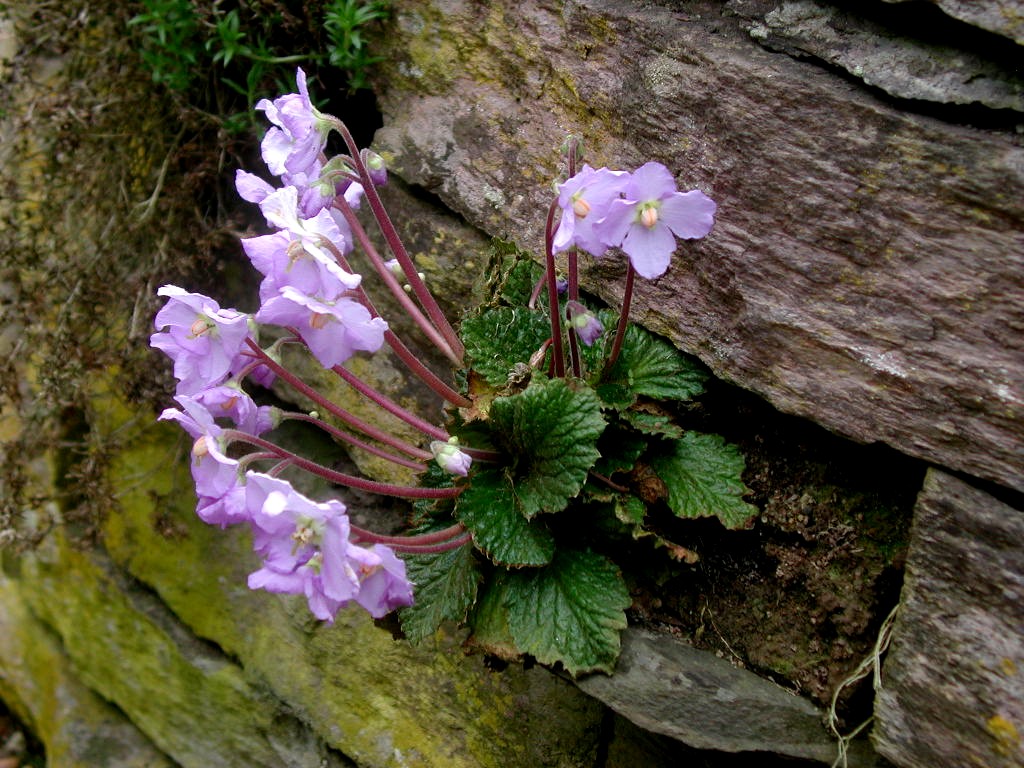 Ramonda nathaliaeНаталијина рамонда
A small Balkan flower that can survive drying out and revive with water
🇷🇸 Serbia and 2 more · Wildflower
Ramonda nathaliaeНаталијина рамонда
A small Balkan flower that can survive drying out and revive with water
🇷🇸 Serbia and 2 more · Wildflower
 African violetSaintpaulia
A small, velvety-leaved house plant with violet, blue or white flowers from East Africa
🇹🇿 Tanzania and 1 more · Wildflower
African violetSaintpaulia
A small, velvety-leaved house plant with violet, blue or white flowers from East Africa
🇹🇿 Tanzania and 1 more · Wildflower
 Brazilian gloxiniaSinningia speciosa
A tuberous houseplant with large, velvety flowers from Brazil
🇧🇷 Brazil and 1 more · Garden flower
Brazilian gloxiniaSinningia speciosa
A tuberous houseplant with large, velvety flowers from Brazil
🇧🇷 Brazil and 1 more · Garden flower
More from Chile
All the flowers of Chile CactusCactaceae
Succulent plants with spines, native to the Americas
🇲🇽 Mexico and 7 more · Wildflower
CactusCactaceae
Succulent plants with spines, native to the Americas
🇲🇽 Mexico and 7 more · Wildflower
 PoinsettiaEuphorbia pulcherrima
The red-bracted shrub of Christmas displays, native to Mexico and Central America
🇲🇽 Mexico and 8 more · Wildflower
PoinsettiaEuphorbia pulcherrima
The red-bracted shrub of Christmas displays, native to Mexico and Central America
🇲🇽 Mexico and 8 more · Wildflower
 MarigoldTagetes
A group of bright annual and perennial flowers known worldwide as marigolds
🇲🇽 Mexico and 7 more · Wildflower
MarigoldTagetes
A group of bright annual and perennial flowers known worldwide as marigolds
🇲🇽 Mexico and 7 more · Wildflower
 BromeliadsBromeliaceae
A family of tropical flowering plants from the Americas, including the pineapple
🇨🇱 Chile and 7 more · Wildflower
BromeliadsBromeliaceae
A family of tropical flowering plants from the Americas, including the pineapple
🇨🇱 Chile and 7 more · Wildflower