
Rebutia
Small, globular cacti from Bolivia and Argentina with large, showy flowers
Rebutia is a genus of small, round cacti native to Bolivia and Argentina. These plants are known for their colorful, relatively large flowers that often cover the plant, and are popular among growers for their easy care and abundant seed production.
- Native to Bolivia and Argentina
- Small, round cacti with large, colorful flowers
- Named after French cactus nurseryman Pierre Rebut
- Produces seeds that germinate easily around the parent plant
What does Rebutia look like?
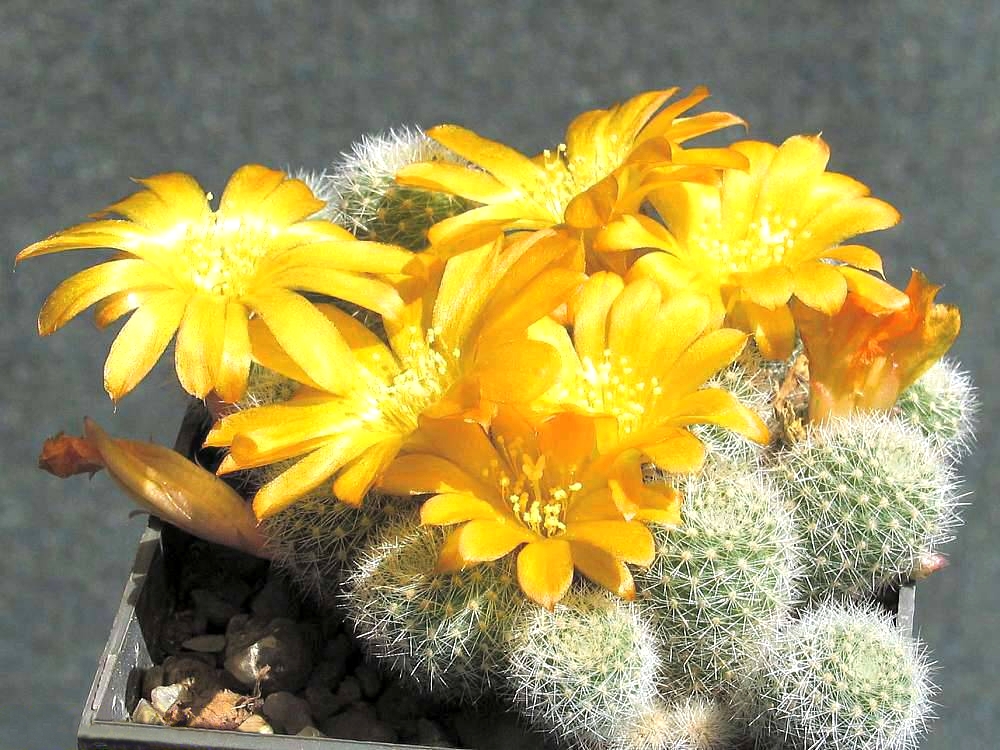
Rebutia are small, globular cacti that usually stay compact and low to the ground. Their bodies are covered in regularly arranged, small bumps called tubercles, rather than the ribs seen in many other cacti. The flowers are strikingly large compared to the plant’s size and often appear in bright, vivid colors, sometimes nearly hiding the cactus beneath. These cacti do not have a strong scent, and their tidy, rounded form makes them popular in collections.
Where does Rebutia come from?
Rebutia comes from the highlands of Bolivia and Argentina. The genus was named in 1895 for Pierre Rebut, a French cactus grower. Over time, the boundaries of the genus have shifted, with many plants once called Rebutia now placed in other genera, and vice versa. Today, only a few species are officially recognized under this name, reflecting ongoing changes in cactus classification.
When and how Rebutia blooms
Rebutia cacti flower freely, often producing a flush of blooms in favorable conditions. They are grown from seeds, which germinate easily around the parent plant. These cacti thrive in well-drained soil and need a dry rest period. Their compact size and readiness to flower make them suitable for pots, rock gardens, and collections.



How Rebutia is used
Rebutia is mainly grown as an ornamental plant, valued for its bright flowers and neat shape. It is popular with cactus enthusiasts and often found in home collections. The ease of growing from seed and the abundance of flowers make it a favorite for beginners and collectors alike.
Kinds of Rebutia
The number of recognized Rebutia species has changed over time. Many plants once listed as separate species are now considered varieties or forms of a few main types, or have been moved to other genera such as Aylostera and Weingartia. The type species is Rebutia minuscula, which has been in cultivation since the late 19th century.
What Rebutia means
Rebutia does not have a strong presence in folklore or symbolism, but it is well known among cactus growers for its beauty and ease of care. Its shifting classification reflects the complexity of cactus taxonomy and ongoing research in plant science.
Questions people ask about Rebutia
Where does Rebutia come from?
Rebutia is native to the highland regions of Bolivia and Argentina in South America.
What does a Rebutia cactus look like?
It is a small, globular cactus with regularly arranged tubercles and produces relatively large, colorful flowers.
How is Rebutia used?
Rebutia is mainly grown as an ornamental plant in home collections and gardens, valued for its bright flowers.
How many species of Rebutia are there?
As of 2024, only three species are officially recognized, though many varieties and forms exist.
Why has the classification of Rebutia changed?
The genus boundaries have shifted due to ongoing research and debate among botanists, with many former species now considered varieties or moved to other genera.
Good reading and sources
- USDA Plants DatabaseUS Department of Agriculture, Article
- Plants of the World OnlineRoyal Botanic Gardens, Kew, Plant database
- Where it has been recordedGBIF, Plant database
- Sightings and photos by naturalistsiNaturalist, Plant database
The facts on this page come from the Wikipedia article "Rebutia", written by its contributors and used under the CC BY-SA 4.0 licence, and from its Wikidata record (CC0). Phool rewrote the text in its own words, with AI assistance, and compares every page with the article to make sure no passage is copied. It may be reused under the same CC BY-SA 4.0 licence with a link back.
It may contain mistakes. It is not medical or foraging advice: many flowers are poisonous, and traditional uses are reported, not recommended. If something is wrong, tell us. Last refreshed 2026-10-03.
Others in the family Cactaceae
The whole family Prickly pearOpuntia
Cactus with flat pads and edible fruit, native to the Americas
🇲🇽 Mexico and 7 more · Wildflower
Indian fig opuntiaOpuntia ficus-indica
A large, spiny cactus grown for its sweet fruit and edible pads
🇲🇽 Mexico and 7 more · Wildflower
Prickly pearOpuntia
Cactus with flat pads and edible fruit, native to the Americas
🇲🇽 Mexico and 7 more · Wildflower
Indian fig opuntiaOpuntia ficus-indica
A large, spiny cactus grown for its sweet fruit and edible pads
🇲🇽 Mexico and 7 more · Wildflower
 Mammillaria
A diverse group of small, rounded cacti with funnel-shaped flowers
🇲🇽 Mexico and 5 more · Wildflower
Mammillaria
A diverse group of small, rounded cacti with funnel-shaped flowers
🇲🇽 Mexico and 5 more · Wildflower
 Disocactus ackermannii
A scarlet-flowered epiphytic cactus from southern Mexico's cloud forests
🇲🇽 Mexico and 1 more · Wildflower
Disocactus ackermannii
A scarlet-flowered epiphytic cactus from southern Mexico's cloud forests
🇲🇽 Mexico and 1 more · Wildflower
More from Bolivia
All the flowers of Bolivia CactusCactaceae
Succulent plants with spines, native to the Americas
🇲🇽 Mexico and 7 more · Wildflower
CactusCactaceae
Succulent plants with spines, native to the Americas
🇲🇽 Mexico and 7 more · Wildflower
 MarigoldTagetes
A group of bright annual and perennial flowers known worldwide as marigolds
🇲🇽 Mexico and 7 more · Wildflower
MarigoldTagetes
A group of bright annual and perennial flowers known worldwide as marigolds
🇲🇽 Mexico and 7 more · Wildflower
 BromeliadsBromeliaceae
A family of tropical flowering plants from the Americas, including the pineapple
🇨🇱 Chile and 7 more · Wildflower
BromeliadsBromeliaceae
A family of tropical flowering plants from the Americas, including the pineapple
🇨🇱 Chile and 7 more · Wildflower
 DogwoodCornus
Woody trees and shrubs with showy bracts and colorful berries
🇨🇳 China and 7 more · Wildflower
DogwoodCornus
Woody trees and shrubs with showy bracts and colorful berries
🇨🇳 China and 7 more · Wildflower