
Sea Campion
Silene uniflora, family Caryophyllaceae
A mat-forming white-flowered plant of Atlantic and Baltic coasts
Sea campion is a perennial plant with fleshy, grey-green leaves and solitary white flowers, found mainly along the coasts of Atlantic and Baltic Europe. It forms mats on coastal shingle, dunes, and strandlines, and is sometimes seen in mountainous areas near fresh water.
- Forms mats of grey-green, fleshy leaves on coastal shingle and dunes
- White flowers with five deeply notched petals and a bladder-like calyx
- Native to Atlantic and Baltic coasts of Europe, including the British Isles
- Has several subspecies adapted to different coastal regions
- Introduced to Germany, Argentina, and New Zealand
What does Sea Campion look like?
Sea campion is a low, mat-forming perennial with stems that spread outwards along the ground, reaching 10 to 40 cm. Its leaves are hairless, fleshy, and grey-green, coated with a natural wax. The plant produces solitary white flowers with five deeply notched petals and a distinctive inflated calyx (the outer part of the flower) that looks like a small bladder. Each flower contains three pistils and three stamens.
Where does Sea Campion come from?
Sea campion grows wild along the Atlantic and Baltic coasts of Europe, including Scandinavia, the British Isles, western France, northern Spain, Portugal, the Azores, Madeira, Canary Islands, and Iceland. It is adapted to maritime habitats, thriving on coastal shingle, dunes, and strandlines. The species was first described scientifically by Albrecht Wilhelm Roth in 1794, and its common name dates back to 1597. It has been introduced to places such as Germany, Argentina, and New Zealand.
When and how Sea Campion blooms
This plant is a long-lived perennial that establishes itself on stable coastal shingle, often where the ground has not shifted for several years. It can also be found in sandy dunes and at the edge of beaches. Sea campion grows from a thick main root and spreads by its stems, which may root as they go. It is sometimes grown in gardens for rockeries or coastal planting.


How Sea Campion is used
Sea campion is mainly valued for its role in stabilising coastal habitats and as a wildflower in naturalistic gardens. It is not widely used in decoration or ceremony, and there are no notable traditional uses recorded in the sources. Its mat-forming habit helps protect shingle and dune environments from erosion.
Kinds of Sea Campion
There are several subspecies of sea campion. Subsp. petraea is found in Sweden, subsp. thorei in southwest France (now extinct in Spain), and subsp. uniflora along Atlantic Europe, the Azores, and Madeira. Other subspecies are recognised by some sources, reflecting its wide and varied coastal range.
What Sea Campion means
Sea campion is a familiar sight along European coasts but does not have a strong presence in folklore, symbolism, or religious practice. Its main cultural value lies in its contribution to coastal ecosystems, where it is one of the first plants to colonise stable shingle and dunes.
Where Sea Campion is used and seen

Questions people ask about Sea Campion
Where does sea campion come from?
Sea campion is native to the Atlantic and Baltic coasts of Europe, including the British Isles, Scandinavia, western France, northern Spain, Portugal, the Azores, Madeira, Canary Islands, and Iceland.
What does sea campion look like?
It is a mat-forming perennial with hairless, grey-green fleshy leaves and solitary white flowers. The flowers have five deeply notched petals and an inflated calyx that looks like a small bladder.
How is sea campion used?
Sea campion is mainly valued for its role in stabilising coastal habitats and as a wildflower in gardens. There are no notable traditional or ceremonial uses recorded in the sources.
Are there different types of sea campion?
Yes, several subspecies are recognised, each adapted to different coastal regions, such as subsp. petraea in Sweden and subsp. uniflora in Atlantic Europe and nearby islands.
Does sea campion have any special meaning or symbolism?
The sources do not mention any special symbolism or cultural meaning for sea campion. Its main importance is ecological, as it helps stabilise coastal environments.
Good reading and sources
- USDA Plants DatabaseUS Department of Agriculture, Article
- Silene unifloraRoyal Horticultural Society, Article
- Plants of the World OnlineRoyal Botanic Gardens, Kew, Plant database
- Where it has been recordedGBIF, Plant database
- Sightings and photos by naturalistsiNaturalist, Plant database
- Silene uniflora on WikipediaEncyclopedia
- More photos on Wikimedia CommonsPhotos
- Wikidata recordOpen data
The facts on this page come from the Wikipedia article "Silene uniflora", written by its contributors and used under the CC BY-SA 4.0 licence, and from its Wikidata record (CC0). Phool rewrote the text in its own words, with AI assistance, and compares every page with the article to make sure no passage is copied. It may be reused under the same CC BY-SA 4.0 licence with a link back.
It may contain mistakes. It is not medical or foraging advice: many flowers are poisonous, and traditional uses are reported, not recommended. If something is wrong, tell us. Last refreshed 2026-10-03.
Others in the family Caryophyllaceae
The whole family Dianthus
A group of frilled, often pink, flowers grown in gardens and bouquets worldwide
Dianthus · Wildflower
CarnationDianthus caryophyllus
A fragrant flower with ruffled petals, grown worldwide for decoration and meaning
🇨🇳 China and 7 more · Garden flower
Dianthus
A group of frilled, often pink, flowers grown in gardens and bouquets worldwide
Dianthus · Wildflower
CarnationDianthus caryophyllus
A fragrant flower with ruffled petals, grown worldwide for decoration and meaning
🇨🇳 China and 7 more · Garden flower
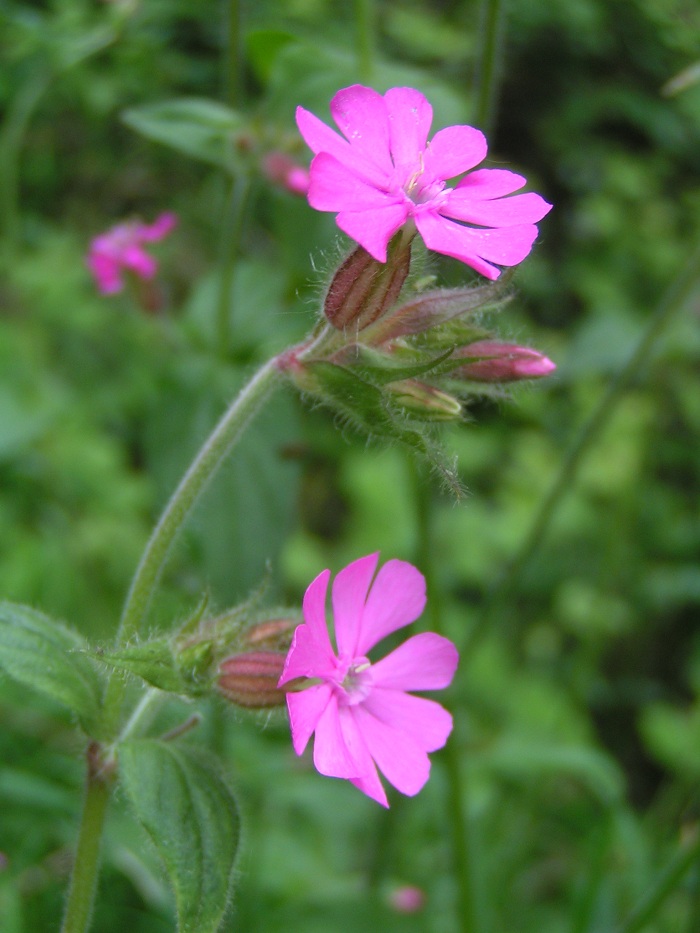 Red campionSilene dioica
A wild pink-red flower of woods and roadsides in northern and central Europe
🇮🇪 Ireland and 4 more · Wildflower
Red campionSilene dioica
A wild pink-red flower of woods and roadsides in northern and central Europe
🇮🇪 Ireland and 4 more · Wildflower
 Baby's breathGypsophila paniculata
A cloud of tiny white summer flowers used in bouquets and gardens
🇨🇳 China and 4 more · Herb or useful flower
Baby's breathGypsophila paniculata
A cloud of tiny white summer flowers used in bouquets and gardens
🇨🇳 China and 4 more · Herb or useful flower
More from the United Kingdom
All the flowers of the United Kingdom Narcissus
Spring-flowering bulbs with trumpet-shaped blooms in white, yellow, and orange
🇬🇧 United Kingdom and 7 more · Wildflower
Narcissus
Spring-flowering bulbs with trumpet-shaped blooms in white, yellow, and orange
🇬🇧 United Kingdom and 7 more · Wildflower
 HawthornCrataegus
A thorny shrub or tree with white or pink spring flowers and small edible fruits
🇮🇪 Ireland and 7 more · Wildflower
HawthornCrataegus
A thorny shrub or tree with white or pink spring flowers and small edible fruits
🇮🇪 Ireland and 7 more · Wildflower
 BlackthornPrunus spinosa
A spiny shrub with white spring flowers and tart blue-black fruit
🇬🇧 United Kingdom and 7 more · Wildflower
BlackthornPrunus spinosa
A spiny shrub with white spring flowers and tart blue-black fruit
🇬🇧 United Kingdom and 7 more · Wildflower
 Common poppyPapaver rhoeas
The vivid red wildflower of fields and remembrance
🇨🇳 China and 7 more · Wildflower
Common poppyPapaver rhoeas
The vivid red wildflower of fields and remembrance
🇨🇳 China and 7 more · Wildflower