
Symphyotrichum
A large group of North American asters with daisy-like flowers in many colours
Symphyotrichum is a genus of over 100 species of annual and perennial plants in the aster family. Most are native to North America, with a few found in Central and South America, the West Indies, and eastern Eurasia. Their daisy-like flowers can be white, pink, blue, or purple, and are grown in gardens or found wild.
- Over 100 species, mostly native to North America
- Flowers can be white, pink, blue, or purple with yellow centers
- Includes popular garden plants like New England and New York asters
- Some species grow in salt marshes or prairies
- One species is native to eastern Eurasia
What does Symphyotrichum look like?
Plants in the Symphyotrichum genus are mostly herbaceous, growing as annuals or perennials. Their flowers have a central cluster of small disc florets, usually yellow when young, surrounded by petal-like ray florets in shades of white, pink, blue, or purple. The leaves can change shape as the plant grows, and the plants vary in size and form depending on species and growing conditions. These asters often have a daisy-like look.
Where does Symphyotrichum come from?
Symphyotrichum was first described as a genus in 1833 by a German botanist, who separated it from the broader Aster group based on differences in flower structure. Most species are native to North America, especially the United States, Canada, and Mexico, but some are found in the West Indies, Central and South America, and one species grows in eastern Eurasia. Some species have been introduced to Europe as garden plants.
When and how Symphyotrichum blooms
Symphyotrichum species bloom at different times depending on the species and location. They grow in a range of habitats, from meadows and prairies to salt marshes. The plants are grown from seed or by dividing mature clumps. Their flowers attract pollinators, and the plants can adapt to various soil and moisture conditions.


How Symphyotrichum is used
Many Symphyotrichum species are grown in gardens for their colourful, late-season flowers. Some, like the New England and New York asters, are especially popular as ornamentals. In the wild, they are important for pollinators. Their daisy-like blooms make them a common sight in natural landscapes and cultivated beds.
Kinds of Symphyotrichum
The genus includes over 100 species and natural hybrids, divided into five subgenera. Notable species include New England aster (Symphyotrichum novae-angliae), New York aster (S. novi-belgii), and Georgia aster (S. georgianum). Some species are adapted to specific habitats, such as salt marshes or prairies, and there is considerable diversity in leaf shape and plant size.
What Symphyotrichum means
Symphyotrichum species, often called asters, are valued in gardens for their late-season colour. They were once grouped with Old World asters but are now recognized as a distinct North American lineage. Their daisy-like flowers are a familiar part of autumn landscapes and are sometimes used in floral arrangements.
Where Symphyotrichum is used and seen

Questions people ask about Symphyotrichum
Where does Symphyotrichum come from?
Most Symphyotrichum species are native to North America, especially the United States, Canada, and Mexico. Some are found in Central and South America, the West Indies, and one species grows in eastern Eurasia.
What do Symphyotrichum flowers look like?
They have daisy-like flower heads with a central cluster of yellow disc florets and surrounding petal-like ray florets in white, pink, blue, or purple. The plants can vary in size and leaf shape.
How are Symphyotrichum plants used?
Many species are grown in gardens for their colourful flowers, especially in late summer and autumn. They are also important wildflowers for pollinators and are sometimes used in floral arrangements.
What are some well-known Symphyotrichum species?
Notable species include the New England aster (Symphyotrichum novae-angliae), New York aster (S. novi-belgii), and Georgia aster (S. georgianum).
What does the name Symphyotrichum mean?
The name comes from Greek words meaning 'unite' and 'hair,' referring to features of the flower's pappus, though this trait is not found in all species.
Good reading and sources
- USDA Plants DatabaseUS Department of Agriculture, Article
- Plants of the World OnlineRoyal Botanic Gardens, Kew, Plant database
- Where it has been recordedGBIF, Plant database
- Sightings and photos by naturalistsiNaturalist, Plant database
- Symphyotrichum on WikipediaEncyclopedia
- More photos on Wikimedia CommonsPhotos
- Wikidata recordOpen data
The facts on this page come from the Wikipedia article "Symphyotrichum", written by its contributors and used under the CC BY-SA 4.0 licence, and from its Wikidata record (CC0). Phool rewrote the text in its own words, with AI assistance, and compares every page with the article to make sure no passage is copied. It may be reused under the same CC BY-SA 4.0 licence with a link back.
It may contain mistakes. It is not medical or foraging advice: many flowers are poisonous, and traditional uses are reported, not recommended. If something is wrong, tell us. Last refreshed 2026-10-03.
Others in the family Asteraceae
The whole family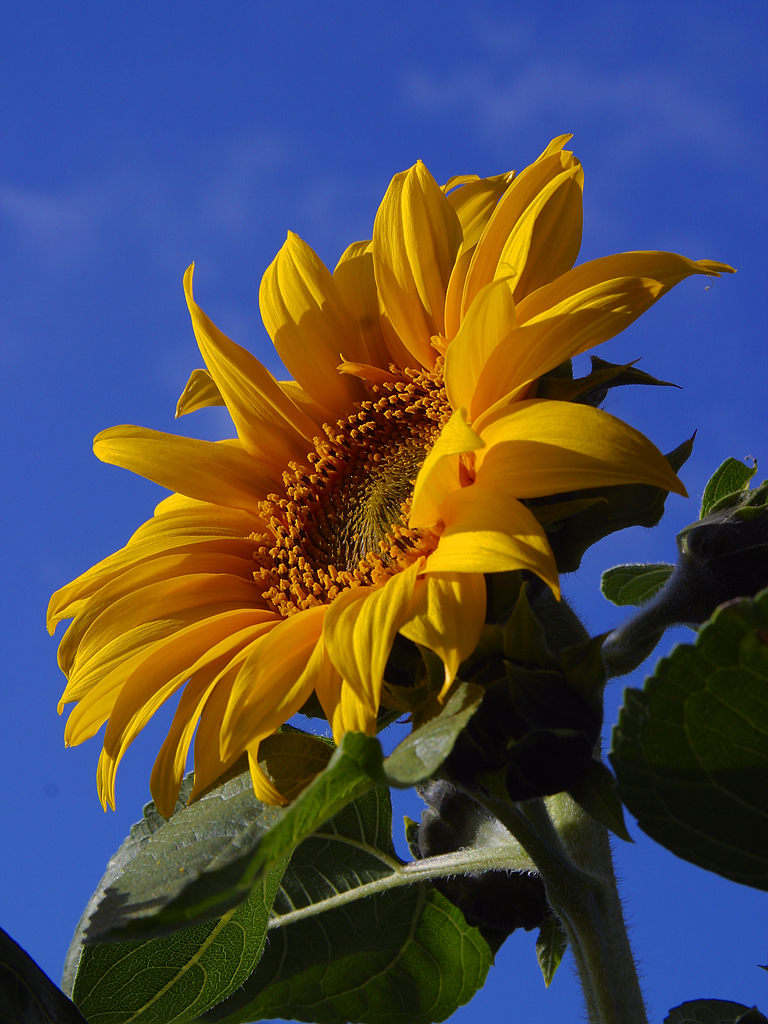 Common sunflowerHelianthus annuus
A tall annual plant grown for its large yellow flower heads and edible seeds
🇨🇦 Canada and 4 more · Wildflower
Common sunflowerHelianthus annuus
A tall annual plant grown for its large yellow flower heads and edible seeds
🇨🇦 Canada and 4 more · Wildflower
 Asteraceae
The vast family of daisies, asters, and sunflowers with star-like flower heads
Asteraceae · Wildflower
Asteraceae
The vast family of daisies, asters, and sunflowers with star-like flower heads
Asteraceae · Wildflower
 DandelionTaraxacum
A yellow-flowered perennial found in fields, lawns, and gardens worldwide
Taraxacum · Wildflower
DandelionTaraxacum
A yellow-flowered perennial found in fields, lawns, and gardens worldwide
Taraxacum · Wildflower
 Dahlia
A bushy perennial with tuberous roots and bright, star-shaped blooms
🇲🇽 Mexico and 1 more · Garden flower
Dahlia
A bushy perennial with tuberous roots and bright, star-shaped blooms
🇲🇽 Mexico and 1 more · Garden flower
More from the United States
All the flowers of the United States PeachPrunus persica
A flowering fruit tree from China, grown for its pink blossoms and sweet fruit
🇨🇳 China and 7 more · Flowering tree
PeachPrunus persica
A flowering fruit tree from China, grown for its pink blossoms and sweet fruit
🇨🇳 China and 7 more · Flowering tree
 AlmondPrunus amygdalus
A Mediterranean tree grown for its fragrant spring flowers and edible seeds
🇮🇷 Iran and 6 more · Flowering tree
AlmondPrunus amygdalus
A Mediterranean tree grown for its fragrant spring flowers and edible seeds
🇮🇷 Iran and 6 more · Flowering tree
 CactusCactaceae
Succulent plants with spines, native to the Americas
🇲🇽 Mexico and 7 more · Wildflower
CactusCactaceae
Succulent plants with spines, native to the Americas
🇲🇽 Mexico and 7 more · Wildflower
 Chrysanthemum菊花
Autumn-blooming flower with thousands of varieties, cherished in East Asia and beyond
🇨🇳 China and 6 more · Wildflower
Chrysanthemum菊花
Autumn-blooming flower with thousands of varieties, cherished in East Asia and beyond
🇨🇳 China and 6 more · Wildflower