
Altamont House
A historic Irish country house with renowned Robinsonian-style gardens
Altamont House is a historic country house in County Carlow, Ireland, best known for its extensive ornamental gardens. The grounds feature rare rhododendrons, azaleas, magnolias, ancient oaks, and a giant redwood, set among varied landscapes including a bog garden and an ice age glen.
- Home to rare rhododendrons, azaleas, and magnolias
- Features ancient oaks believed to be over 500 years old
- Includes a giant redwood planted to mark the Battle of Waterloo
- Set beside the River Slaney with views of local mountains
- Gardens include a bog garden, arboretum, and ice age glen
What is Altamont House?
Altamont House is a country house surrounded by 100 acres of gardens on the banks of the River Slaney. Visitors find a mix of formal and informal planting, including a bog garden, arboretum, and an ice age glen. The gardens are home to rare rhododendrons, azaleas, magnolias, wild bluebells, snowdrops, and ancient oaks. There are views of the Blackstairs and Wicklow Mountains, and a giant redwood planted to mark the Battle of Waterloo.
The history of Altamont House
The house's early history is unclear, with some suggesting it began as a convent in the 16th century. The main part of the house dates from the 18th century, with later changes by the St George family. In the 1840s, the Dawson Borrer family added a lake during the Irish famine. Feilding Lecky Watson bought the estate in 1923 and expanded the gardens, focusing on rhododendrons. His daughter, Corona North, continued this work. A trust was set up in the 1990s, and the Irish State now owns and manages the property.
What there is to see
The gardens were shaped over centuries, with each owner adding new features. The Robinsonian style blends formal and wild plantings. The lake, dug in the 1840s, and the arboretum with its rare trees, were later additions. Rhododendrons and other rare plants were sourced from around the world, often through exchanges with other gardens. The grounds include habitats for wildlife, ancient trees, and seasonal displays of bluebells and snowdrops.


When to go
Altamont House and its gardens are open to visitors as a heritage site. People come to walk the varied landscapes, see rare and historic plants, and enjoy views of the surrounding mountains. The gardens are especially noted for their spring displays of bluebells and snowdrops, as well as the collection of rhododendrons and azaleas. The site is maintained for public enjoyment and conservation.
Parts and collections
The gardens feature a range of rare and notable plants, especially rhododendrons and azaleas collected from around the world. There are also ancient oaks, magnolias, and a giant redwood. The grounds include different environments such as a bog garden, ice age glen, and arboretum, each supporting different plant varieties.
Why Altamont House matters
Altamont House is considered a highlight of Irish gardening, often called 'the jewel in Ireland's gardening crown.' The giant redwood commemorates the Battle of Waterloo. The estate's preservation by trust and transfer to state ownership reflect its cultural and horticultural value. It is listed among notable country houses and tourist attractions in Ireland.
The flowers of Altamont House
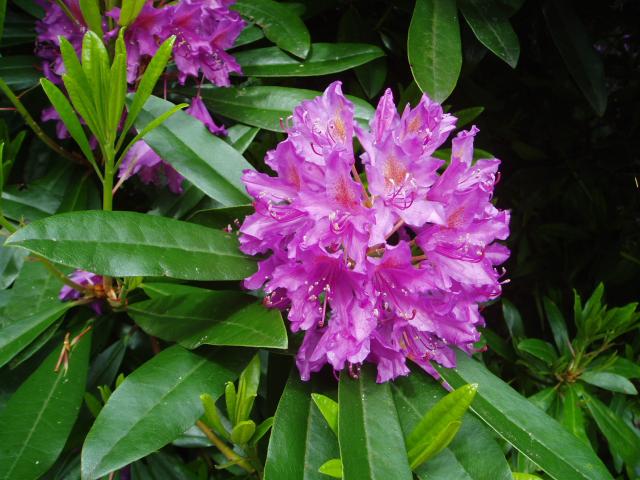 RhododendronA vast group of shrubs and trees with showy blooms in many colours
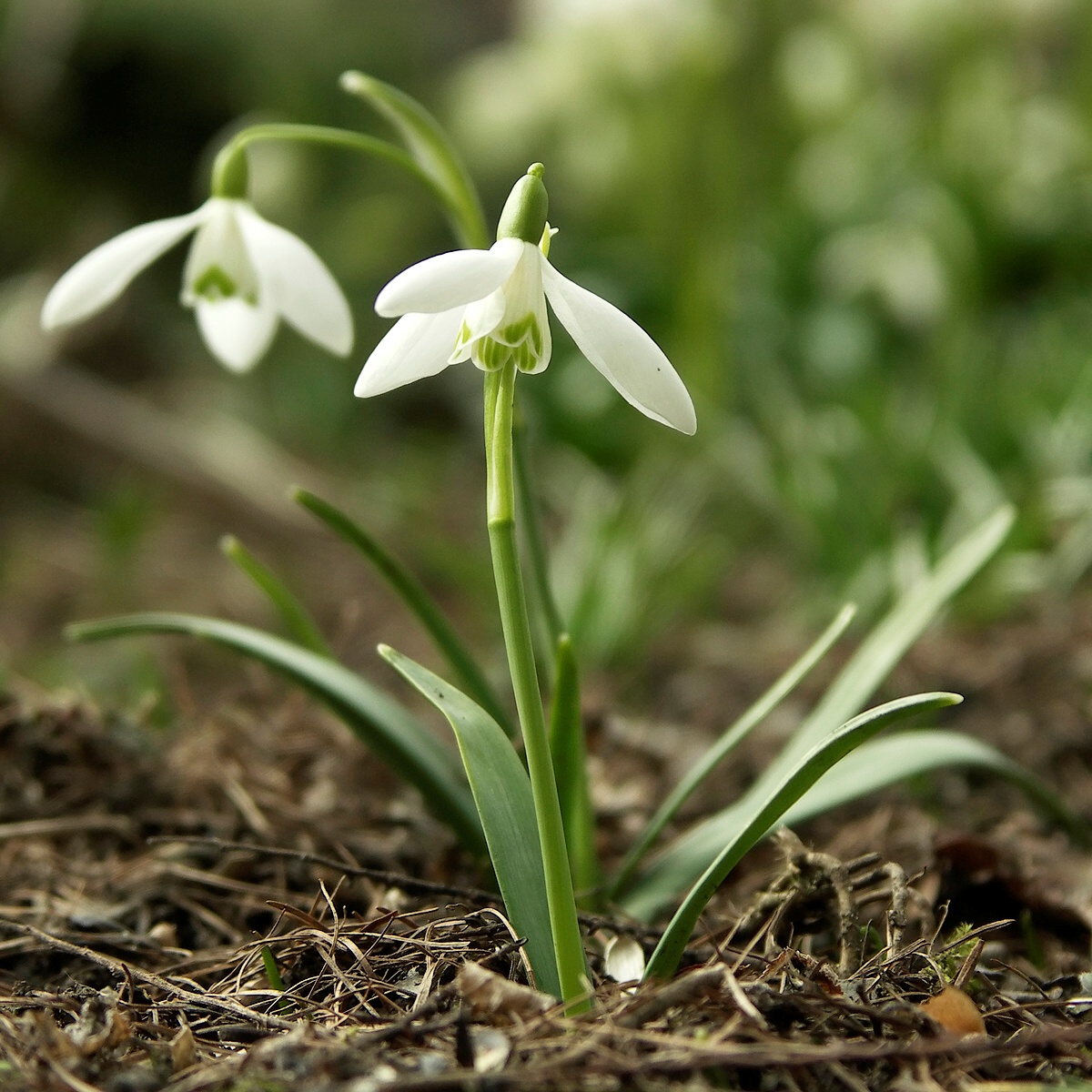 SnowdropWhite bell-shaped flowers that bloom at the end of winter
 Common rhododendronA dense evergreen shrub with violet-purple flowers from Europe and the Caucasus
 Rhododendron aureumA low evergreen shrub with pale yellow spring flowers from northeastern Asia
 Magnolia sieboldiiA summer-blooming magnolia with white, cup-shaped flowers from East Asia
 Rhododendron molleA yellow-flowered deciduous azalea from China and Japan
 Rhododendron simsiiA shrub from East Asia with flowers in shades from white to deep red
 Magnolia liliifloraA small Chinese magnolia with large pink-purple spring flowers
Questions people ask about Altamont House
Where is Altamont House located?
Altamont House is in County Carlow, near Tullow, Ireland. It sits on the banks of the River Slaney and is known for its extensive gardens.
What is special about the gardens at Altamont House?
The gardens are known for their Robinsonian style, rare rhododendrons, azaleas, magnolias, ancient oaks, and a giant redwood. They also include a bog garden, arboretum, and an ice age glen.
Who developed the gardens at Altamont House?
Feilding Lecky Watson expanded the gardens in the 20th century, focusing on rhododendrons. His daughter, Corona North, continued his horticultural work.
Can the public visit Altamont House and its gardens?
Yes, the house and gardens are open to visitors as a heritage site managed by the Irish State. The gardens are especially popular for spring flower displays.
What kinds of plants can be seen at Altamont House?
Visitors can see rare rhododendrons, azaleas, magnolias, wild bluebells, snowdrops, ancient oaks, and a giant redwood among other trees and plants.
Good reading and sources
- Altamont House on WikipediaEncyclopedia
- More photos on Wikimedia CommonsPhotos
- Wikidata recordOpen data
The facts on this page come from the Wikipedia article "Altamont House", written by its contributors and used under the CC BY-SA 4.0 licence, and from its Wikidata record (CC0). Phool rewrote the text in its own words, with AI assistance, and compares every page with the article to make sure no passage is copied. It may be reused under the same CC BY-SA 4.0 licence with a link back.
It may contain mistakes. Opening times, prices and bloom dates change: check with the place before you travel. If something is wrong, tell us. Last refreshed 2026-10-03.
More of the same kind
 Place
AlhambraLa Alhambra
Medieval palace and fortress complex overlooking Granada, Spain
Granada, 🇪🇸 Spain · Flower garden
Place
AlhambraLa Alhambra
Medieval palace and fortress complex overlooking Granada, Spain
Granada, 🇪🇸 Spain · Flower garden
 Place
Chashme Shahi
A Mughal garden built around a spring in Srinagar, Kashmir
Srinagar, 🇮🇳 India · Flower garden, Mar to Nov
Place
Chashme Shahi
A Mughal garden built around a spring in Srinagar, Kashmir
Srinagar, 🇮🇳 India · Flower garden, Mar to Nov
 Place
Yadavindra Gardens
A 17th-century Mughal garden with seven terraces in Pinjore, Haryana
Panchkula, 🇮🇳 India · Flower garden, Apr to Dec
Place
Yadavindra Gardens
A 17th-century Mughal garden with seven terraces in Pinjore, Haryana
Panchkula, 🇮🇳 India · Flower garden, Apr to Dec
 Place
Shalimar Bagh
A Mughal-era garden of terraces, fountains and chinar trees by Dal Lake, Srinagar
Srinagar, 🇮🇳 India · Flower garden
Place
Shalimar Bagh
A Mughal-era garden of terraces, fountains and chinar trees by Dal Lake, Srinagar
Srinagar, 🇮🇳 India · Flower garden
More from Ireland
All the flowers of Ireland Common flaxLinum usitatissimum
The slender blue-flowered plant grown for linen and linseed
🇨🇳 China and 7 more · Wildflower
Common flaxLinum usitatissimum
The slender blue-flowered plant grown for linen and linseed
🇨🇳 China and 7 more · Wildflower
 HawthornCrataegus
A thorny shrub or tree with white or pink spring flowers and small edible fruits
🇮🇪 Ireland and 7 more · Wildflower
HawthornCrataegus
A thorny shrub or tree with white or pink spring flowers and small edible fruits
🇮🇪 Ireland and 7 more · Wildflower
 Lily-of-the-valleyConvallaria majalis
A woodland plant with sweet-scented white bell flowers in late spring
🇫🇮 Finland and 4 more · Wildflower
Lily-of-the-valleyConvallaria majalis
A woodland plant with sweet-scented white bell flowers in late spring
🇫🇮 Finland and 4 more · Wildflower
 RapeseedBrassica napus
A yellow-flowered crop grown for its oil-rich seeds and protein meal
🇨🇳 China and 7 more · Wildflower
RapeseedBrassica napus
A yellow-flowered crop grown for its oil-rich seeds and protein meal
🇨🇳 China and 7 more · Wildflower