🇨🇭 The flowers of Switzerland
23 pages from Switzerland: its flowers, the things made with them and the places to see them, across 8 cities and regions.
Switzerland’s flowers thrive in a landscape shaped by the Alps, the Jura, and the Swiss Plateau. The country is known for its alpine meadows, rich wildflower diversity, and the edelweiss, a white star-shaped flower that is a national symbol. The mix of mountain and lowland habitats supports a wide range of flowering plants.
- The edelweiss is a national symbol of Switzerland.
- Alpine meadows bloom with wildflowers each summer.
- Switzerland’s flora changes with altitude and region.
The plant life of Switzerland
Switzerland’s plant life is shaped by its mountains, valleys, and plateaus. The Alps dominate much of the land, creating a patchwork of alpine meadows and rocky slopes where many wildflowers grow. The Swiss Plateau, lying between the Alps and the Jura Mountains, is home to forests, grasslands, and farmland. This mix of habitats supports a rich variety of flowering plants. The country’s climate ranges from cool and wet in the mountains to milder in the lowlands, allowing both alpine and temperate species to thrive.
From region to region in Switzerland
In the high Alps, short summers bring carpets of wildflowers to meadows and rocky outcrops. The Jura Mountains, with their cooler and wetter climate, support forests and unique plant communities. The Swiss Plateau, where most people live, has a mix of cultivated fields, woodlands, and grasslands. Each region’s climate and elevation shape the kinds of flowers that grow there.
Flowers to know in Switzerland
The edelweiss, with its white, woolly petals, is closely linked to Swiss identity and appears on coins and emblems. Alpine meadows host many other wildflowers, such as gentians and alpine roses. The country’s varied landscape also supports rare and endemic species found only in certain mountain areas.
The facts in this overview come from the Wikipedia article "Switzerland", written by its contributors and used under the CC BY-SA 4.0 licence. Phool rewrote the text in its own words, with AI assistance, and compares every page with the article to make sure no passage is copied. It may be reused under the same CC BY-SA 4.0 licence with a link back.
 Sweet VioletViola odorata
A scented violet with edible leaves and flowers, native to Eurasia
🇨🇳 China and 7 more · Wildflower
Sweet VioletViola odorata
A scented violet with edible leaves and flowers, native to Eurasia
🇨🇳 China and 7 more · Wildflower
 EdelweissLeontopodium nivale
A woolly white star-shaped flower of the European mountains
🇦🇹 Austria and 5 more · Wildflower
EdelweissLeontopodium nivale
A woolly white star-shaped flower of the European mountains
🇦🇹 Austria and 5 more · Wildflower
 Cross-leaved HeathErica tetralix
A pink-flowered heather of bogs and wet heaths in western Europe
🇵🇹 Portugal and 3 more · Wildflower
Cross-leaved HeathErica tetralix
A pink-flowered heather of bogs and wet heaths in western Europe
🇵🇹 Portugal and 3 more · Wildflower
 Alpine toadflaxLinaria alpina
A small violet-flowered plant of rocky European mountain slopes
🇦🇹 Austria and 7 more · Wildflower
Alpine toadflaxLinaria alpina
A small violet-flowered plant of rocky European mountain slopes
🇦🇹 Austria and 7 more · Wildflower
 Aquilegia alpina
A rare blue-flowered columbine from the Alps
🇫🇷 France and 3 more · Wildflower
Aquilegia alpina
A rare blue-flowered columbine from the Alps
🇫🇷 France and 3 more · Wildflower
 Common peonyPaeonia officinalis
A deep pink or red peony from the mountains of southern Europe
🇮🇹 Italy and 7 more · Wildflower
Common peonyPaeonia officinalis
A deep pink or red peony from the mountains of southern Europe
🇮🇹 Italy and 7 more · Wildflower
 Bloody crane's-billGeranium sanguineum
A hardy crimson-flowered perennial of grasslands and gardens
🇨🇭 Switzerland · Wildflower
Bloody crane's-billGeranium sanguineum
A hardy crimson-flowered perennial of grasslands and gardens
🇨🇭 Switzerland · Wildflower
 Purple mountain saxifrageSaxifraga oppositifolia
A mat-forming purple flower of Arctic and high mountain regions
🇨🇦 Canada and 4 more · Wildflower
Purple mountain saxifrageSaxifraga oppositifolia
A mat-forming purple flower of Arctic and high mountain regions
🇨🇦 Canada and 4 more · Wildflower
 Eightpetal mountain-avensDryas octopetala
A low evergreen with creamy white eight-petalled flowers of Arctic and alpine regions
🇮🇸 Iceland and 2 more · Wildflower
Eightpetal mountain-avensDryas octopetala
A low evergreen with creamy white eight-petalled flowers of Arctic and alpine regions
🇮🇸 Iceland and 2 more · Wildflower
 Purple pitcher plantSarracenia purpurea
A hardy carnivorous plant with tubular purple-green leaves that trap insects
🇺🇸 United States and 7 more · Wildflower
Purple pitcher plantSarracenia purpurea
A hardy carnivorous plant with tubular purple-green leaves that trap insects
🇺🇸 United States and 7 more · Wildflower
 Greater Pasque FlowerPulsatilla grandis
A violet spring flower of open meadows and hillsides in central Europe
🇫🇷 France and 7 more · Wildflower
Greater Pasque FlowerPulsatilla grandis
A violet spring flower of open meadows and hillsides in central Europe
🇫🇷 France and 7 more · Wildflower
 Lady's-slipper orchidCypripedium calceolus
A wild orchid with a yellow slipper-shaped flower found across Europe and Asia
🇬🇧 United Kingdom and 7 more · Wildflower
Lady's-slipper orchidCypripedium calceolus
A wild orchid with a yellow slipper-shaped flower found across Europe and Asia
🇬🇧 United Kingdom and 7 more · Wildflower
 Hungarian gentianGentiana pannonica
A mountain wildflower with reddish-violet, spotted bell-shaped blooms
🇦🇹 Austria and 2 more · Wildflower
Hungarian gentianGentiana pannonica
A mountain wildflower with reddish-violet, spotted bell-shaped blooms
🇦🇹 Austria and 2 more · Wildflower
 Christmas roseHelleborus niger
A winter-blooming evergreen with white flowers, known as the Christmas rose
🇩🇪 Germany and 5 more · Wildflower
Christmas roseHelleborus niger
A winter-blooming evergreen with white flowers, known as the Christmas rose
🇩🇪 Germany and 5 more · Wildflower
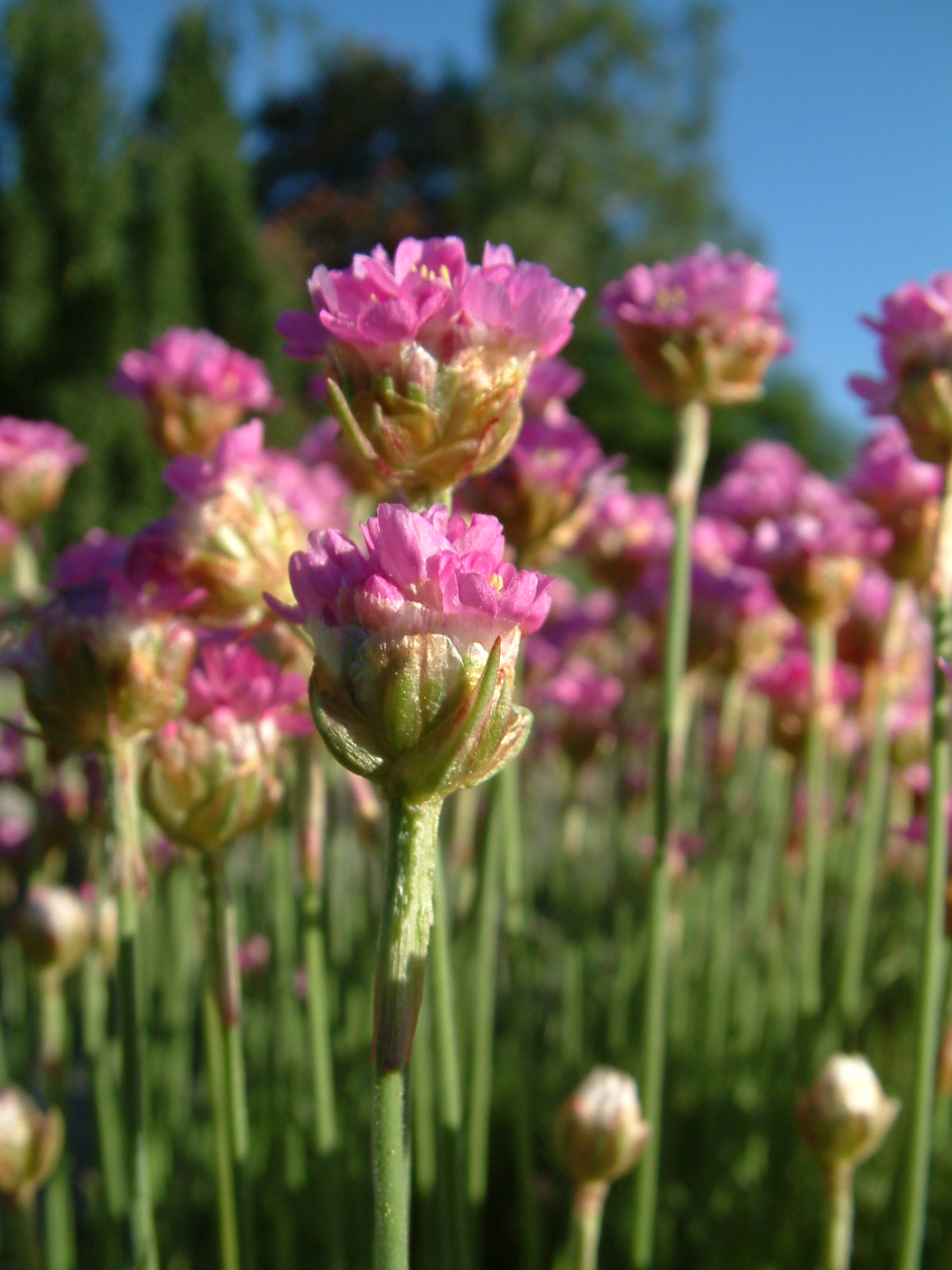 ThriftArmeria maritima
A low-growing perennial with pink globe-shaped blooms found near coasts and in gardens
🇨🇳 China and 7 more · Wildflower
ThriftArmeria maritima
A low-growing perennial with pink globe-shaped blooms found near coasts and in gardens
🇨🇳 China and 7 more · Wildflower
 Mountain arnicaArnica montana
A yellow-flowered herb from Europe's uplands, used in herbal traditions
🇫🇷 France and 7 more · Wildflower
Mountain arnicaArnica montana
A yellow-flowered herb from Europe's uplands, used in herbal traditions
🇫🇷 France and 7 more · Wildflower
 Siberian irisIris sibirica
A blue-flowered iris from Europe and Central Asia, grown in gardens worldwide
🇫🇷 France and 7 more · Wildflower
Siberian irisIris sibirica
A blue-flowered iris from Europe and Central Asia, grown in gardens worldwide
🇫🇷 France and 7 more · Wildflower
 Wild daffodilNarcissus pseudonarcissus
A pale yellow spring flower and the national emblem of Wales
🇬🇧 United Kingdom and 9 more · Wildflower
Wild daffodilNarcissus pseudonarcissus
A pale yellow spring flower and the national emblem of Wales
🇬🇧 United Kingdom and 9 more · Wildflower
 Poet's daffodilNarcissus poeticus
A fragrant white daffodil linked to ancient Greek myth and poetry
🇪🇸 Spain and 6 more · Wildflower
Poet's daffodilNarcissus poeticus
A fragrant white daffodil linked to ancient Greek myth and poetry
🇪🇸 Spain and 6 more · Wildflower
 Fringed Water-lilyNymphoides peltata
A floating yellow aquatic plant with wavy leaves and fringed flowers
🇨🇳 China and 7 more · Water flower
Fringed Water-lilyNymphoides peltata
A floating yellow aquatic plant with wavy leaves and fringed flowers
🇨🇳 China and 7 more · Water flower
 ColumbineAquilegia vulgaris
A nodding blue or purple wildflower with spurred petals, known as granny’s bonnet
🇫🇷 France and 5 more · Wildflower
ColumbineAquilegia vulgaris
A nodding blue or purple wildflower with spurred petals, known as granny’s bonnet
🇫🇷 France and 5 more · Wildflower
Photo credits on this page
The small pictures above come from Wikimedia Commons under free licences. Some are cropped to fit.
- Wild daffodil: Unknown author, CC BY-SA 3.0, source
- Mountain arnica: Franz Eugen Köhler, Köhlers Medizinal-Pflanzen, Public domain, source
- Leontopodium: Böhringer Friedrich, CC BY-SA 2.5, source
- Poet's daffodil: Arnaucc, CC BY-SA 3.0, source
- Sweet Violet: Fritz Geller-Grimm, CC BY-SA 2.5, source
- Cross-leaved Heath: Christian Fischer, CC BY-SA 3.0, source
- Bloody crane's-bill: Didier Descouens, CC BY-SA 4.0, source
- Purple mountain saxifrage: Roger Culos, CC BY-SA 3.0, source
- Eightpetal mountain-avens: Jörg Hempel, CC BY-SA 3.0 de, source
- Columbine: Josep Gesti, CC BY-SA 4.0, source
- Alpine toadflax: Björn S., CC BY-SA 3.0, source
- Aquilegia alpina: H. Zell, CC BY-SA 3.0, source
- Common peony: Franz Xaver, CC BY-SA 3.0, source
- Purple pitcher plant: (c) Alex Karasoulos, some rights reserved (CC BY), CC BY 4.0, source
- Greater Pasque Flower: Eleassar, CC BY-SA 3.0, source
- Lady's-slipper orchid: No machine-readable author provided. Johan N assumed (based on copyrig, Public domain, source
- Hungarian gentian: Unknown author, CC BY-SA 3.0, source
- Christmas rose: Dominicus Johannes Bergsma, CC BY-SA 4.0, source
- Thrift: Unknown author, CC BY-SA 3.0, source
- Siberian iris: W. Bulach, CC BY-SA 4.0, source
- Fringed Water-lily: TeunSpaans at Dutch Wikipedia, CC BY-SA 3.0, source