
Fleabane
Erigeron, family Asteraceae
A daisy-like wildflower with narrow rays in white, pink, or lavender
Fleabane (Erigeron) is a large group of daisy-like plants in the Asteraceae family, found across the world but most diverse in North America. These well-branched annuals, biennials, or perennials have narrow white, pink, or lavender ray flowers with yellow centers and are often grown as ornamentals.
- Erigeron is most diverse in North America
- Flowers have narrow white, pink, or lavender rays and yellow centers
- Some species are grown as ornamental garden plants
- The name fleabane comes from a belief it repelled fleas
- There are about 460 species in the genus
What does Fleabane look like?
Fleabane plants are usually well-branched, with upright stems and a bushy appearance. Their flower heads look like small daisies, with many narrow ray petals in shades of white, lavender, or pink, surrounding a yellow disc in the center. Some species lack ray flowers altogether. The pappus, or crown of bristles on the fruit, is shorter than in true asters. Leaves and overall size vary widely across the genus.
Where does Fleabane come from?
The genus Erigeron is found worldwide, with its greatest diversity in North America. The name 'fleabane' comes from an old belief that dried plants could repel fleas, though this is debated. The scientific name comes from Greek words meaning 'early in the morning' and 'old man', referring to the white hairs on the fruit after flowering. The genus is closely related to asters and true daisies.
When and how Fleabane blooms
Fleabane species can be annual, biennial, or perennial. They grow from seed and thrive in a range of soils and climates, depending on the species. Many are cultivated as ornamentals, with garden varieties selected for their flower color and form. Named cultivars include 'Wayne Roderick' and 'Dunkelste aller', which has deep-violet, semi-double blooms.


How Fleabane is used
Fleabane is often grown in gardens for its daisy-like flowers and is valued as an ornamental plant. In the wild, it provides food for the larvae of certain moths and butterflies. The belief that it repels fleas is part of its folk history, but not a common use today.
Kinds of Fleabane
There are around 460 species of Erigeron, with notable ones including blue fleabane (Erigeron acer) and long-leaf fleabane (Erigeron corymbosus). Cultivated forms vary in flower color and petal shape, with some selected for especially vivid or double blooms.
What Fleabane means
The name fleabane reflects a traditional belief in its ability to repel pests, though this is now considered a misnomer for North American species. The genus is not strongly tied to symbolism or ceremony, but its daisy-like flowers are a familiar sight in gardens and wild meadows.
Where Fleabane is used and seen
 Rose and Jasmine GardenA public garden in Islamabad with hundreds of rose and jasmine varieties
 language of flowersA way of sending secret messages using flowers and their meanings
 Cottage gardenAn informal English garden style mixing flowers, herbs, and vegetables
 Arctic–Alpine Botanic GardenA botanic garden in Tromsø for Arctic and mountain plants from around the world
Questions people ask about Fleabane
Where does fleabane come from?
Fleabane (Erigeron) is found worldwide, but it is most diverse in North America. Different species grow in a wide range of habitats.
What does fleabane look like?
Fleabane plants have daisy-like flower heads with many narrow ray petals in white, pink, or lavender, and a yellow center. Some species lack ray flowers.
Why is it called fleabane?
The name fleabane comes from a traditional belief that dried plants could repel fleas, though this is not a common use today.
How is fleabane used?
Fleabane is mainly grown as an ornamental plant in gardens. In the wild, it serves as a food source for the larvae of some moths and butterflies.
Are there different types of fleabane?
Yes, there are around 460 species of Erigeron, with many variations in flower color and form. Some are cultivated for gardens, while others grow wild.
Good reading and sources
- Encyclopaedia BritannicaArticle
- USDA Plants DatabaseUS Department of Agriculture, Article
- Plants of the World OnlineRoyal Botanic Gardens, Kew, Plant database
- Where it has been recordedGBIF, Plant database
- Sightings and photos by naturalistsiNaturalist, Plant database
The facts on this page come from the Wikipedia article "Erigeron", written by its contributors and used under the CC BY-SA 4.0 licence, and from its Wikidata record (CC0). Phool rewrote the text in its own words, with AI assistance, and compares every page with the article to make sure no passage is copied. It may be reused under the same CC BY-SA 4.0 licence with a link back.
It may contain mistakes. It is not medical or foraging advice: many flowers are poisonous, and traditional uses are reported, not recommended. If something is wrong, tell us. Last refreshed 2026-10-03.
Others in the family Asteraceae
The whole family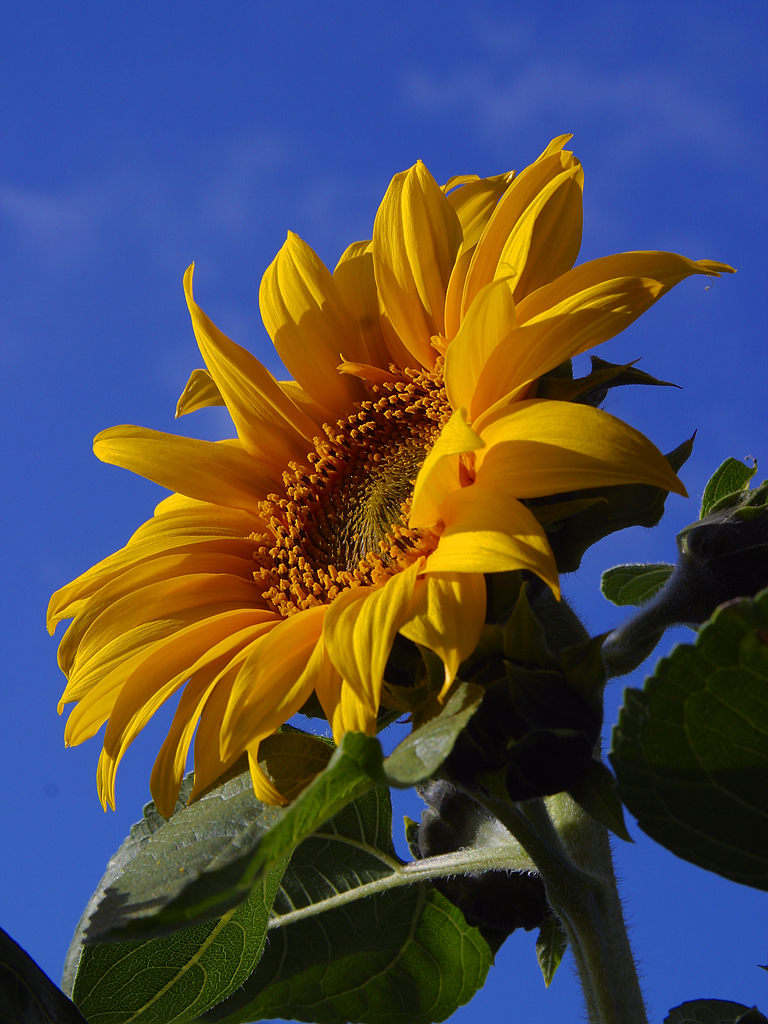 Common sunflowerHelianthus annuus
A tall annual plant grown for its large yellow flower heads and edible seeds
🇨🇦 Canada and 4 more · Wildflower
Common sunflowerHelianthus annuus
A tall annual plant grown for its large yellow flower heads and edible seeds
🇨🇦 Canada and 4 more · Wildflower
 Asteraceae
The vast family of daisies, asters, and sunflowers with star-like flower heads
Asteraceae · Wildflower
Asteraceae
The vast family of daisies, asters, and sunflowers with star-like flower heads
Asteraceae · Wildflower
 DandelionTaraxacum
A yellow-flowered perennial found in fields, lawns, and gardens worldwide
Taraxacum · Wildflower
DandelionTaraxacum
A yellow-flowered perennial found in fields, lawns, and gardens worldwide
Taraxacum · Wildflower
 Dahlia
A bushy perennial with tuberous roots and bright, star-shaped blooms
🇲🇽 Mexico and 1 more · Garden flower
Dahlia
A bushy perennial with tuberous roots and bright, star-shaped blooms
🇲🇽 Mexico and 1 more · Garden flower
More from the United States
All the flowers of the United States PeachPrunus persica
A flowering fruit tree from China, grown for its pink blossoms and sweet fruit
🇨🇳 China and 7 more · Flowering tree
PeachPrunus persica
A flowering fruit tree from China, grown for its pink blossoms and sweet fruit
🇨🇳 China and 7 more · Flowering tree
 AlmondPrunus amygdalus
A Mediterranean tree grown for its fragrant spring flowers and edible seeds
🇮🇷 Iran and 6 more · Flowering tree
AlmondPrunus amygdalus
A Mediterranean tree grown for its fragrant spring flowers and edible seeds
🇮🇷 Iran and 6 more · Flowering tree
 CactusCactaceae
Succulent plants with spines, native to the Americas
🇲🇽 Mexico and 7 more · Wildflower
CactusCactaceae
Succulent plants with spines, native to the Americas
🇲🇽 Mexico and 7 more · Wildflower
 Chrysanthemum菊花
Autumn-blooming flower with thousands of varieties, cherished in East Asia and beyond
🇨🇳 China and 6 more · Wildflower
Chrysanthemum菊花
Autumn-blooming flower with thousands of varieties, cherished in East Asia and beyond
🇨🇳 China and 6 more · Wildflower