
Iris reticulata
A small spring iris with blue or yellow flowers and a netted bulb
Iris reticulata is a compact bulbous iris from western Asia, known for its early spring blooms in blue, purple, or yellow with a bright yellow or orange mark. It is grown in gardens worldwide, especially in rockeries, but parts of the plant are toxic if eaten or handled.
- Native to mountain areas near the Caspian Sea
- Blooms in late winter and early spring
- Flowers in blue, purple, or yellow with a bright yellow or orange mark
- Bulbs have a brown, netted covering
- All parts are toxic if eaten or handled
What does Iris reticulata look like?
Iris reticulata is a small iris, reaching up to 15 cm tall. Its flowers are about 2.5 to 3 cm wide and appear in shades of blue, purple, or yellow, each with a bright yellow or orange mark on the outer petals. The plant grows from a round bulb covered by a brown, net-like layer. Its leaves are narrow, ribbed, and pointed, emerging after the flowers fade.
Where does Iris reticulata come from?
This iris grows naturally in the mountains close to the Caspian Sea, stretching from eastern Turkey through Azerbaijan to Iran. It is found in the Hyrcanian forests and rocky slopes of this region. Over time, it has been introduced to gardens in many temperate countries, where it is valued for its early flowers and compact size.
When and how Iris reticulata blooms
Iris reticulata blooms in late winter or early spring, often between November and February in the northern hemisphere. It prefers sunny spots with rocky, well-drained soil that dries out in summer. The plant is usually grown from bulbs, which need a dry rest period after flowering. In cooler climates, it is often kept in bulb frames or alpine houses to protect it from excess moisture.
How Iris reticulata is used
Gardeners plant Iris reticulata in rock gardens, gravel beds, or containers for its early and colorful blooms. It is not used for food or medicine, as most parts are poisonous. The plant is mainly enjoyed for its decorative value in gardens and as an early sign of spring.
Kinds of Iris reticulata
Several named forms are grown in gardens, including 'George' with purple flowers, 'Katharine Hodgkin' with pale blue blooms, and 'Pixie' in deep blue. There is also a variety called Iris reticulata var. bakeriana, sometimes known as Iris bakeriana.
What Iris reticulata means
Iris reticulata is appreciated for its early flowering and is a favorite in rock gardens. Some cultivars have received awards from horticultural societies for their garden performance. However, care is needed when handling the plant, as it can cause skin irritation and is toxic if eaten.
Where Iris reticulata is used and seen
 BouquetA creative arrangement of flowers, given or displayed for many occasions
 Hakone Botanical Garden of WetlandsA garden of wetland and alpine plants in Hakone, Japan
 Parc floral de ParisA botanical garden and flower park in the Bois de Vincennes, Paris
 Parc Floral de la SourceA large public garden in Orléans built around the source of the Loiret river
 KeukenhofA vast Dutch flower garden famous for its spring tulip displays
 KanzashiTraditional Japanese hair ornaments, often crafted as folded silk flowers
 HanafudaJapanese playing cards with flower designs used for traditional games
 History of flower arrangementHow arranging flowers became an art across cultures and centuries
Questions people ask about Iris reticulata
Where does Iris reticulata come from?
Iris reticulata is native to the mountains near the Caspian Sea, found from eastern Turkey through Azerbaijan to Iran.
What does Iris reticulata look like?
It is a small plant up to 15 cm tall, with narrow, ribbed leaves and flowers in blue, purple, or yellow, each marked with a bright yellow or orange stripe.
When does Iris reticulata flower?
It blooms in late winter and early spring, usually from November to February in the northern hemisphere.
Is Iris reticulata poisonous?
Yes, most parts of the plant, including the bulb and leaves, are toxic if eaten and can irritate the skin.
How is Iris reticulata used?
It is grown mainly for its early spring flowers in gardens, especially in rockeries or containers, but not used for food or medicine.
Good reading and sources
- Iris 'George' (Reticulata)Royal Horticultural Society, Article
- USDA Plants DatabaseUS Department of Agriculture, Article
- Plants of the World OnlineRoyal Botanic Gardens, Kew, Plant database
- Where it has been recordedGBIF, Plant database
- Sightings and photos by naturalistsiNaturalist, Plant database
- Iris reticulata on WikipediaEncyclopedia
- More photos on Wikimedia CommonsPhotos
- Wikidata recordOpen data
The facts on this page come from the Wikipedia article "Iris reticulata", written by its contributors and used under the CC BY-SA 4.0 licence, and from its Wikidata record (CC0). Phool rewrote the text in its own words, with AI assistance, and compares every page with the article to make sure no passage is copied. It may be reused under the same CC BY-SA 4.0 licence with a link back.
It may contain mistakes. It is not medical or foraging advice: many flowers are poisonous, and traditional uses are reported, not recommended. If something is wrong, tell us. Last refreshed 2026-10-03.
Others in the family Iridaceae
The whole family Gladiolus
Tall, showy flower spikes grown from corms, known as sword lilies
Gladiolus · Garden flower
Gladiolus
Tall, showy flower spikes grown from corms, known as sword lilies
Gladiolus · Garden flower
 Iris
A large group of perennial flowers with striking, six-lobed blooms
Iris · Wildflower
Iris
A large group of perennial flowers with striking, six-lobed blooms
Iris · Wildflower
 Crocus
Small corm-grown flowers in white, yellow, orange or purple
🇹🇷 Turkey and 7 more · Wildflower
Crocus
Small corm-grown flowers in white, yellow, orange or purple
🇹🇷 Turkey and 7 more · Wildflower
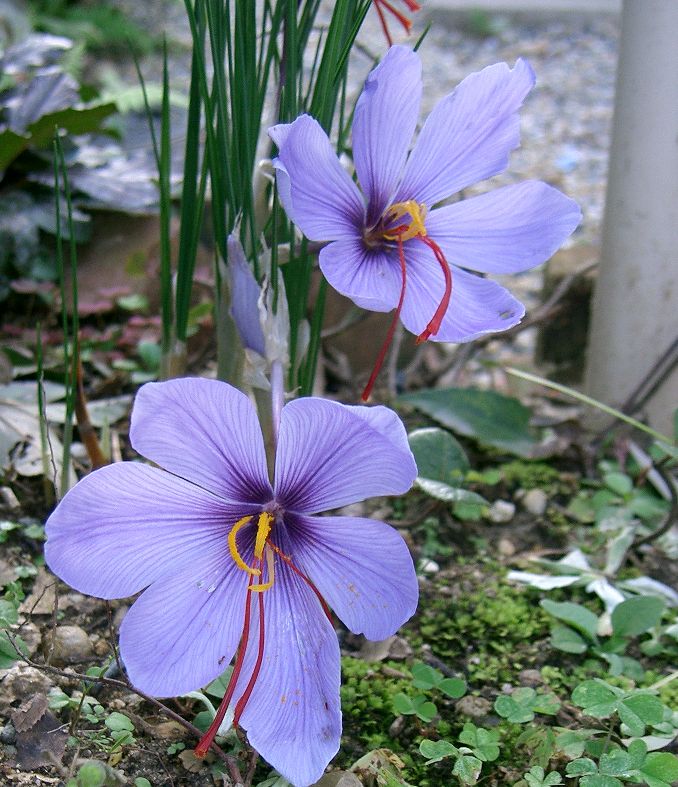 Saffron crocusCrocus sativus
The purple autumn flower whose red stigmas yield the spice saffron
🇨🇳 China and 1 more · Garden flower
Saffron crocusCrocus sativus
The purple autumn flower whose red stigmas yield the spice saffron
🇨🇳 China and 1 more · Garden flower
More from Iran
All the flowers of Iran PeachPrunus persica
A flowering fruit tree from China, grown for its pink blossoms and sweet fruit
🇨🇳 China and 7 more · Flowering tree
PeachPrunus persica
A flowering fruit tree from China, grown for its pink blossoms and sweet fruit
🇨🇳 China and 7 more · Flowering tree
 PomegranatePunica granatum
A shrub with bright red flowers and a fruit full of edible seeds
🇮🇷 Iran and 9 more · Flowering shrub
PomegranatePunica granatum
A shrub with bright red flowers and a fruit full of edible seeds
🇮🇷 Iran and 9 more · Flowering shrub
 AlmondPrunus amygdalus
A Mediterranean tree grown for its fragrant spring flowers and edible seeds
🇮🇷 Iran and 6 more · Flowering tree
AlmondPrunus amygdalus
A Mediterranean tree grown for its fragrant spring flowers and edible seeds
🇮🇷 Iran and 6 more · Flowering tree
 ApricotPrunus armeniaca
A small fruit tree with early white to pink blossoms and golden-orange fruit
🇨🇳 China and 6 more · Flowering tree
ApricotPrunus armeniaca
A small fruit tree with early white to pink blossoms and golden-orange fruit
🇨🇳 China and 6 more · Flowering tree