
Madonna lily
Lilium candidum, family Liliaceae
A pure white, fragrant lily with deep religious symbolism
The Madonna lily is a tall flowering plant with pure white blooms tinged yellow at the throat. Native to the Balkans and Middle East, it has been grown for over 3,000 years and appears in ancient art and religious traditions.
- Flowers are pure white with yellow throats and very fragrant
- Cultivated for at least 3,000 years across many cultures
- Toxic to cats; ingestion can be fatal
- Featured in ancient Minoan wall paintings
- Symbol of purity in Christian religious art
What does Madonna lily look like?
This lily grows from a bulb and sends up a leafy stem that can reach 1.2 metres, sometimes even 2 metres tall. In summer it carries several flowers that are pure white with a yellow tint inside the throat. The scent is sweet and very strong. Unlike most lilies, it forms a rosette of leaves at ground level in winter.
Where does Madonna lily come from?
It comes from the Balkans and the Middle East. People have cultivated it for at least 3,000 years. Over time it spread and became naturalized in parts of Europe, North Africa, the Canary Islands, Mexico and other areas. Its long history includes appearances in ancient frescoes and religious texts.
When and how Madonna lily blooms
The plant grows a basal leaf rosette in winter that dies back in summer. A tall flowering stem rises in late spring and blooms in summer. It prefers well-drained soil and full sun. To avoid virus infections, growers sometimes raise new plants from seed rather than using bulblets.


How Madonna lily is used
Its flowers are used in Christian worship and art as a symbol of purity. In Taiwan, both the bulbs and flowers are eaten. It was once the provincial flower of Quebec, though not native there. Gardeners grow it for its beauty and fragrance, but must keep it away from cats due to its toxicity.
What Madonna lily means
The Madonna lily appears in Minoan frescoes like the 'Prince of the Lilies' and in biblical descriptions of Solomon’s Temple. In Catholic and Orthodox traditions, it represents chastity and is linked to the Virgin Mary and other saints. Some believe the fleur-de-lis emblem was inspired by this flower, though it more closely resembles an iris.
Where Madonna lily is used and seen

Traditions that use it
Questions people ask about Madonna lily
Where does the Madonna lily come from?
It is native to the Balkans and the Middle East, and has become naturalized in parts of Europe, North Africa, Mexico and other regions.
What does the Madonna lily symbolize?
In Christian tradition, especially Catholic and Orthodox, it symbolizes chastity and purity, often associated with the Virgin Mary and other saints.
Is the Madonna lily safe around pets?
No. It is highly toxic to cats. Even contact with pollen can be dangerous if a cat grooms itself afterward. Immediate veterinary care is needed if exposure occurs.
Can you eat any part of the Madonna lily?
Yes, in Taiwan both the flowers and bulbs are used as food, along with some related lily species.
When does the Madonna lily bloom?
It produces its fragrant white flowers in summer, after sending up a tall stem in late spring.
Good reading and sources
- Encyclopaedia BritannicaArticle
- USDA Plants DatabaseUS Department of Agriculture, Article
- Lilium candidum (IXb/a)Royal Horticultural Society, Article
- Plants of the World OnlineRoyal Botanic Gardens, Kew, Plant database
- Where it has been recordedGBIF, Plant database
- Sightings and photos by naturalistsiNaturalist, Plant database
- Lilium candidum on WikipediaEncyclopedia
- More photos on Wikimedia CommonsPhotos
- Wikidata recordOpen data
The facts on this page come from the Wikipedia article "Lilium candidum", written by its contributors and used under the CC BY-SA 4.0 licence, and from its Wikidata record (CC0). Phool rewrote the text in its own words, with AI assistance, and compares every page with the article to make sure no passage is copied. It may be reused under the same CC BY-SA 4.0 licence with a link back.
It may contain mistakes. It is not medical or foraging advice: many flowers are poisonous, and traditional uses are reported, not recommended. If something is wrong, tell us. Last refreshed 2026-10-03.
Others in the family Liliaceae
The whole family LilyLilium
Tall bulb flowers with large, colourful blooms in many gardens and cultures
Lilium · Wildflower
LilyLilium
Tall bulb flowers with large, colourful blooms in many gardens and cultures
Lilium · Wildflower
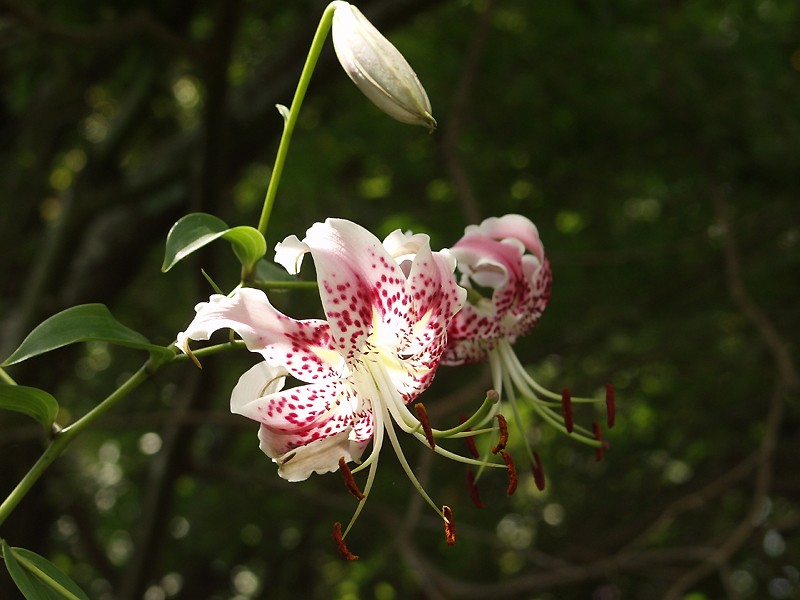 Lilium speciosum
A late-summer lily with fragrant white to pink flowers from East Asia
🇯🇵 Japan and 2 more · Wildflower
Lilium speciosum
A late-summer lily with fragrant white to pink flowers from East Asia
🇯🇵 Japan and 2 more · Wildflower
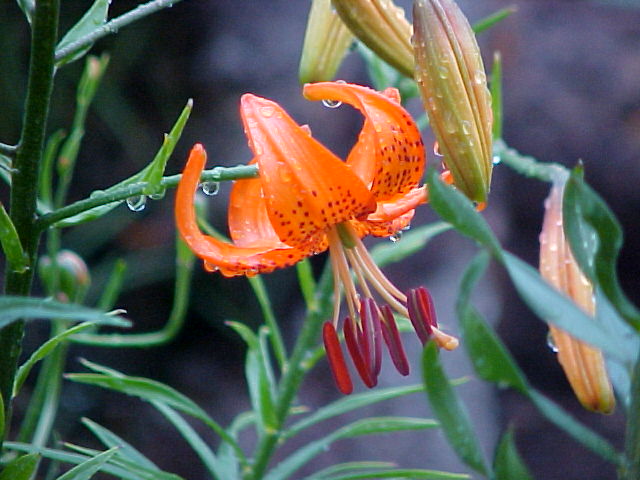 Lilium davidii
A tall Asian lily with edible bulbs and orange recurved flowers
🇨🇳 China and 1 more · Wildflower
Lilium davidii
A tall Asian lily with edible bulbs and orange recurved flowers
🇨🇳 China and 1 more · Wildflower
 Fritillaria
Bell-shaped spring flowers from the lily family grown for gardens and tradition
Fritillaria · Wildflower
Fritillaria
Bell-shaped spring flowers from the lily family grown for gardens and tradition
Fritillaria · Wildflower
More from France
All the flowers of France TulipTulipa
Spring-blooming bulbs with showy, cup-shaped flowers in many colours
🇳🇱 Netherlands and 7 more · Wildflower
TulipTulipa
Spring-blooming bulbs with showy, cup-shaped flowers in many colours
🇳🇱 Netherlands and 7 more · Wildflower
 Common flaxLinum usitatissimum
The slender blue-flowered plant grown for linen and linseed
🇨🇳 China and 7 more · Wildflower
Common flaxLinum usitatissimum
The slender blue-flowered plant grown for linen and linseed
🇨🇳 China and 7 more · Wildflower
 Chrysanthemum菊花
Autumn-blooming flower with thousands of varieties, cherished in East Asia and beyond
🇨🇳 China and 6 more · Wildflower
Chrysanthemum菊花
Autumn-blooming flower with thousands of varieties, cherished in East Asia and beyond
🇨🇳 China and 6 more · Wildflower
 LindenTilia
Tall, broad-leaved trees with fragrant yellow flowers and heart-shaped leaves
🇨🇳 China and 7 more · Flowering tree
LindenTilia
Tall, broad-leaved trees with fragrant yellow flowers and heart-shaped leaves
🇨🇳 China and 7 more · Flowering tree