
Scarlet sage
Salvia splendens, family Lamiaceae
A bright bedding plant with spikes of red, white, or purple flowers
Scarlet sage is a tender perennial from Brazil, often grown as a garden annual for its upright spikes of vivid flowers. While wild plants can reach over a metre tall, most garden types are compact and come in red, white, or purple, making them popular in public spaces worldwide.
- Native to the high mountains of Brazil
- Wild plants can reach over 1.3 metres tall
- Garden forms come in red, white, purple, and mixed colours
- Most popular as a dwarf bedding plant
- Blooms through summer and autumn
What does Scarlet sage look like?
Scarlet sage is a leafy plant that can grow over a metre tall in the wild, but most garden varieties are much shorter. Its leaves are elliptical, with toothed edges and long stalks. The plant produces upright spikes of tubular or bell-shaped flowers, usually in bright scarlet red, but also in white, purple, or mixed colours. The flowers appear in clusters from the leaf joints, and the plant is often seen in mass plantings for its vivid colour.
Where does Scarlet sage come from?
This plant is native to the high mountains of Brazil, growing at elevations between 2,000 and 3,000 metres where the climate is warm and humid year-round. It was first described in 1822 and originally called 'Lee's scarlet sage.' Over time, it spread from Brazil to gardens around the world, especially after the development of smaller, more colourful cultivars. The wild form is rarely seen in cultivation.
When and how Scarlet sage blooms
Scarlet sage blooms through the summer and autumn. It is a subtropical species that cannot survive frost, so in colder climates it is grown as an annual. Gardeners plant it from seed or young plants in spring, often choosing dwarf varieties for bedding displays. It prefers warm, humid conditions and is commonly used in public gardens and shopping malls for its reliable, long-lasting colour.
![Common name : Scarlet Sage, Moroklei (Manipuri) Botanical name : Salvia splendens - [ (SAL-vee-uh) referring to helping, saving, healing; (SPLEN-denz) meaning splendid ] Cultivar : Empire Red Family : Lamiaceae (mint fam](https://thumb.wikimedia.org/wikipedia/commons/thumb/0/0d/Salvia_splendens_%28357118788%29.jpg/960px-Salvia_splendens_%28357118788%29.jpg)


How Scarlet sage is used
People grow scarlet sage mainly for its bright, showy flowers in gardens and public spaces. It is popular as a bedding plant, planted in large groups for colour. The plant is not known for use in ceremonies, food, or medicine, and its main value is decorative.
Kinds of Scarlet sage
There are many named cultivars of scarlet sage. Some have white flowers ('Alba'), dark violet or purple ('Atropurpurea', 'Violacea'), or red and white mixed ('Bicolor', 'Issanchon'). Dwarf and early-flowering types like 'Scarlet Pygmy' and 'St. John's Fire' are common in gardens. The 'Van Houttei' cultivar is taller and still widely grown. Some, like 'Vanguard' and 'Van-Houttei', have received awards for garden merit.
What Scarlet sage means
Scarlet sage is valued for its bright display in gardens and public plantings, but it is not tied to any particular symbolism, festival, or religious use in the sources. Its many cultivars make it a favourite for mass plantings, and it is widely recognised as a bedding plant. Some cultivars have been awarded for their performance in gardens.
Where Scarlet sage is used and seen


Where to see Scarlet sage
 🇯🇵 Furano · Jun to AugLavender fields of FuranoHillside lavender farms in central Hokkaido, at their purple best in July.
 🇯🇵 Biei · Jun to SepBiei flower fields and the Patchwork RoadA cycling and driving circuit through rolling farmland and striped flower hills north of Furano.
 🇹🇭 Chiang Mai · Jan to DecMon Cham in the cool seasonA ridge-top viewpoint in Mae Rim with terraced vegetable and flower plots and cool mountain air.
Questions people ask about Scarlet sage
Where does scarlet sage come from?
Scarlet sage is native to the high mountains of Brazil, where it grows at elevations of 2,000 to 3,000 metres in warm, humid conditions.
What does scarlet sage look like?
It is a leafy plant with upright spikes of tubular or bell-shaped flowers, most often bright red but also white, purple, or mixed. Garden types are usually compact, while wild plants can grow over a metre tall.
How is scarlet sage used?
Scarlet sage is mainly grown as a bedding plant in gardens and public spaces for its bright, long-lasting flowers. It is not commonly used for food, medicine, or ceremonies.
Are there different varieties of scarlet sage?
Yes, there are many cultivars with flowers in red, white, purple, or mixed colours. Some are dwarf and early-flowering, while others are taller like 'Van Houttei.'
What does scarlet sage symbolise?
The sources do not mention any particular symbolism or cultural meaning for scarlet sage.
Good reading and sources
- Encyclopaedia BritannicaArticle
- Salvia splendens 'Vanguard' | scarlet-flowered sage 'Vanguard'Royal Horticultural Society, Article
- USDA Plants DatabaseUS Department of Agriculture, Article
- Plants of the World OnlineRoyal Botanic Gardens, Kew, Plant database
- Where it has been recordedGBIF, Plant database
- Sightings and photos by naturalistsiNaturalist, Plant database
- Salvia splendens on WikipediaEncyclopedia
- More photos on Wikimedia CommonsPhotos
- Wikidata recordOpen data
The facts on this page come from the Wikipedia article "Salvia splendens", written by its contributors and used under the CC BY-SA 4.0 licence, and from its Wikidata record (CC0). Phool rewrote the text in its own words, with AI assistance, and compares every page with the article to make sure no passage is copied. It may be reused under the same CC BY-SA 4.0 licence with a link back.
It may contain mistakes. It is not medical or foraging advice: many flowers are poisonous, and traditional uses are reported, not recommended. If something is wrong, tell us. Last refreshed 2026-10-03.
Others in the family Lamiaceae
The whole family RosemarySalvia rosmarinus
A fragrant evergreen shrub with needle-like leaves and purple, blue, or white flowers
🇪🇸 Spain and 5 more · Flowering shrub
RosemarySalvia rosmarinus
A fragrant evergreen shrub with needle-like leaves and purple, blue, or white flowers
🇪🇸 Spain and 5 more · Flowering shrub
 Salvia
A vast group of aromatic herbs and shrubs known for their flowers and uses
Salvia · Wildflower
Salvia
A vast group of aromatic herbs and shrubs known for their flowers and uses
Salvia · Wildflower
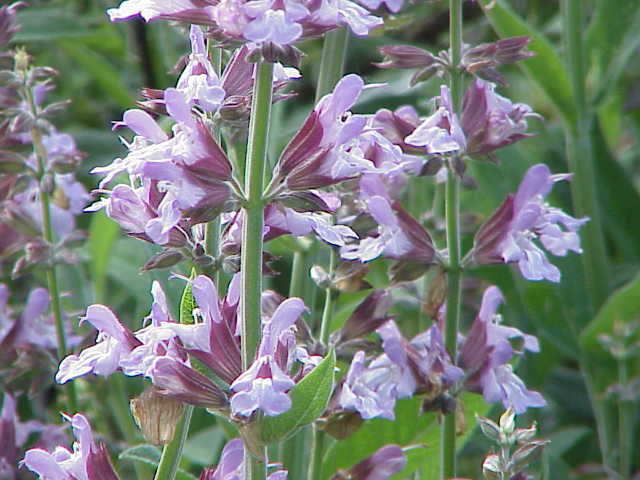 Common sageSalvia officinalis
A Mediterranean herb with grey-green leaves and blue to purple flowers
🇨🇳 China and 1 more · Herb or useful flower
Common sageSalvia officinalis
A Mediterranean herb with grey-green leaves and blue to purple flowers
🇨🇳 China and 1 more · Herb or useful flower
 Holy basilOcimum tenuiflorum
A fragrant herb central to Hindu worship and Southeast Asian cooking
🇲🇲 Myanmar and 6 more · Herb or useful flower
Holy basilOcimum tenuiflorum
A fragrant herb central to Hindu worship and Southeast Asian cooking
🇲🇲 Myanmar and 6 more · Herb or useful flower
More from Brazil
All the flowers of Brazil CactusCactaceae
Succulent plants with spines, native to the Americas
🇲🇽 Mexico and 7 more · Wildflower
CactusCactaceae
Succulent plants with spines, native to the Americas
🇲🇽 Mexico and 7 more · Wildflower
 Eucalyptus
The tall, aromatic trees and shrubs known as gum trees or eucalypts
🇦🇺 Australia and 7 more · Flowering tree
Eucalyptus
The tall, aromatic trees and shrubs known as gum trees or eucalypts
🇦🇺 Australia and 7 more · Flowering tree
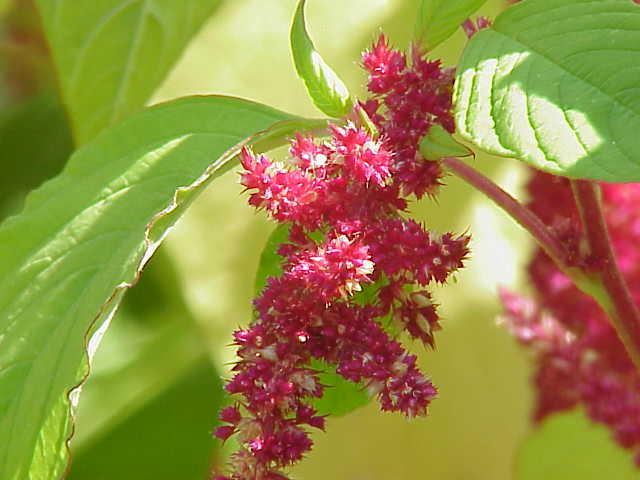 AmaranthAmaranthus
A tall, colourful plant grown for its flowers, leaves and edible seeds
🇲🇽 Mexico and 7 more · Wildflower
AmaranthAmaranthus
A tall, colourful plant grown for its flowers, leaves and edible seeds
🇲🇽 Mexico and 7 more · Wildflower
 Sensitive PlantMimosa pudica
A touch-sensitive plant whose leaves fold up when disturbed
🇧🇷 Brazil and 8 more · Wildflower
Sensitive PlantMimosa pudica
A touch-sensitive plant whose leaves fold up when disturbed
🇧🇷 Brazil and 8 more · Wildflower