
Moss campion
Silene acaulis, family Caryophyllaceae
A tough alpine cushion plant blooming with pink star-shaped flowers
Moss campion is a low, cushion-forming alpine wildflower native across the high Arctic and mountain ranges of North America and Eurasia. Dense green mats produce solitary pink star-shaped flowers each summer, while the roots have historical uses as food and folk medicine.
- The oldest known cushion lived for 350 years and grew to two feet across.
- Flowers open first on the south side of the mat, earning it the nickname compass plant.
- Dense cushions trap heat from the sun to create their own warm internal microclimate.
- Individual cushions can switch the sexual gender of their flowers from one year to the next.
What does Moss campion look like?
Moss campion grows as a compact, ground-hugging cushion up to a foot or more across. Its narrow, bright green foliage sprouts from the base, while old dry leaves linger underneath for years. The stems and leaves feel very sticky, which helps deter crawling insects like ants and beetles. Single star-shaped blossoms sit on short stalks above the mat. Each flower measures six to twelve millimetres across, with petals emerging from a thick tubular calyx. Ten stamens and three styles reach outward beyond the opening. Most blooms are bright pink, though rare white forms occur. Flowers can be male, female, or bisexual, and cushions may change sex between growing seasons.
Where does Moss campion come from?
This species thrives across the high Arctic tundra and harsh mountain environments of Eurasia and North America. It is found on windswept alpine fellfields, exposed summits, and gravelly slopes above the treeline. Plants cope with freezing winds by forming dense mats that trap solar warmth, making the cushion interior significantly warmer than the surrounding air. Individual plants grow extremely slowly and live for centuries. Specimens in Colorado frequently reach seventy-five to a hundred years old, while Alaskan plants can survive for three centuries. The oldest recorded specimen lived for three hundred and fifty years, reaching two feet across.
When and how Moss campion blooms
Gardeners cultivate moss campion by sowing seeds in early spring. Young seedlings are potted separately and kept in a greenhouse for their initial winter. Plants can be established outdoors in late spring or early summer, placed in cool conditions with full sunshine and sharply drained soil. In nature, flowers bloom between June and August. Hermaphroditic blooms are slightly larger than female ones, but female flowers yield superior seeds, while male flowers offer higher quality pollen. Flowering starts earlier during warm seasons.


How Moss campion is used
People in Iceland and across the Arctic historically gathered the plant to eat the raw skin of the roots as a vegetable. In traditional herbal practice, the herb was also prepared to soothe colic in infants. The plant naturally contains chemical compounds called saponins. Although saponins can be harmful if consumed in large quantities, thorough cooking breaks them down, and they are poorly absorbed by the human digestive system.
Kinds of Moss campion
Botanists recognize distinct regional varieties of the species. The variety exscapa features noticeably shorter flowering stalks and is listed as threatened in New Hampshire. Another form, variety subacaulescens, is native to the Rocky Mountains of Colorado and Wyoming. This western variety produces delicate pale pink blossoms throughout the summer months.
What Moss campion means
Mountaineers and naturalists sometimes call this plant the compass plant because its pink flowers typically open on the sunnier southern side of the mat first. Researchers study moss campion to track the effects of climate change in cold biomes. While mild warming speeds up flowering and seed development in the short term, hotter summers reduce survival and reproduction, threatening alpine populations over time.
Where Moss campion is used and seen

Questions people ask about Moss campion
Where does moss campion grow in the wild?
Moss campion is native to the high Arctic and cold mountain ranges across North America and Eurasia. It grows on windswept alpine ridges, rocky fellfields, and gravelly ground above the treeline.
Why is it known as the compass plant?
The nickname comes from the way the plant flowers. Because sunlight warms the southern side of the cushion first, the buds on the south-facing edge consistently open before the rest of the mat.
How was moss campion used in traditional medicine and food?
In Arctic regions and Iceland, people ate the raw root skin as a vegetable. Traditional healers also used the plant to soothe colic symptoms in children. Large amounts should not be eaten raw due to saponins.
How does the plant survive extreme alpine cold?
Its low, dense cushion structure hugs the ground and shields it from arctic winds. When sunshine hits the foliage, the tight mat traps warmth, creating an internal temperature noticeably higher than the chilly outside air.
Good reading and sources
- USDA Plants DatabaseUS Department of Agriculture, Article
- Silene acaulisRoyal Horticultural Society, Article
- Plants of the World OnlineRoyal Botanic Gardens, Kew, Plant database
- Where it has been recordedGBIF, Plant database
- Sightings and photos by naturalistsiNaturalist, Plant database
- Silene acaulis on WikipediaEncyclopedia
- More photos on Wikimedia CommonsPhotos
- Wikidata recordOpen data
The facts on this page come from the Wikipedia article "Silene acaulis", written by its contributors and used under the CC BY-SA 4.0 licence, and from its Wikidata record (CC0). EveryPhool rewrote the text in its own words, with AI assistance, and compares every page with the article to make sure no passage is copied. It may be reused under the same CC BY-SA 4.0 licence with a link back.
It may contain mistakes. It is not medical or foraging advice: many flowers are poisonous, and traditional uses are reported, not recommended. If something is wrong, tell us. Last refreshed 2026-10-04.
Others in the family Caryophyllaceae
The whole family Dianthus
A group of frilled, often pink, flowers grown in gardens and bouquets worldwide
Dianthus · Wildflower
CarnationDianthus caryophyllus
A fragrant flower with ruffled petals, grown worldwide for decoration and meaning
🇨🇳 China and 7 more · Garden flower
Dianthus
A group of frilled, often pink, flowers grown in gardens and bouquets worldwide
Dianthus · Wildflower
CarnationDianthus caryophyllus
A fragrant flower with ruffled petals, grown worldwide for decoration and meaning
🇨🇳 China and 7 more · Garden flower
 Baby's breathGypsophila paniculata
A cloud of tiny white summer flowers used in bouquets and gardens
🇨🇳 China and 4 more · Herb or useful flower
Baby's breathGypsophila paniculata
A cloud of tiny white summer flowers used in bouquets and gardens
🇨🇳 China and 4 more · Herb or useful flower
 Fringed pinkDianthus superbus
A wild pink flower with deeply fringed petals and a sweet scent
🇫🇷 France and 6 more · Wildflower
Fringed pinkDianthus superbus
A wild pink flower with deeply fringed petals and a sweet scent
🇫🇷 France and 6 more · Wildflower
More from Iceland
All the flowers of Iceland Common ValerianValeriana officinalis
Tall, sweet-scented wildflower with pale pink blooms and a long history in herbal lore
🇮🇸 Iceland and 8 more · Wildflower
Common ValerianValeriana officinalis
Tall, sweet-scented wildflower with pale pink blooms and a long history in herbal lore
🇮🇸 Iceland and 8 more · Wildflower
 Wild PansyViola tricolor
A small wildflower with purple, yellow, and white blooms found across Eurasia
🇨🇳 China and 3 more · Wildflower
Wild PansyViola tricolor
A small wildflower with purple, yellow, and white blooms found across Eurasia
🇨🇳 China and 3 more · Wildflower
 Eightpetal mountain-avensDryas octopetala
A low evergreen with creamy white eight-petalled flowers of Arctic and alpine regions
🇮🇸 Iceland and 2 more · Wildflower
Eightpetal mountain-avensDryas octopetala
A low evergreen with creamy white eight-petalled flowers of Arctic and alpine regions
🇮🇸 Iceland and 2 more · Wildflower
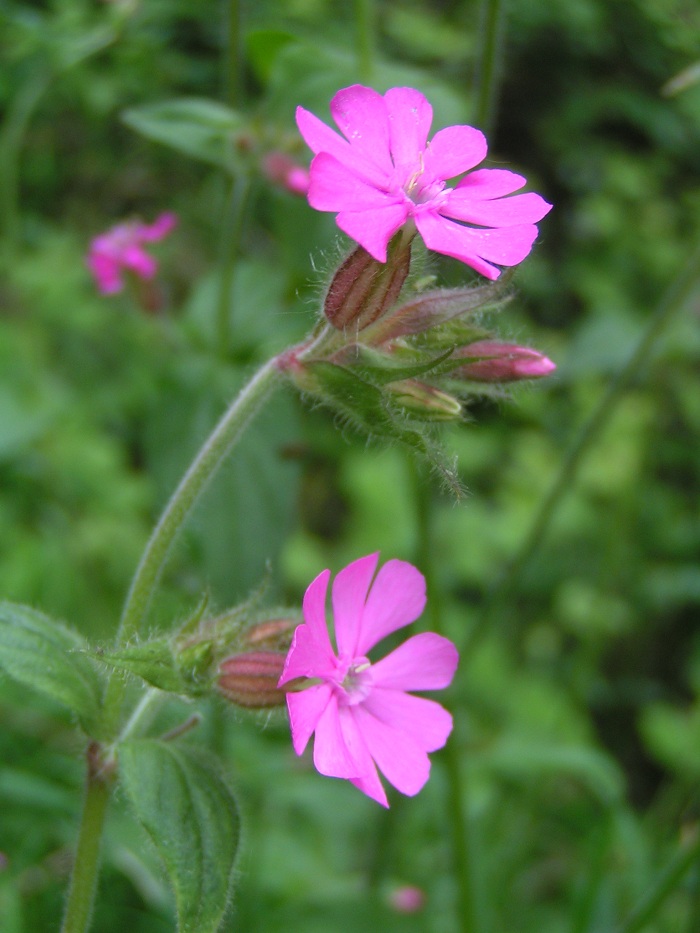 Red campionSilene dioica
A wild pink-red flower of woods and roadsides in northern and central Europe
🇮🇪 Ireland and 4 more · Wildflower
Red campionSilene dioica
A wild pink-red flower of woods and roadsides in northern and central Europe
🇮🇪 Ireland and 4 more · Wildflower