
Goldenrod
Solidago, family Asteraceae
Tall yellow-flowered perennials of meadows and prairies, vital for pollinators
Goldenrod (Solidago) is a group of perennial plants with bright yellow flower heads, mostly native to North America. These plants grow in open places and bloom in late summer to fall, supporting many insects. Some species are grown in gardens, while others have become invasive in parts of Europe and Asia.
- Supports over 100 species of butterflies and moths
- Bright yellow flower heads bloom in late summer and fall
- Native to North America, now invasive in parts of Europe and Asia
- Important nectar source for bees and other pollinators
What does Goldenrod look like?
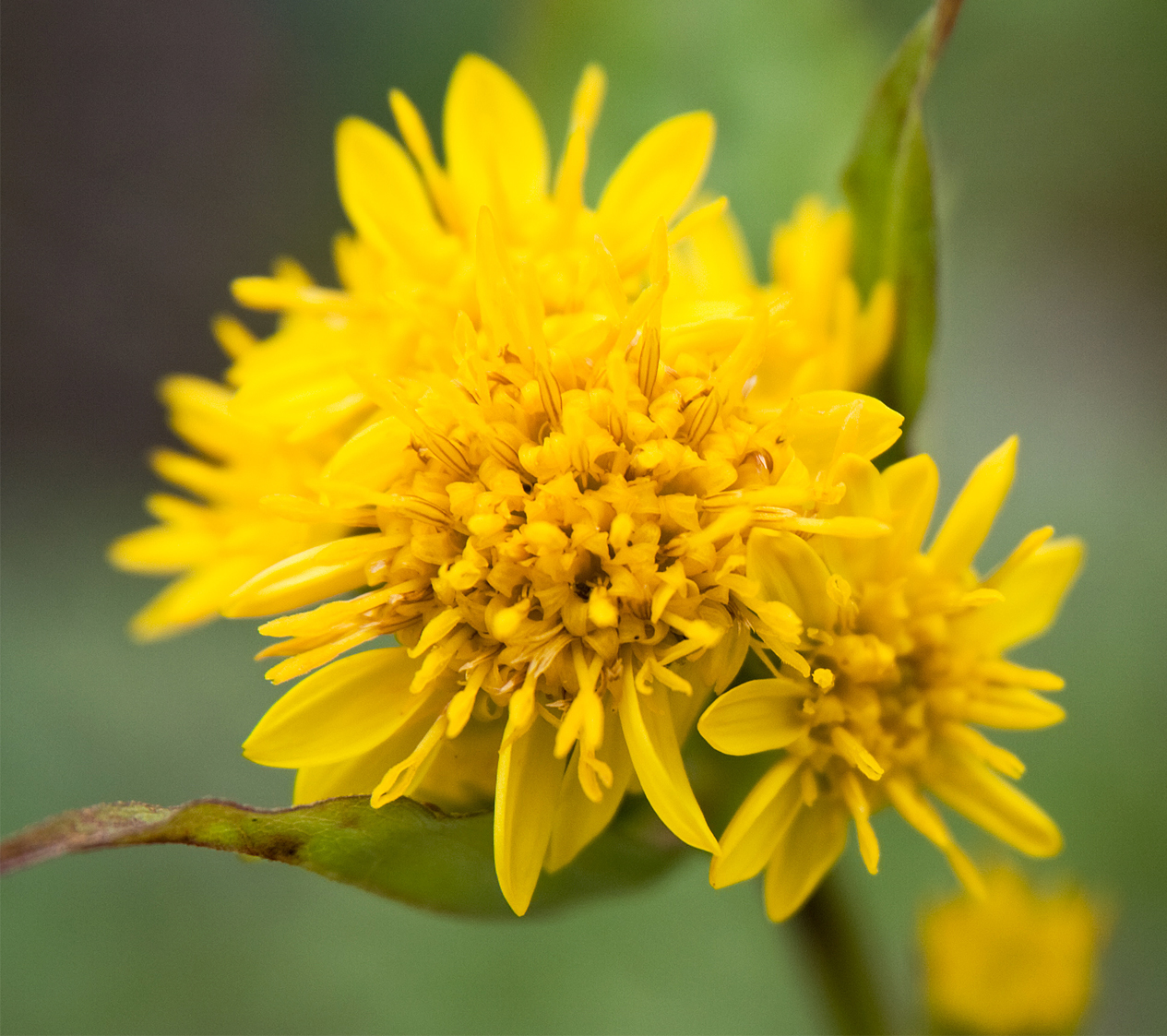
Goldenrods are perennial herbs that can grow from just a few centimeters to over two meters tall. They have upright or sometimes spreading stems, with leaves that may be smooth or hairy and are often toothed or sometimes smooth-edged. The flower heads are small, bright yellow, and grouped in dense clusters or sprays, though a few species have white ray florets. These clusters can take many shapes, from arching plumes to flat-topped arrays. The plants spread by seeds and underground rhizomes, sometimes forming large colonies.
Where does Goldenrod come from?
Most goldenrod species are native to North America, including Mexico, with a few found in South America and Eurasia. They grow wild in open spaces like meadows and prairies. Some species have been introduced to Europe and Asia, where they can become invasive. The genus Solidago is part of the large daisy family, Asteraceae. Its classification has been debated, especially regarding closely related genera, but molecular studies generally support keeping many former subgroups within Solidago.
When and how Goldenrod blooms
Goldenrods bloom in late summer and autumn, triggered by shortening days. They grow from woody bases or rhizomes and can be started from seed or by dividing established plants. They prefer open, sunny places and can thrive in meadows, prairies, and gardens. The plants spread both by wind-dispersed seeds and by their underground stems, which can lead to dense stands.


How Goldenrod is used
Goldenrod is valued in gardens for its late-season color and as a nectar source for bees, butterflies, and other insects. Some species' young leaves and seeds have been eaten traditionally, and herbal teas are sometimes made from the plant. Despite common belief, goldenrod pollen does not cause hay fever, as it is mainly insect-pollinated. In some regions, goldenrod is considered a weed or even invasive, especially where it has been introduced outside its native range.
Kinds of Goldenrod
There are about 100 to 120 species of Solidago, with around 80 in North America. The group includes species with different heights, leaf shapes, and flower arrangements. Some, like Solidago canadensis, are especially widespread and have become invasive in parts of Europe and Asia. A few species, such as Solidago bicolor, have white ray florets instead of yellow.
What Goldenrod means
Goldenrod is seen as a keystone plant for North American pollinators, supporting over 100 species of butterflies and moths, as well as many bees. It has been considered a sign of good fortune in some places. The plant is sometimes mistakenly blamed for hay fever, which is actually caused by ragweed. In Europe and Asia, some goldenrod species are now regarded as invasive weeds.
Where Goldenrod is used and seen

Questions people ask about Goldenrod
Where does goldenrod come from?
Goldenrod is mostly native to North America, including Canada, the United States, and Mexico. A few species are also native to South America and Eurasia.
What does goldenrod look like?
Goldenrod plants are perennials with upright or spreading stems and clusters of small, bright yellow flowers. They can range from just a few centimeters to over two meters tall.
What is goldenrod used for?
Goldenrod is grown in gardens for its yellow flowers and is important for pollinators. Some species have edible young leaves and seeds, and herbal teas are sometimes made from the plant.
Does goldenrod cause hay fever?
No, goldenrod pollen is not a common cause of hay fever. Its pollen is heavy and mainly carried by insects, while hay fever is usually triggered by wind-borne ragweed pollen.
Is goldenrod invasive?
Some goldenrod species, especially those introduced from North America, have become invasive in parts of Europe and Asia, where they can crowd out native plants.
Good reading and sources
- Encyclopaedia BritannicaArticle
- USDA Plants DatabaseUS Department of Agriculture, Article
- In Search of Thomas Edison's Botanical TreasuresNew York Botanical Garden, Article
- Plants of the World OnlineRoyal Botanic Gardens, Kew, Plant database
- Where it has been recordedGBIF, Plant database
- Sightings and photos by naturalistsiNaturalist, Plant database
The facts on this page come from the Wikipedia article "Solidago", written by its contributors and used under the CC BY-SA 4.0 licence, and from its Wikidata record (CC0). Phool rewrote the text in its own words, with AI assistance, and compares every page with the article to make sure no passage is copied. It may be reused under the same CC BY-SA 4.0 licence with a link back.
It may contain mistakes. It is not medical or foraging advice: many flowers are poisonous, and traditional uses are reported, not recommended. If something is wrong, tell us. Last refreshed 2026-10-03.
Others in the family Asteraceae
The whole family Chrysanthemum菊花
Autumn-blooming flower with thousands of varieties, cherished in East Asia and beyond
🇨🇳 China and 6 more · Wildflower
Chrysanthemum菊花
Autumn-blooming flower with thousands of varieties, cherished in East Asia and beyond
🇨🇳 China and 6 more · Wildflower
 Asteraceae
The vast family of daisies, asters, and sunflowers with star-like flower heads
Asteraceae · Wildflower
Asteraceae
The vast family of daisies, asters, and sunflowers with star-like flower heads
Asteraceae · Wildflower
 DandelionTaraxacum
A yellow-flowered perennial found in fields, lawns, and gardens worldwide
Taraxacum · Wildflower
DandelionTaraxacum
A yellow-flowered perennial found in fields, lawns, and gardens worldwide
Taraxacum · Wildflower
 Dahlia
A bushy perennial with tuberous roots and bright, star-shaped blooms
🇲🇽 Mexico and 1 more · Garden flower
Dahlia
A bushy perennial with tuberous roots and bright, star-shaped blooms
🇲🇽 Mexico and 1 more · Garden flower
More from Canada
All the flowers of Canada Common sunflowerHelianthus annuus
A tall annual plant grown for its large yellow flower heads and edible seeds
🇨🇦 Canada and 4 more · Wildflower
Common sunflowerHelianthus annuus
A tall annual plant grown for its large yellow flower heads and edible seeds
🇨🇦 Canada and 4 more · Wildflower
 BirchBetula
Slender trees with papery bark found across the northern world
🇨🇳 China and 7 more · Wildflower
BirchBetula
Slender trees with papery bark found across the northern world
🇨🇳 China and 7 more · Wildflower
 CactusCactaceae
Succulent plants with spines, native to the Americas
🇲🇽 Mexico and 7 more · Wildflower
CactusCactaceae
Succulent plants with spines, native to the Americas
🇲🇽 Mexico and 7 more · Wildflower
 TulipTulipa
Spring-blooming bulbs with showy, cup-shaped flowers in many colours
🇳🇱 Netherlands and 7 more · Wildflower
TulipTulipa
Spring-blooming bulbs with showy, cup-shaped flowers in many colours
🇳🇱 Netherlands and 7 more · Wildflower