Iris cedreti
In its own language: سوسن الأرز
A rare white and maroon iris found only on Lebanon’s mountain slopes
Iris cedreti is a dwarf perennial iris native to the mountains of Lebanon. Its large white flowers are marked with fine maroon or purple veins and a dark patch, blooming in May. This critically endangered plant grows on rocky slopes and is threatened by habitat loss and picking.
- Endemic to the Mount Lebanon mountain chain
- Large white flowers with maroon or purple veins and a dark patch
- Critically endangered due to habitat loss and picking
- Toxic if ingested or handled
- Seeds stored at Kew’s Millennium Seed Bank for conservation
What does Iris cedreti look like?
Iris cedreti is a compact, dwarf iris with pale yellow rhizomes and narrow, pointed leaves up to 23 cm long. The plant reaches 30–40 cm in height. Its striking flowers, about 18 cm across, have a white base covered with fine dots or veins in dark maroon, purple, or nearly black. Each flower shows a rounded, dark maroon signal patch and a beard of short brownish or purplish hairs. The standards are broad and slightly channeled, while the falls are ovate. After flowering, it forms a lobed seed capsule.
Where does Iris cedreti come from?
This iris is found only in Lebanon, growing wild along the Mount Lebanon range, especially in the Bsharri District. It was first described in 1972, and its name refers to the famous Cedars of Lebanon. The plant thrives at elevations between 1,300 and 2,000 meters on rocky, well-drained slopes. It is part of a group of closely related mountain irises, and genetic studies suggest these species may have diverged only recently.
When and how Iris cedreti blooms
Iris cedreti blooms in May, producing flowers at the top of short stems. It prefers sunny, rocky habitats with good drainage and terra rossa soil. In cultivation, it is rarely grown outside its native region due to its need for dry summer conditions. Propagation is possible by seed or division, with seeds requiring a period of cold followed by warmth. Seedlings are best grown in a mix of peat, perlite, and sandy loam.
How Iris cedreti is used
While rarely cultivated, Iris cedreti is sometimes grown as an ornamental plant. Its striking flowers have inspired perfume makers, such as Prada’s Infusion d'Iris Cedre. The plant is also a symbol of Lebanon’s unique mountain flora. However, it is not widely used in gardens due to its specific growing needs and conservation status.
Kinds of Iris cedreti
Iris cedreti is one of several Oncocyclus irises native to Lebanon’s mountains. These species are very similar, and recent studies found little genetic difference among them. The name is sometimes misspelled as I. cedretii or I. cedretti. No named cultivars are reported.
What Iris cedreti means
Iris cedreti is critically endangered, with much of its habitat lost to development, grazing, and tourism. It is protected in some reserves, and seeds have been stored at Kew’s Millennium Seed Bank. The plant is toxic if eaten or handled, causing stomach upset or skin irritation. Its beauty has inspired art and fragrance, but it remains a symbol of Lebanon’s threatened natural heritage.
Where Iris cedreti is used and seen
 BouquetA creative arrangement of flowers, given or displayed for many occasions
 Hakone Botanical Garden of WetlandsA garden of wetland and alpine plants in Hakone, Japan
 Parc floral de ParisA botanical garden and flower park in the Bois de Vincennes, Paris
 Parc Floral de la SourceA large public garden in Orléans built around the source of the Loiret river
 KeukenhofA vast Dutch flower garden famous for its spring tulip displays
 KanzashiTraditional Japanese hair ornaments, often crafted as folded silk flowers
 HanafudaJapanese playing cards with flower designs used for traditional games
 History of flower arrangementHow arranging flowers became an art across cultures and centuries
Questions people ask about Iris cedreti
Where does Iris cedreti come from?
Iris cedreti is native only to Lebanon, where it grows wild along the Mount Lebanon mountain chain, especially in the Bsharri District at high elevations.
What does Iris cedreti look like?
It is a dwarf iris with narrow leaves and large white flowers marked with fine maroon or purple veins, a dark maroon patch, and a short beard of brownish or purplish hairs.
Why is Iris cedreti endangered?
The species is critically endangered due to habitat loss from construction, tourism, grazing, and flower picking, which have destroyed much of its limited range in Lebanon.
Is Iris cedreti poisonous?
Yes, like many irises, most parts of Iris cedreti are toxic if eaten and can cause stomach pain or vomiting. Handling the plant may also cause skin irritation.
What does Iris cedreti symbolise or inspire?
Iris cedreti is a symbol of Lebanon’s unique mountain flora and has inspired art and perfume, such as Prada’s Infusion d'Iris Cedre.
Good reading and sources
- Iris cedretii from LebanonRoyal Horticultural Society, Article
- IUCN Red List of Threatened SpeciesIUCN Red List, Article
- Plants of the World OnlineRoyal Botanic Gardens, Kew, Plant database
- Where it has been recordedGBIF, Plant database
- Sightings and photos by naturalistsiNaturalist, Plant database
The facts on this page come from the Wikipedia article "Iris cedreti", written by its contributors and used under the CC BY-SA 4.0 licence, and from its Wikidata record (CC0). Phool rewrote the text in its own words, with AI assistance, and compares every page with the article to make sure no passage is copied. It may be reused under the same CC BY-SA 4.0 licence with a link back.
It may contain mistakes. It is not medical or foraging advice: many flowers are poisonous, and traditional uses are reported, not recommended. If something is wrong, tell us. Last refreshed 2026-10-03.
Others in the family Iridaceae
The whole family Gladiolus
Tall, showy flower spikes grown from corms, known as sword lilies
Gladiolus · Garden flower
Gladiolus
Tall, showy flower spikes grown from corms, known as sword lilies
Gladiolus · Garden flower
 Iris
A large group of perennial flowers with striking, six-lobed blooms
Iris · Wildflower
Iris
A large group of perennial flowers with striking, six-lobed blooms
Iris · Wildflower
 Crocus
Small corm-grown flowers in white, yellow, orange or purple
🇹🇷 Turkey and 7 more · Wildflower
Crocus
Small corm-grown flowers in white, yellow, orange or purple
🇹🇷 Turkey and 7 more · Wildflower
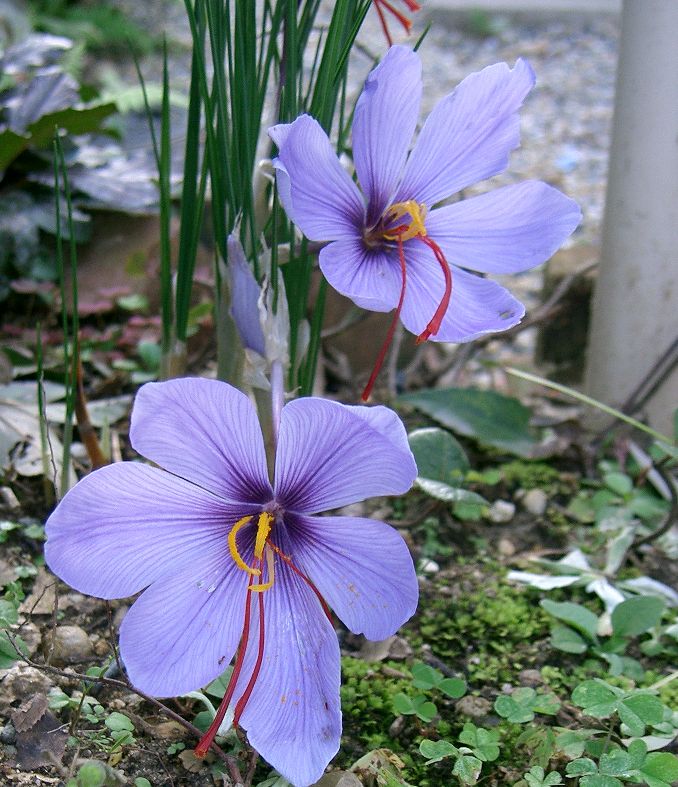 Saffron crocusCrocus sativus
The purple autumn flower whose red stigmas yield the spice saffron
🇨🇳 China and 1 more · Garden flower
Saffron crocusCrocus sativus
The purple autumn flower whose red stigmas yield the spice saffron
🇨🇳 China and 1 more · Garden flower
More from Lebanon
All the flowers of Lebanon FennelFoeniculum vulgare
A tall, aromatic herb with feathery leaves and yellow umbels, used for food and spice
🇨🇳 China and 7 more · Herb or useful flower
FennelFoeniculum vulgare
A tall, aromatic herb with feathery leaves and yellow umbels, used for food and spice
🇨🇳 China and 7 more · Herb or useful flower
 HyacinthHyacinthus
A spring-blooming bulb with fragrant, colourful flower spikes
🇹🇷 Turkey and 7 more · Bulb flower
HyacinthHyacinthus
A spring-blooming bulb with fragrant, colourful flower spikes
🇹🇷 Turkey and 7 more · Bulb flower
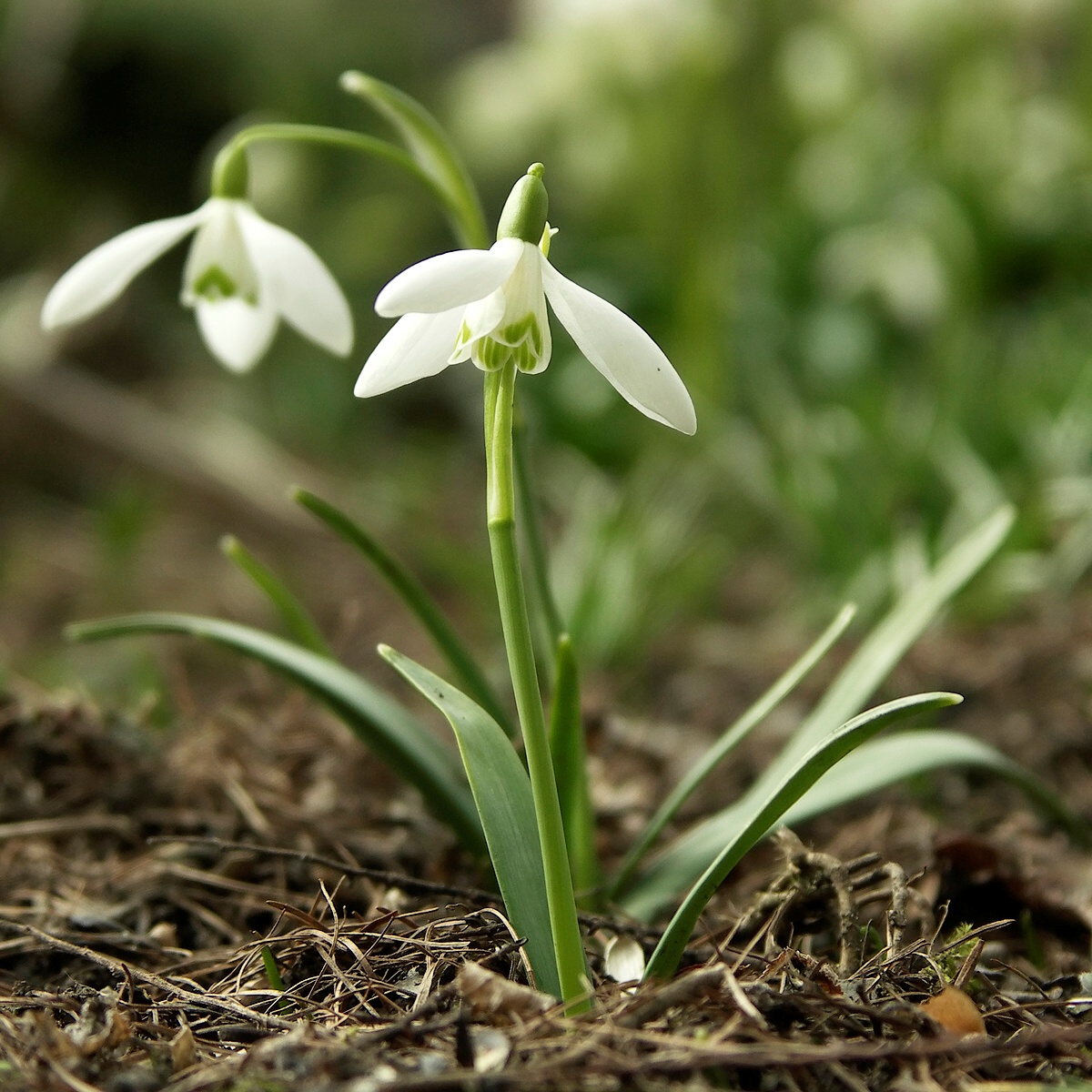 SnowdropGalanthus
White bell-shaped flowers that bloom at the end of winter
🇹🇷 Turkey and 7 more · Wildflower
SnowdropGalanthus
White bell-shaped flowers that bloom at the end of winter
🇹🇷 Turkey and 7 more · Wildflower
 Orchis
A group of wild orchids with tuberous roots from Europe, North Africa and Asia
🇹🇷 Turkey and 7 more · Wildflower
Orchis
A group of wild orchids with tuberous roots from Europe, North Africa and Asia
🇹🇷 Turkey and 7 more · Wildflower