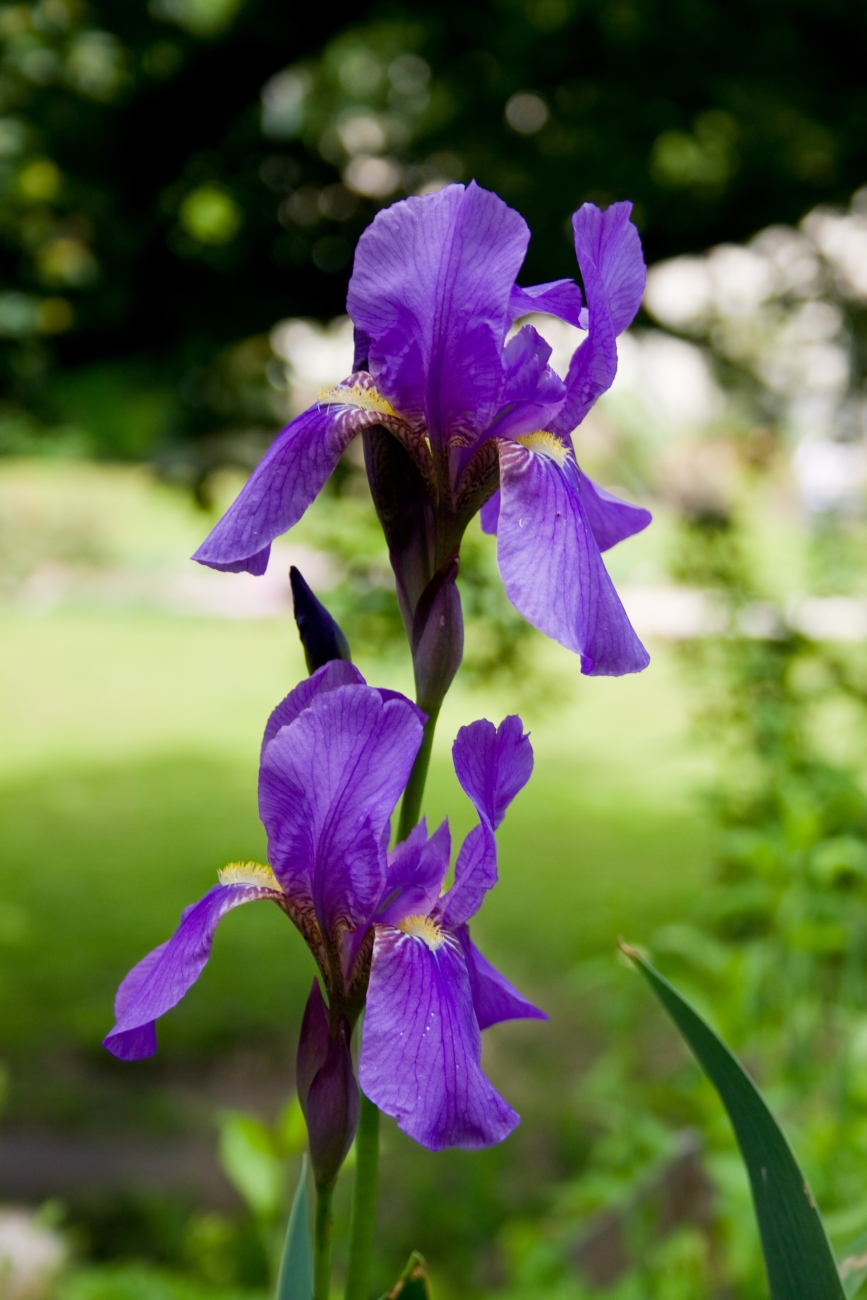
Iris croatica
A dark violet bearded iris found in the hills and woods of Croatia
Iris croatica is a bearded iris species native to Croatia and parts of Slovenia, where it grows in hilly woodlands on limestone and dolomite soils. Its dark violet flowers have pale standards and a whitish yellow beard, and it is strictly protected in Croatia, where it is regarded as the unofficial national flower.
- Endemic to Croatia and found in parts of Slovenia
- Dark violet flowers with a whitish yellow beard
- Strictly protected as a native plant in Croatia
- Unofficially regarded as Croatia's national flower
- Grows in hilly woodlands on limestone and dolomite soils
What does Iris croatica look like?
Iris croatica is a perennial with branched stems and striking dark violet flowers. Like other bearded irises, it has three large outer petals called falls and three smaller inner petals called standards. The standards are a paler violet with white veining at the throat, while the falls are deeper in color. A whitish yellow beard runs along the center of the falls. The spathes, or flower sheaths, show a hint of red-violet. The plant grows from a rhizome and forms clumps in suitable woodland habitats.
Where does Iris croatica come from?
Iris croatica is native to temperate woodlands in Croatia and neighboring Slovenia. It was first described as a species in 1962 by botanists Ivo and Marija Horvat. The plant is found mainly in hilly regions with limestone and dolomite soils, often under downy oak and black hophornbeam trees. Although later considered by some botanists as a synonym of Iris germanica, it remains recognized for its local distinctiveness. It is one of nine Iridaceae species strictly protected in Croatia.
When and how Iris croatica blooms
This iris grows from a rhizome, forming clumps over time. It thrives in the woods of hilly areas, especially where the soil is limestone or dolomite. The plant prefers the partial shade provided by trees like downy oak and black hophornbeam. Flowering occurs in its natural woodland habitat, but the sources do not specify the exact season. It can also be grown in gardens that mimic its native conditions.
How Iris croatica is used
Iris croatica is not widely used for decoration or in gardens outside its native range, but it holds special cultural value in Croatia. It is regarded as the unofficial national flower and is strictly protected by law. Its presence in the wild is valued for its beauty and as a symbol of local natural heritage. Picking or disturbing wild plants is prohibited to preserve its populations.
Kinds of Iris croatica
Iris croatica is a tetraploid species, with four sets of chromosomes (4n=48), which distinguishes it genetically from some other irises. Some botanists have grouped it with Iris germanica, but it is still recognized as a distinct local species in Croatia. No named cultivars or garden varieties are mentioned in the sources.
What Iris croatica means
Iris croatica is an unofficial national symbol of Croatia, reflecting its importance in local identity and natural heritage. Its strict legal protection highlights its conservation status and the value placed on native flora. The plant is not tied to religious or festival use, but its role as a symbol is significant in Croatian culture.
Where Iris croatica is used and seen
 BouquetA creative arrangement of flowers, given or displayed for many occasions
 The Daffodil FestivalPierce County’s spring parade and daffodil celebration since 1934
 Hakone Botanical Garden of WetlandsA garden of wetland and alpine plants in Hakone, Japan
 Parc floral de ParisA botanical garden and flower park in the Bois de Vincennes, Paris
 Parc Floral de la SourceA large public garden in Orléans built around the source of the Loiret river
 KeukenhofA vast Dutch flower garden famous for its spring tulip displays
 KanzashiTraditional Japanese hair ornaments, often crafted as folded silk flowers
 HanafudaJapanese playing cards with flower designs used for traditional games
Questions people ask about Iris croatica
Where does Iris croatica come from?
Iris croatica is native to Croatia and parts of Slovenia, where it grows in hilly woodlands, especially on limestone and dolomite soils.
What does Iris croatica look like?
It has branched stems and dark violet flowers with three large outer petals and three paler inner petals. The flowers feature a whitish yellow beard and white veining at the throat.
Is Iris croatica protected?
Yes, it is strictly protected in Croatia, where it is listed among nine Iridaceae species that cannot be picked or disturbed in the wild.
What does Iris croatica symbolise?
It is regarded as the unofficial national flower of Croatia and is a symbol of local natural heritage.
Where can Iris croatica be found?
It is found in hilly regions of continental Croatia, such as Samoborsko gorje, Cesargradska gora, Strahinjčica, Zagrebačko gorje, and Žumberačko gorje.
Good reading and sources
- Plants of the World OnlineRoyal Botanic Gardens, Kew, Plant database
- Where it has been recordedGBIF, Plant database
- Iris croatica on WikipediaEncyclopedia
- More photos on Wikimedia CommonsPhotos
- Wikidata recordOpen data
The facts on this page come from the Wikipedia article "Iris croatica", written by its contributors and used under the CC BY-SA 4.0 licence, and from its Wikidata record (CC0). Phool rewrote the text in its own words, with AI assistance, and compares every page with the article to make sure no passage is copied. It may be reused under the same CC BY-SA 4.0 licence with a link back.
It may contain mistakes. It is not medical or foraging advice: many flowers are poisonous, and traditional uses are reported, not recommended. If something is wrong, tell us. Last refreshed 2026-10-03.
Others in the family Iridaceae
The whole family Gladiolus
Tall, showy flower spikes grown from corms, known as sword lilies
Gladiolus · Garden flower
Gladiolus
Tall, showy flower spikes grown from corms, known as sword lilies
Gladiolus · Garden flower
 Iris
A large group of perennial flowers with striking, six-lobed blooms
Iris · Wildflower
Iris
A large group of perennial flowers with striking, six-lobed blooms
Iris · Wildflower
 Crocus
Small corm-grown flowers in white, yellow, orange or purple
🇹🇷 Turkey and 7 more · Wildflower
Crocus
Small corm-grown flowers in white, yellow, orange or purple
🇹🇷 Turkey and 7 more · Wildflower
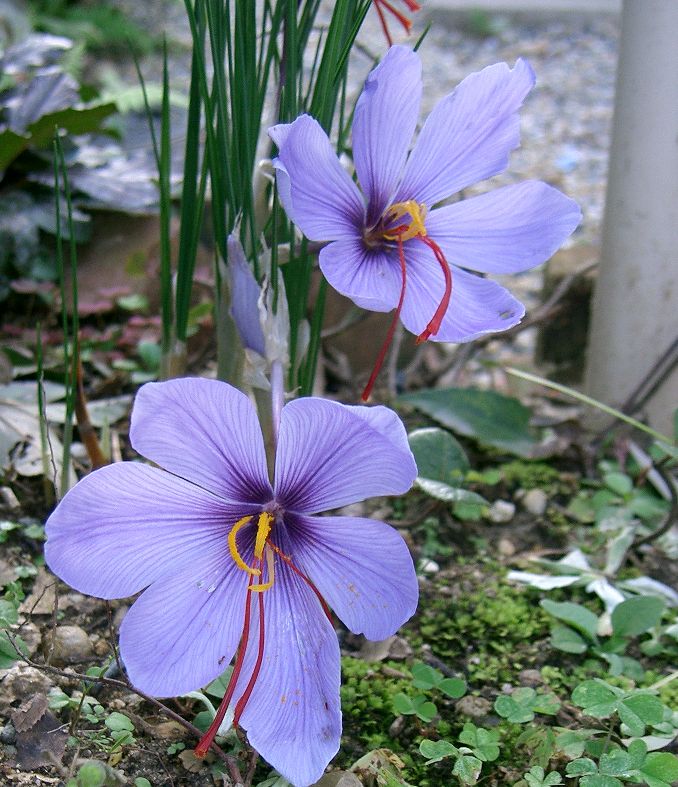 Saffron crocusCrocus sativus
The purple autumn flower whose red stigmas yield the spice saffron
🇨🇳 China and 1 more · Garden flower
Saffron crocusCrocus sativus
The purple autumn flower whose red stigmas yield the spice saffron
🇨🇳 China and 1 more · Garden flower
More from Croatia
All the flowers of Croatia OliveOlea europaea
Evergreen tree grown for its fruit and oil across the Mediterranean and beyond
🇪🇸 Spain and 7 more · Flowering tree
OliveOlea europaea
Evergreen tree grown for its fruit and oil across the Mediterranean and beyond
🇪🇸 Spain and 7 more · Flowering tree
 Poet's daffodilNarcissus poeticus
A fragrant white daffodil linked to ancient Greek myth and poetry
🇪🇸 Spain and 6 more · Wildflower
Poet's daffodilNarcissus poeticus
A fragrant white daffodil linked to ancient Greek myth and poetry
🇪🇸 Spain and 6 more · Wildflower
 Sweet irisIris pallida
A Mediterranean iris grown for its scented roots and pale purple flowers
🇭🇷 Croatia and 4 more · Garden flower
Sweet irisIris pallida
A Mediterranean iris grown for its scented roots and pale purple flowers
🇭🇷 Croatia and 4 more · Garden flower
 Grecian foxgloveDigitalis lanata
A woolly-leaved foxglove of the Balkans, source of the heart drug digoxin
🇦🇱 Albania and 9 more · Wildflower
Grecian foxgloveDigitalis lanata
A woolly-leaved foxglove of the Balkans, source of the heart drug digoxin
🇦🇱 Albania and 9 more · Wildflower