
Sweet iris
Iris pallida, family Iridaceae
A Mediterranean iris grown for its scented roots and pale purple flowers
Sweet iris is a perennial bearded iris from the Dalmatian coast, now grown in gardens and fields elsewhere. Its pale purple or whitish flowers appear in late spring, and its rhizomes are valued for their fragrance, used in perfumes, foods, and traditional crafts.
- Native to the Dalmatian coast along the Adriatic Sea
- Grown in Italy’s Chianti region for its fragrant rhizomes
- Flowers are pale purple or white and appear in late spring
- Orris oil from its roots is used in perfumes and flavorings
- The 'Variegata' variety has won horticultural awards
What does Sweet iris look like?
Sweet iris grows from a thick rhizome and forms upright clumps of bluish-green, sword-like leaves. The stems reach about half a meter to just over three-quarters of a meter tall. In late spring, each stem produces a few fan-shaped blooms, usually pale purple or white, with a noticeable scent. The flowers are typical of bearded irises, with soft, fuzzy 'beards' on the petals.
Where does Sweet iris come from?
This iris is native to rocky slopes and hillsides along the Dalmatian coast, a region on the Adriatic Sea. It is also found in nearby Mediterranean and sub-Mediterranean areas, sometimes reaching higher elevations in Montenegro. Over time, it has been introduced to other parts of Europe and is now widely grown for both ornamental and commercial uses. Its name reflects its origin in Dalmatia.
When and how Sweet iris blooms
Sweet iris blooms in May and June. It grows best in rocky or well-drained soils and can handle poor soil and varying climates. Gardeners often plant it for its flowers and its scented rhizomes. In Italy’s Chianti region, it is cultivated for orris root, which is harvested from mature rhizomes and used in perfumes and flavorings.
How Sweet iris is used
The rhizome of sweet iris has been valued for centuries. It is dried and processed to produce orris oil, a key ingredient in perfumes, scented products, and some foods and drinks. Historically, it was used in medicine and to freshen linens. The rhizomes have also been made into beads for necklaces and rosaries.
Kinds of Sweet iris
There are several recognized forms of sweet iris. One subspecies with deeper purple flowers is found in Slovenia and nearby Italy. Others are native to different parts of the Dalmatian coast. The garden variety 'Variegata', with striped leaves, has received awards for its ornamental value.
What Sweet iris means
Sweet iris has a long history in European gardens and trade, especially for its fragrant rhizomes. Its scent has been prized since at least the 15th century. The plant is also grown for its beauty, and some forms are recognized by horticultural societies. It remains an important crop for perfume and traditional crafts.
Where Sweet iris is used and seen
 BouquetA creative arrangement of flowers, given or displayed for many occasions
 The Daffodil FestivalPierce County’s spring parade and daffodil celebration since 1934
 Hakone Botanical Garden of WetlandsA garden of wetland and alpine plants in Hakone, Japan
 Parc floral de ParisA botanical garden and flower park in the Bois de Vincennes, Paris
 Parc Floral de la SourceA large public garden in Orléans built around the source of the Loiret river
 KeukenhofA vast Dutch flower garden famous for its spring tulip displays
 KanzashiTraditional Japanese hair ornaments, often crafted as folded silk flowers
 HanafudaJapanese playing cards with flower designs used for traditional games
Questions people ask about Sweet iris
Where does sweet iris come from?
Sweet iris is native to the Dalmatian coast, a region along the Adriatic Sea, and is also found in nearby Mediterranean areas. It has since been widely grown in gardens and fields in other parts of Europe.
What does sweet iris look like?
It has bluish-green, sword-shaped leaves and tall stems that bear a few pale purple or white flowers in late spring. The blooms have a strong scent and fuzzy 'beards' on the petals.
What is sweet iris used for?
Its rhizomes are dried and processed to make orris oil, which is used in perfumes, scented products, and some foods and drinks. The plant has also been used in traditional medicine and crafts.
Are there different types of sweet iris?
Yes, there are several subspecies and varieties, including forms with deeper purple flowers and the 'Variegata' cultivar, which has striped leaves and is popular in gardens.
What does sweet iris symbolize?
The sources do not mention a specific symbolic meaning for sweet iris, but it has a long history of use in European gardens and for its fragrance.
Good reading and sources
- Iris pallida 'Variegata' hort. [2] (v)Royal Horticultural Society, Article
- USDA Plants DatabaseUS Department of Agriculture, Article
- Plants of the World OnlineRoyal Botanic Gardens, Kew, Plant database
- Where it has been recordedGBIF, Plant database
- Sightings and photos by naturalistsiNaturalist, Plant database
The facts on this page come from the Wikipedia article "Iris pallida", written by its contributors and used under the CC BY-SA 4.0 licence, and from its Wikidata record (CC0). Phool rewrote the text in its own words, with AI assistance, and compares every page with the article to make sure no passage is copied. It may be reused under the same CC BY-SA 4.0 licence with a link back.
It may contain mistakes. It is not medical or foraging advice: many flowers are poisonous, and traditional uses are reported, not recommended. If something is wrong, tell us. Last refreshed 2026-10-03.
Others in the family Iridaceae
The whole family Gladiolus
Tall, showy flower spikes grown from corms, known as sword lilies
Gladiolus · Garden flower
Gladiolus
Tall, showy flower spikes grown from corms, known as sword lilies
Gladiolus · Garden flower
 Iris
A large group of perennial flowers with striking, six-lobed blooms
Iris · Wildflower
Iris
A large group of perennial flowers with striking, six-lobed blooms
Iris · Wildflower
 Crocus
Small corm-grown flowers in white, yellow, orange or purple
🇹🇷 Turkey and 7 more · Wildflower
Crocus
Small corm-grown flowers in white, yellow, orange or purple
🇹🇷 Turkey and 7 more · Wildflower
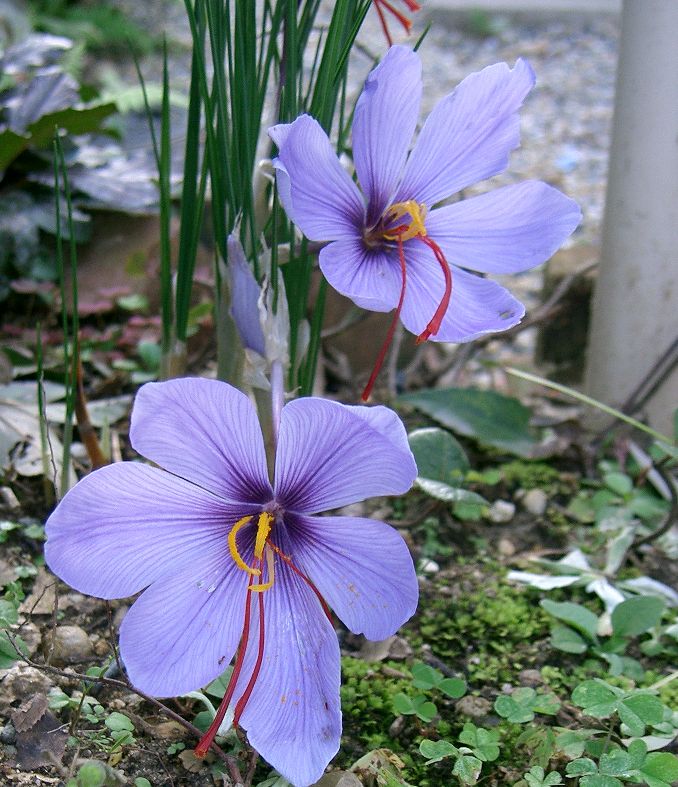 Saffron crocusCrocus sativus
The purple autumn flower whose red stigmas yield the spice saffron
🇨🇳 China and 1 more · Garden flower
Saffron crocusCrocus sativus
The purple autumn flower whose red stigmas yield the spice saffron
🇨🇳 China and 1 more · Garden flower
More from Croatia
All the flowers of Croatia OliveOlea europaea
Evergreen tree grown for its fruit and oil across the Mediterranean and beyond
🇪🇸 Spain and 7 more · Flowering tree
OliveOlea europaea
Evergreen tree grown for its fruit and oil across the Mediterranean and beyond
🇪🇸 Spain and 7 more · Flowering tree
 Poet's daffodilNarcissus poeticus
A fragrant white daffodil linked to ancient Greek myth and poetry
🇪🇸 Spain and 6 more · Wildflower
Poet's daffodilNarcissus poeticus
A fragrant white daffodil linked to ancient Greek myth and poetry
🇪🇸 Spain and 6 more · Wildflower
 Grecian foxgloveDigitalis lanata
A woolly-leaved foxglove of the Balkans, source of the heart drug digoxin
🇦🇱 Albania and 9 more · Wildflower
Grecian foxgloveDigitalis lanata
A woolly-leaved foxglove of the Balkans, source of the heart drug digoxin
🇦🇱 Albania and 9 more · Wildflower
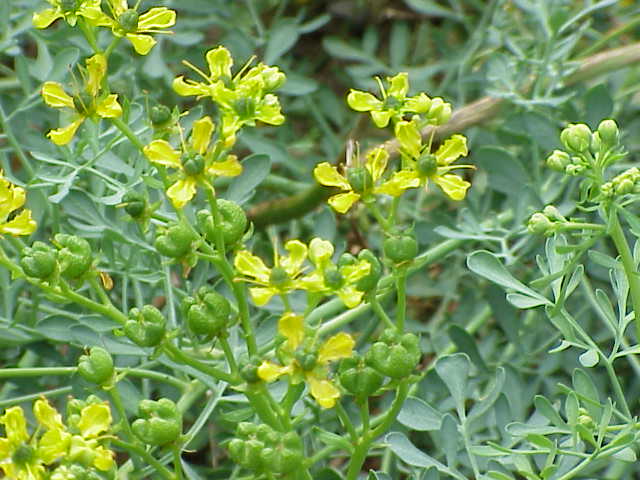 Common rueRuta graveolens
A strong-scented Mediterranean herb with blue-green leaves and yellow flowers
🇱🇹 Lithuania and 8 more · Wildflower
Common rueRuta graveolens
A strong-scented Mediterranean herb with blue-green leaves and yellow flowers
🇱🇹 Lithuania and 8 more · Wildflower