Iberian iris
Iris iberica, family Iridaceae
A rare, boldly veined iris from the Caucasus steppes
Iberian iris is a perennial iris native to the Caucasus Mountains, found in eastern Georgia, Armenia, and western Azerbaijan. Its large, solitary spring flowers show pale backgrounds with heavy dark veining and a striking black or purple patch, making it a prized but endangered ornamental.
- Native to the Caucasus Mountains of Georgia, Armenia, and Azerbaijan
- Large, solitary flowers with bold dark veining and a black or purple patch
- Endangered in the wild due to habitat loss and picking
- Grown as an ornamental in temperate gardens
- Many hybrids exist, but most are sterile
What does Iberian iris look like?
Iberian iris grows from a slender rhizome and has 4–6 narrow, sickle-shaped grey-green leaves. Its short stem holds a single, large flower in late spring. The flower is 10–15 cm across, with a pale background—white, cream, or pale blue—heavily veined or stippled in shades of mauve, violet, maroon, or purple-brown. A dark, velvet-like patch and a brown or purple beard mark the center of each fall (outer petal). The standards (inner petals) are round and paler, with less veining.
Where does Iberian iris come from?
This iris is native to the dry grasslands and stony slopes of the Caucasus Mountains, especially in eastern Georgia, Armenia, and western Azerbaijan. The Latin name 'iberica' refers to its origin in the Georgian Caucasus. It was first described in 1808 by Hoffmann. Subspecies are found in eastern Turkey and northwestern Iran. Its wild populations are now rare and threatened by habitat loss and picking.
When and how Iberian iris blooms
Iberian iris blooms in late spring, with leaves emerging in autumn after a summer rest. It prefers dry, sunny slopes and steppes, often among grasses and scattered shrubs at altitudes from 400 to 3,000 meters. In gardens, it is grown as an ornamental in temperate regions, best in sandy soil and protected from excess moisture. Propagation is by seed or careful division of rhizomes.
How Iberian iris is used
The plant is valued as an ornamental for its striking flowers and is cultivated in gardens, especially in temperate climates. In its native range, it is sometimes picked and sold in markets, which has contributed to its decline. It is also considered a regional emblem and is listed as endangered in Georgia.
Kinds of Iberian iris
There are two main subspecies: Iris iberica subsp. elegantissima, with cream or pale yellow flowers found in eastern Turkey, and subsp. lycotis, found near the Iranian border. Many hybrids have been bred with other irises, resulting in a wide range of flower colors and forms, though most are sterile.
What Iberian iris means
Iberian iris is recognized as an endangered species and is included in conservation lists in Georgia and the former USSR. Its bold, veined flowers make it a symbol of the Caucasus region. The plant is featured in botanical collections and has inspired many hybrid irises in horticulture.
Where Iberian iris is used and seen
 BouquetA creative arrangement of flowers, given or displayed for many occasions
 Hakone Botanical Garden of WetlandsA garden of wetland and alpine plants in Hakone, Japan
 Parc floral de ParisA botanical garden and flower park in the Bois de Vincennes, Paris
 Parc Floral de la SourceA large public garden in Orléans built around the source of the Loiret river
 KeukenhofA vast Dutch flower garden famous for its spring tulip displays
 KanzashiTraditional Japanese hair ornaments, often crafted as folded silk flowers
 HanafudaJapanese playing cards with flower designs used for traditional games
 History of flower arrangementHow arranging flowers became an art across cultures and centuries
Questions people ask about Iberian iris
Where does the Iberian iris come from?
It is native to the Caucasus Mountains, especially eastern Georgia, Armenia, and western Azerbaijan, and also found in parts of Turkey and Iran.
What does the Iberian iris look like?
It has a single large flower with a pale background, heavily veined in dark colors, and a dark signal patch and beard at the center. The leaves are narrow, grey-green, and sickle-shaped.
Why is the Iberian iris endangered?
Its populations are threatened by habitat loss, land development, and picking for sale in markets, leading to its listing as endangered in Georgia and the former USSR.
How is the Iberian iris used?
It is mainly grown as an ornamental plant for its striking flowers, both in gardens and botanical collections. In its native region, it is also considered a regional emblem.
Are there different forms of Iberian iris?
Yes, there are two main subspecies and many hybrids bred with other irises, resulting in a variety of flower colors and patterns.
Good reading and sources
- Iris ibericaRoyal Horticultural Society, Article
- Plants of the World OnlineRoyal Botanic Gardens, Kew, Plant database
- Where it has been recordedGBIF, Plant database
- Sightings and photos by naturalistsiNaturalist, Plant database
The facts on this page come from the Wikipedia article "Iris iberica", written by its contributors and used under the CC BY-SA 4.0 licence, and from its Wikidata record (CC0). Phool rewrote the text in its own words, with AI assistance, and compares every page with the article to make sure no passage is copied. It may be reused under the same CC BY-SA 4.0 licence with a link back.
It may contain mistakes. It is not medical or foraging advice: many flowers are poisonous, and traditional uses are reported, not recommended. If something is wrong, tell us. Last refreshed 2026-10-03.
Others in the family Iridaceae
The whole family Gladiolus
Tall, showy flower spikes grown from corms, known as sword lilies
Gladiolus · Garden flower
Gladiolus
Tall, showy flower spikes grown from corms, known as sword lilies
Gladiolus · Garden flower
 Iris
A large group of perennial flowers with striking, six-lobed blooms
Iris · Wildflower
Iris
A large group of perennial flowers with striking, six-lobed blooms
Iris · Wildflower
 Crocus
Small corm-grown flowers in white, yellow, orange or purple
🇹🇷 Turkey and 7 more · Wildflower
Crocus
Small corm-grown flowers in white, yellow, orange or purple
🇹🇷 Turkey and 7 more · Wildflower
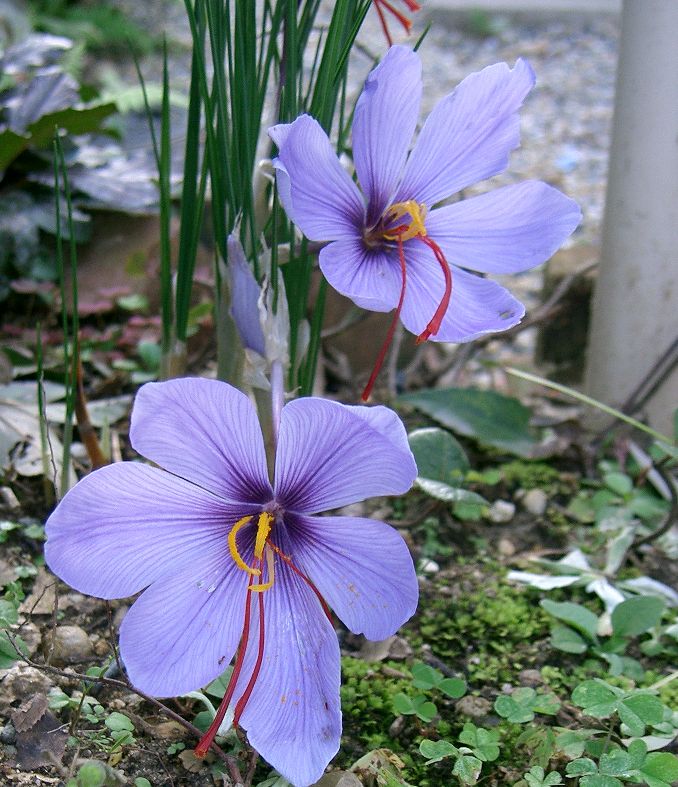 Saffron crocusCrocus sativus
The purple autumn flower whose red stigmas yield the spice saffron
🇨🇳 China and 1 more · Garden flower
Saffron crocusCrocus sativus
The purple autumn flower whose red stigmas yield the spice saffron
🇨🇳 China and 1 more · Garden flower
More from Georgia
All the flowers of Georgia Helianthus
Tall North American plants with large, bright flower heads called sunflowers
🇺🇦 Ukraine and 1 more · Wildflower
Helianthus
Tall North American plants with large, bright flower heads called sunflowers
🇺🇦 Ukraine and 1 more · Wildflower
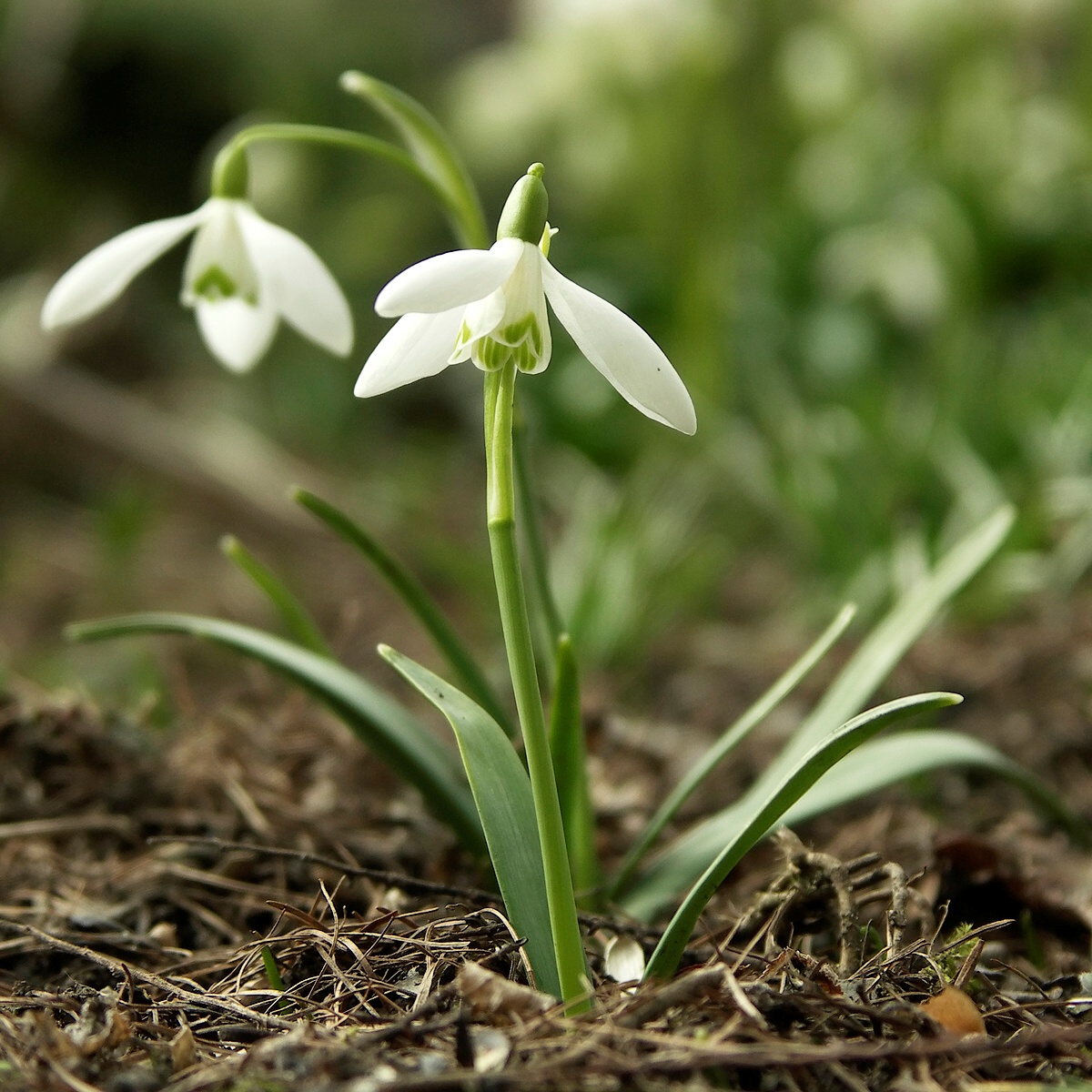 SnowdropGalanthus
White bell-shaped flowers that bloom at the end of winter
🇹🇷 Turkey and 7 more · Wildflower
SnowdropGalanthus
White bell-shaped flowers that bloom at the end of winter
🇹🇷 Turkey and 7 more · Wildflower
 MallowMalva
Edible and ornamental flowering plants with pink, purple or white blooms
🇮🇳 India and 6 more · Wildflower
MallowMalva
Edible and ornamental flowering plants with pink, purple or white blooms
🇮🇳 India and 6 more · Wildflower
 White cloverTrifolium repens
A low-growing, mat-forming clover with white flower heads
🇨🇳 China and 7 more · Wildflower
White cloverTrifolium repens
A low-growing, mat-forming clover with white flower heads
🇨🇳 China and 7 more · Wildflower