
Fringed iris
Iris japonica, family Iridaceae
A pale blue or white iris with fringed petals from China and Japan
Fringed iris (Iris japonica) is a rhizomatous perennial plant native to China and Japan, grown for its pale blue, lavender, or white flowers with orange or yellow crests and finely fringed petals. It forms dense clumps in gardens and woodlands, blooming in spring, and is popular as an ornamental ground cover in temperate regions.
- Flowers are pale blue, lavender, or white with fringed edges and orange or yellow crests
- Native to China and Japan, found in forests and on rocky slopes
- Blooms in spring for 2–5 weeks, each flower lasting a short time
- Forms dense clumps by spreading rhizomes and stolons
- All parts of the plant are poisonous if eaten
What does Fringed iris look like?
Fringed iris is a low-growing perennial with glossy, fan-shaped green leaves that arch outward and can reach up to 60 cm tall. Its wiry stems rise above the foliage, bearing clusters of delicate, flat flowers about 4.5–6 cm across. The flowers are pale blue, lavender, or white, with each petal edged in fine fringes and marked with orange or yellow crests and purple spots. The blooms have a light, clove-like scent and appear in succession for several weeks in spring.
Where does Fringed iris come from?
Iris japonica is native to China and Japan, where it grows wild on forest edges, rocky slopes, and wet meadows, often at moderate to high altitudes. The species was described by Carl Peter Thunberg in the late 18th century and introduced to Europe from China in 1792. Although the Latin name suggests a Japanese origin, it is believed to have originated in China and later become naturalized in Japan. It has also been found in Myanmar and Mongolia.
When and how Fringed iris blooms
This iris blooms in spring, with flowers opening one after another for up to five weeks. It spreads by creeping rhizomes and stolons, forming dense mats. Gardeners grow it in moist, well-drained soils, preferring partial shade. It can be propagated by seed or division, with division best done after flowering. The plant is hardy in mild climates and is often used as ground cover or in containers in sheltered spots.


How Fringed iris is used
Fringed iris is mainly grown as an ornamental plant in gardens and parks, valued for its attractive flowers and evergreen foliage. It is used as a ground cover and sometimes in containers. In Japan, its presence in woods can indicate former human habitation. The plant has received horticultural awards and is the most commonly grown crested iris in the UK.
Kinds of Fringed iris
Many cultivars of Iris japonica exist, with differences in flower color, leaf variegation, and hardiness. Notable forms include 'Variegata' with cream-edged leaves, 'Ledger's Variety' with white and purple flowers, and 'Bourne Graceful' with large, frilly pale mauve blooms. White-flowered forms from Zhejiang were once named as a separate form but are now considered part of the species.
What Fringed iris means
Fringed iris is admired for its delicate, fringed flowers and is associated with gardens in China and Japan. Its name in Chinese (蝴蝶花, hu die hua) means 'butterfly flower.' The plant is sometimes used as a symbol of past human settlement in Japanese woods. It has received the Royal Horticultural Society's Award of Garden Merit. Like many irises, it is toxic if ingested.
Where Fringed iris is used and seen
 BouquetA creative arrangement of flowers, given or displayed for many occasions
 Hakone Botanical Garden of WetlandsA garden of wetland and alpine plants in Hakone, Japan
 Parc floral de ParisA botanical garden and flower park in the Bois de Vincennes, Paris
 Parc Floral de la SourceA large public garden in Orléans built around the source of the Loiret river
 KeukenhofA vast Dutch flower garden famous for its spring tulip displays
 KanzashiTraditional Japanese hair ornaments, often crafted as folded silk flowers
 HanafudaJapanese playing cards with flower designs used for traditional games
 History of flower arrangementHow arranging flowers became an art across cultures and centuries
Questions people ask about Fringed iris
Where does fringed iris come from?
Fringed iris (Iris japonica) is native to China and Japan, growing wild in forest margins, rocky slopes, and wet meadows. It has also been found in Myanmar and Mongolia.
What does the flower look like?
The flower is flat and about 4.5–6 cm wide, with pale blue, lavender, or white petals that are finely fringed. Each flower has orange or yellow crests and purple spots, and blooms in clusters above glossy green leaves.
How is fringed iris used?
It is mainly grown as an ornamental ground cover or container plant in gardens and parks. Its attractive flowers and evergreen foliage make it popular in temperate regions.
Is fringed iris poisonous?
Yes, like many irises, most parts of the fringed iris plant are toxic if ingested.
What does fringed iris symbolise?
In Japan, its presence in woods can indicate past human habitation, but there is no widely recorded symbolic meaning beyond its ornamental value.
Good reading and sources
- Plants of the World OnlineRoyal Botanic Gardens, Kew, Plant database
- Where it has been recordedGBIF, Plant database
- Sightings and photos by naturalistsiNaturalist, Plant database
- Iris japonica on WikipediaEncyclopedia
- More photos on Wikimedia CommonsPhotos
- Wikidata recordOpen data
The facts on this page come from the Wikipedia article "Iris japonica", written by its contributors and used under the CC BY-SA 4.0 licence, and from its Wikidata record (CC0). Phool rewrote the text in its own words, with AI assistance, and compares every page with the article to make sure no passage is copied. It may be reused under the same CC BY-SA 4.0 licence with a link back.
It may contain mistakes. It is not medical or foraging advice: many flowers are poisonous, and traditional uses are reported, not recommended. If something is wrong, tell us. Last refreshed 2026-10-03.
Others in the family Iridaceae
The whole family Gladiolus
Tall, showy flower spikes grown from corms, known as sword lilies
Gladiolus · Garden flower
Gladiolus
Tall, showy flower spikes grown from corms, known as sword lilies
Gladiolus · Garden flower
 Iris
A large group of perennial flowers with striking, six-lobed blooms
Iris · Wildflower
Iris
A large group of perennial flowers with striking, six-lobed blooms
Iris · Wildflower
 Crocus
Small corm-grown flowers in white, yellow, orange or purple
🇹🇷 Turkey and 7 more · Wildflower
Crocus
Small corm-grown flowers in white, yellow, orange or purple
🇹🇷 Turkey and 7 more · Wildflower
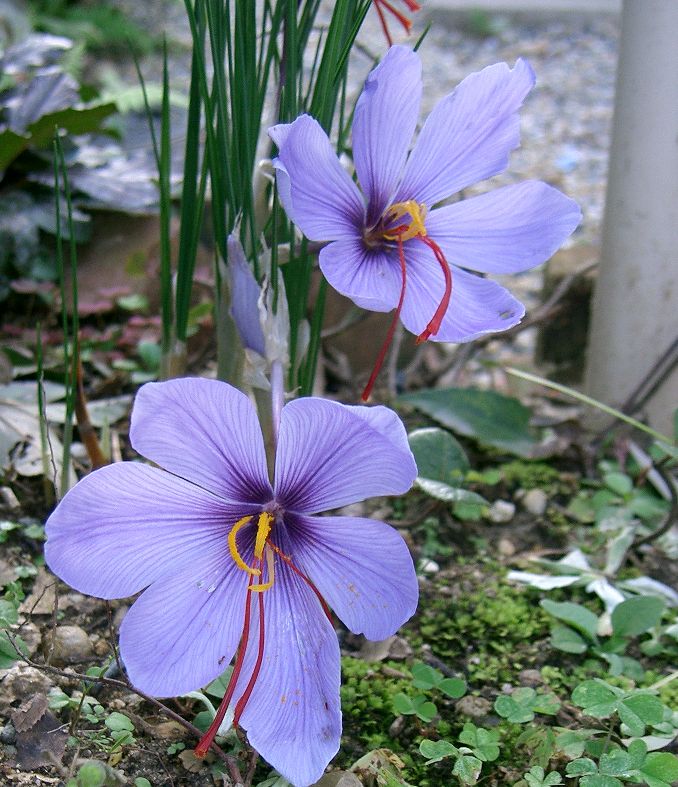 Saffron crocusCrocus sativus
The purple autumn flower whose red stigmas yield the spice saffron
🇨🇳 China and 1 more · Garden flower
Saffron crocusCrocus sativus
The purple autumn flower whose red stigmas yield the spice saffron
🇨🇳 China and 1 more · Garden flower
More from China
All the flowers of China PeachPrunus persica
A flowering fruit tree from China, grown for its pink blossoms and sweet fruit
🇨🇳 China and 7 more · Flowering tree
PeachPrunus persica
A flowering fruit tree from China, grown for its pink blossoms and sweet fruit
🇨🇳 China and 7 more · Flowering tree
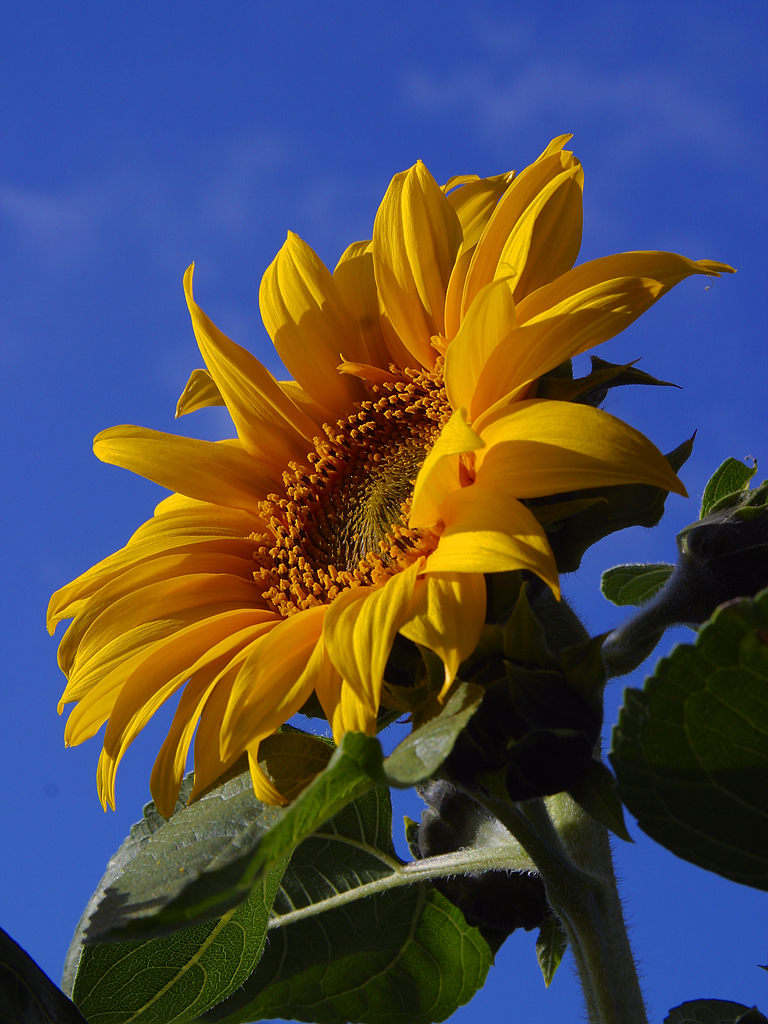 Common sunflowerHelianthus annuus
A tall annual plant grown for its large yellow flower heads and edible seeds
🇨🇦 Canada and 4 more · Wildflower
Common sunflowerHelianthus annuus
A tall annual plant grown for its large yellow flower heads and edible seeds
🇨🇦 Canada and 4 more · Wildflower
 PomegranatePunica granatum
A shrub with bright red flowers and a fruit full of edible seeds
🇮🇷 Iran and 9 more · Flowering shrub
PomegranatePunica granatum
A shrub with bright red flowers and a fruit full of edible seeds
🇮🇷 Iran and 9 more · Flowering shrub
 BirchBetula
Slender trees with papery bark found across the northern world
🇨🇳 China and 7 more · Wildflower
BirchBetula
Slender trees with papery bark found across the northern world
🇨🇳 China and 7 more · Wildflower