
Iris lactea
In its own language: 白花马蔺
A hardy wild iris with pale blue to violet blooms from central Asia
Iris lactea is a perennial iris from central and eastern Asia, valued for its pale blue, violet, or white flowers. It grows wild in grasslands and meadows, and is widely cultivated in gardens for its resilience and delicate blooms. Its leaves and rhizomes are also used in traditional crafts and medicine.
- Native to grasslands and steppes across central and eastern Asia
- Flowers range from pale blue and violet to white and yellow
- Used in traditional medicine and crafts in China and Tibet
- Tolerant of drought and poor soils, often grown for soil improvement
- Known as 'milky iris' in English and '白花马蔺' in Chinese
What does Iris lactea look like?
Iris lactea is a low-growing iris with creeping rhizomes covered in reddish-purple fibers. Its slender, ribbed leaves are grey-green and can reach up to 70 cm long. The plant sends up stems with 2–4 lightly scented flowers, each 5–7.5 cm across, in shades from pale blue and violet to white or yellow. The blooms have dark upright petals and drooping segments marked with blue or purple lines. After flowering, it forms narrow, ribbed seed capsules containing pear-shaped, maroon-brown seeds.
Where does Iris lactea come from?
This iris is native to a broad area of temperate and tropical Asia, including China, Tibet, Mongolia, Central Asia, and parts of India and Russia. It grows wild in grasslands, steppes, and along riverbanks, often at elevations from 600 to 3800 meters. The species was first described in the late 18th century by Pallas. Its naming history is complex, with several early botanists confusing it with other irises, but it is now recognized as Iris lactea.
When and how Iris lactea blooms
Iris lactea blooms from spring into summer, with flowers lasting several weeks. It thrives in sunny or partly shaded spots and tolerates a wide range of soils, including dry or salty ground. The plant is propagated by dividing its rhizomes or by sowing seeds. It is often grown in gardens, rockeries, and for soil improvement, and can even be used to help reclaim contaminated soils.


How Iris lactea is used
People grow Iris lactea for its attractive flowers and its ability to withstand tough conditions. In China and Tibet, its rhizomes are used in traditional medicine, and its leaves are used for animal fodder, thatching, and weaving mats or baskets. The plant is also valued for its use in herbal remedies and for making paper and brushes. In some places, it is considered a wildflower emblem.
Kinds of Iris lactea
Several named forms and varieties of Iris lactea exist, including 'Biglumis', 'Chinensis', 'Chrysantha' (with yellow flowers), and 'Hyacinthiana'. There are also hybrids involving Iris lactea and other iris species. The species shows variation in flower color and form, with some varieties having white blooms with purple veins or pale violet inner petals.
What Iris lactea means
Iris lactea is recognized as a symbol of wild beauty in parts of Asia and is used in traditional crafts and medicine. In Afghanistan, its use has been restricted due to its role in herbal remedies. The plant is widely grown in China, where it is called 'bai hua ma lin'. Its resilience and adaptability have made it a common sight in both wild and cultivated settings.
Where Iris lactea is used and seen
 BouquetA creative arrangement of flowers, given or displayed for many occasions
 Hakone Botanical Garden of WetlandsA garden of wetland and alpine plants in Hakone, Japan
 Parc floral de ParisA botanical garden and flower park in the Bois de Vincennes, Paris
 Parc Floral de la SourceA large public garden in Orléans built around the source of the Loiret river
 KeukenhofA vast Dutch flower garden famous for its spring tulip displays
 KanzashiTraditional Japanese hair ornaments, often crafted as folded silk flowers
 HanafudaJapanese playing cards with flower designs used for traditional games
 History of flower arrangementHow arranging flowers became an art across cultures and centuries
Questions people ask about Iris lactea
Where does Iris lactea come from?
Iris lactea is native to a wide area of temperate and tropical Asia, including China, Tibet, Mongolia, Central Asia, and parts of India and Russia. It grows wild in grasslands, meadows, and along riverbanks.
What does Iris lactea look like?
This iris has slender, ribbed grey-green leaves and stems that bear 2–4 lightly scented flowers. The blooms are 5–7.5 cm wide and come in shades of pale blue, violet, white, or yellow, with distinctive markings on the petals.
How is Iris lactea used?
It is grown for its ornamental flowers and is also used in traditional medicine, especially in China and Tibet. Its leaves are used for animal fodder, weaving, and thatching, and its rhizomes are used in herbal remedies.
Is Iris lactea easy to grow?
Yes, Iris lactea is very hardy and adapts to a wide range of soils, including dry or salty ground. It thrives in both sunny and partly shaded locations and is often grown in gardens and for soil improvement.
Does Iris lactea have any special meaning or symbolism?
In some regions, Iris lactea is seen as a symbol of wild beauty and resilience. It is also used as a wildflower emblem in parts of Asia and features in traditional crafts and remedies.
Good reading and sources
- Iris lactea | white-flowered irisRoyal Horticultural Society, Article
- Plants of the World OnlineRoyal Botanic Gardens, Kew, Plant database
- Where it has been recordedGBIF, Plant database
- Sightings and photos by naturalistsiNaturalist, Plant database
The facts on this page come from the Wikipedia article "Iris lactea", written by its contributors and used under the CC BY-SA 4.0 licence, and from its Wikidata record (CC0). Phool rewrote the text in its own words, with AI assistance, and compares every page with the article to make sure no passage is copied. It may be reused under the same CC BY-SA 4.0 licence with a link back.
It may contain mistakes. It is not medical or foraging advice: many flowers are poisonous, and traditional uses are reported, not recommended. If something is wrong, tell us. Last refreshed 2026-10-03.
Others in the family Iridaceae
The whole family Gladiolus
Tall, showy flower spikes grown from corms, known as sword lilies
Gladiolus · Garden flower
Gladiolus
Tall, showy flower spikes grown from corms, known as sword lilies
Gladiolus · Garden flower
 Iris
A large group of perennial flowers with striking, six-lobed blooms
Iris · Wildflower
Iris
A large group of perennial flowers with striking, six-lobed blooms
Iris · Wildflower
 Crocus
Small corm-grown flowers in white, yellow, orange or purple
🇹🇷 Turkey and 7 more · Wildflower
Crocus
Small corm-grown flowers in white, yellow, orange or purple
🇹🇷 Turkey and 7 more · Wildflower
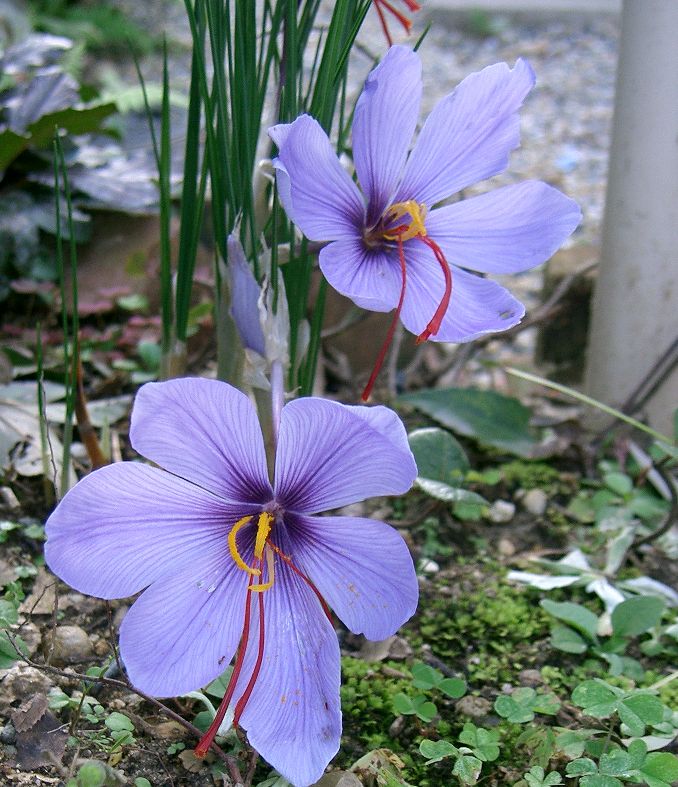 Saffron crocusCrocus sativus
The purple autumn flower whose red stigmas yield the spice saffron
🇨🇳 China and 1 more · Garden flower
Saffron crocusCrocus sativus
The purple autumn flower whose red stigmas yield the spice saffron
🇨🇳 China and 1 more · Garden flower
More from China
All the flowers of China PeachPrunus persica
A flowering fruit tree from China, grown for its pink blossoms and sweet fruit
🇨🇳 China and 7 more · Flowering tree
PeachPrunus persica
A flowering fruit tree from China, grown for its pink blossoms and sweet fruit
🇨🇳 China and 7 more · Flowering tree
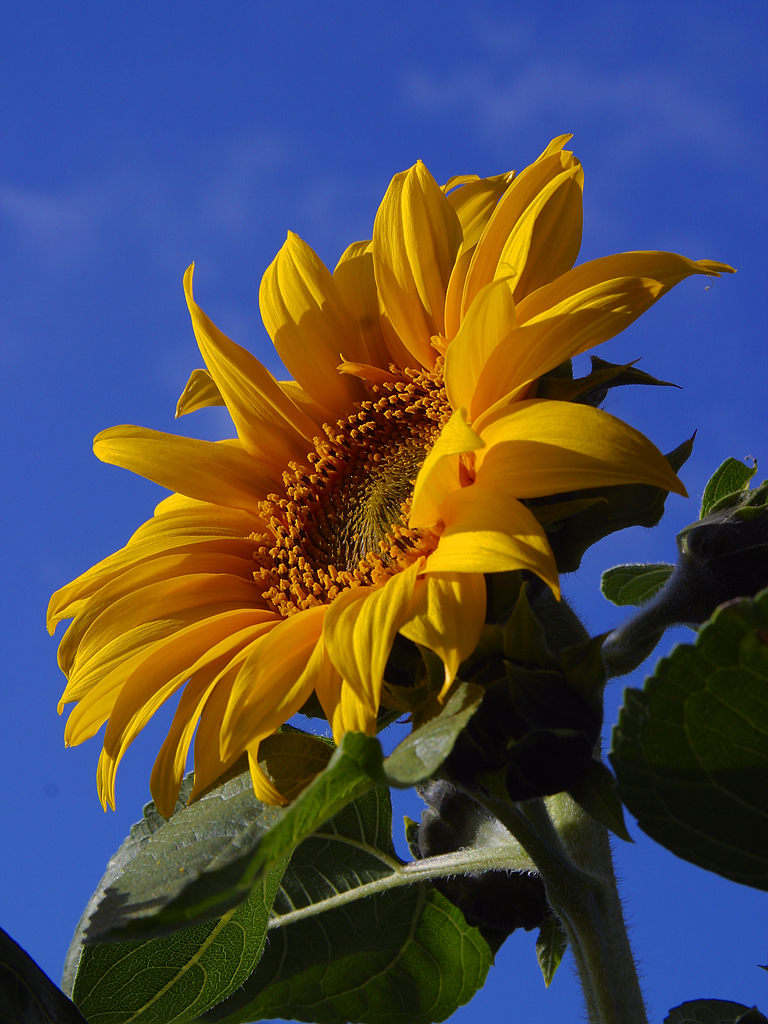 Common sunflowerHelianthus annuus
A tall annual plant grown for its large yellow flower heads and edible seeds
🇨🇦 Canada and 4 more · Wildflower
Common sunflowerHelianthus annuus
A tall annual plant grown for its large yellow flower heads and edible seeds
🇨🇦 Canada and 4 more · Wildflower
 PomegranatePunica granatum
A shrub with bright red flowers and a fruit full of edible seeds
🇮🇷 Iran and 9 more · Flowering shrub
PomegranatePunica granatum
A shrub with bright red flowers and a fruit full of edible seeds
🇮🇷 Iran and 9 more · Flowering shrub
 BirchBetula
Slender trees with papery bark found across the northern world
🇨🇳 China and 7 more · Wildflower
BirchBetula
Slender trees with papery bark found across the northern world
🇨🇳 China and 7 more · Wildflower