
Narcissus triandrus
A delicate daffodil with nodding, pale flowers from southwestern Europe
Narcissus triandrus is a perennial bulb plant from France, Spain, and Portugal, known for its slender stems and clusters of milk-white or pale yellow, drooping flowers. It grows in mountain and woodland habitats and is valued in gardens for its gentle appearance and late spring bloom.
- Native to mountain and woodland areas in France, Spain, and Portugal
- Produces clusters of nodding, pale flowers in late spring
- Tolerates drought and resists grazing by rabbits and deer
- Popular garden cultivar 'Hawera' has received notable recognition
What does Narcissus triandrus look like?
Narcissus triandrus grows from small, dark bulbs and sends up two long, narrow leaves per bulb, sometimes with curled tips. Its stems, about 30 cm tall, are thick and smooth, holding up to six nodding, cup-shaped flowers. The blossoms are usually a soft white or pale yellow and hang downwards, giving a delicate, graceful look. The plant appears in late spring and stands out for its slender form and gentle coloring.
Where does Narcissus triandrus come from?
This species is native to southwestern Europe, especially in France, Spain, and Portugal. It thrives in acidic soils found in mountain areas, woodlands, and open scrub. The plant is found in several mountain ranges across the Iberian Peninsula. Over time, it has been introduced into gardens, where it is appreciated for its unique, drooping flowers and ability to adapt to different climates.
When and how Narcissus triandrus blooms
Narcissus triandrus bulbs are usually planted in late autumn, in soft, well-drained soil. The bulbs rest through most of the year, sending up leaves and flowers in spring. The plant prefers sunny spots but can also grow in partial shade. It is drought tolerant and resists grazing by animals like rabbits and deer, likely due to its chemical makeup. Flowers appear from April to May.


How Narcissus triandrus is used
Gardeners grow Narcissus triandrus for its attractive, nodding blooms and its ability to thrive with little care. It is often chosen for borders, rock gardens, and naturalized areas. Some cultivars, such as 'Hawera', are recognized for their garden value. While not widely used in ceremonies, its gentle look makes it a favorite in spring gardens.
Kinds of Narcissus triandrus
There are several subspecies and varieties of Narcissus triandrus, including subsp. triandrus, subsp. lusitanicus, and subsp. pallidulus. Varieties such as var. cernuus, var. con-color, and var. loiseleurii are also known. The popular garden cultivar 'Hawera' is part of this group and has received awards for its performance.
What Narcissus triandrus means
Narcissus triandrus is valued in horticulture for its beauty and resilience. The plant is recognized for its resistance to pests and drought, making it a reliable choice for gardeners. Some cultivated forms have been honored by gardening societies for their ornamental qualities. In its native regions, it is part of the local wildflower flora.
Where Narcissus triandrus is used and seen
 History of flower arrangementHow arranging flowers became an art across cultures and centuries
 ChapletA ring-shaped headpiece woven from flowers, leaves, or twigs
 Lunar New Year FairA festive flower market held before Lunar New Year in Cantonese communities
 Dutch gardenA formal, geometric flower garden style from the Netherlands
 Chinese New YearThe Spring Festival marked by red decorations, family gatherings, and flower displays
Questions people ask about Narcissus triandrus
Where does Narcissus triandrus come from?
It is native to southwestern Europe, especially France, Spain, and Portugal, where it grows in mountain and woodland habitats with acidic soils.
What does the flower look like?
The plant has slender stems that hold several drooping, cup-shaped flowers, usually in soft white or pale yellow. Each bulb produces two narrow leaves, and the flowers appear in late spring.
How is Narcissus triandrus used?
It is mainly grown in gardens for its delicate, nodding blooms and is valued for its ability to resist drought and animal grazing. Some cultivars are especially popular with gardeners.
Are there different types of Narcissus triandrus?
Yes, there are several subspecies and varieties, as well as garden cultivars like 'Hawera', which is well regarded for its performance.
Does it have any special meaning or use in culture?
While it is not widely used in ceremonies or symbolism, Narcissus triandrus is appreciated in horticulture for its beauty and resilience, and some forms have received awards.
Good reading and sources
- Narcissus 'Hawera' (5)Royal Horticultural Society, Article
- IUCN Red List of Threatened SpeciesIUCN Red List, Article
- Plants of the World OnlineRoyal Botanic Gardens, Kew, Plant database
- Where it has been recordedGBIF, Plant database
- Sightings and photos by naturalistsiNaturalist, Plant database
- Narcissus triandrus on WikipediaEncyclopedia
- More photos on Wikimedia CommonsPhotos
- Wikidata recordOpen data
The facts on this page come from the Wikipedia article "Narcissus triandrus", written by its contributors and used under the CC BY-SA 4.0 licence, and from its Wikidata record (CC0). Phool rewrote the text in its own words, with AI assistance, and compares every page with the article to make sure no passage is copied. It may be reused under the same CC BY-SA 4.0 licence with a link back.
It may contain mistakes. It is not medical or foraging advice: many flowers are poisonous, and traditional uses are reported, not recommended. If something is wrong, tell us. Last refreshed 2026-10-03.
Others in the family Amaryllidaceae
The whole family Narcissus
Spring-flowering bulbs with trumpet-shaped blooms in white, yellow, and orange
🇬🇧 United Kingdom and 7 more · Wildflower
Narcissus
Spring-flowering bulbs with trumpet-shaped blooms in white, yellow, and orange
🇬🇧 United Kingdom and 7 more · Wildflower
 Allium
The genus of onions, garlic, leeks, chives and their wild relatives
Allium · Wildflower
Allium
The genus of onions, garlic, leeks, chives and their wild relatives
Allium · Wildflower
 Wild GarlicAllium ursinum
A wild woodland plant with star-shaped white flowers and edible leaves
🇮🇪 Ireland · Wildflower
Wild GarlicAllium ursinum
A wild woodland plant with star-shaped white flowers and edible leaves
🇮🇪 Ireland · Wildflower
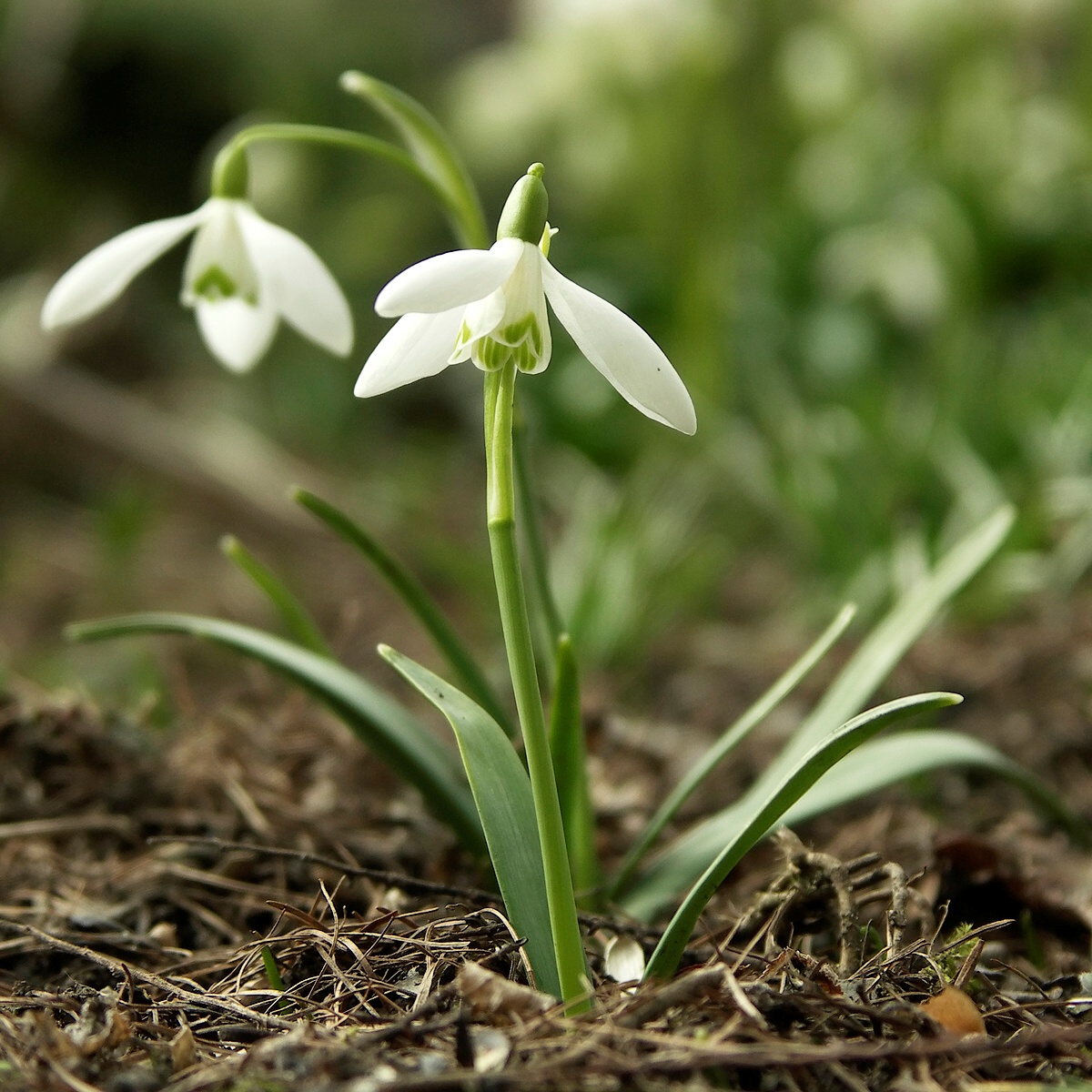 SnowdropGalanthus
White bell-shaped flowers that bloom at the end of winter
🇹🇷 Turkey and 7 more · Wildflower
SnowdropGalanthus
White bell-shaped flowers that bloom at the end of winter
🇹🇷 Turkey and 7 more · Wildflower
More from France
All the flowers of France TulipTulipa
Spring-blooming bulbs with showy, cup-shaped flowers in many colours
🇳🇱 Netherlands and 7 more · Wildflower
TulipTulipa
Spring-blooming bulbs with showy, cup-shaped flowers in many colours
🇳🇱 Netherlands and 7 more · Wildflower
 Common flaxLinum usitatissimum
The slender blue-flowered plant grown for linen and linseed
🇨🇳 China and 7 more · Wildflower
Common flaxLinum usitatissimum
The slender blue-flowered plant grown for linen and linseed
🇨🇳 China and 7 more · Wildflower
 Chrysanthemum菊花
Autumn-blooming flower with thousands of varieties, cherished in East Asia and beyond
🇨🇳 China and 6 more · Wildflower
Chrysanthemum菊花
Autumn-blooming flower with thousands of varieties, cherished in East Asia and beyond
🇨🇳 China and 6 more · Wildflower
 LindenTilia
Tall, broad-leaved trees with fragrant yellow flowers and heart-shaped leaves
🇨🇳 China and 7 more · Flowering tree
LindenTilia
Tall, broad-leaved trees with fragrant yellow flowers and heart-shaped leaves
🇨🇳 China and 7 more · Flowering tree