
Chinese New Year
In its own language: 春节
The Spring Festival marked by red decorations, family gatherings, and flower displays
Chinese New Year, or Spring Festival, is the most important holiday in Chinese culture, celebrated at the start of the traditional lunisolar year. Families gather for reunion dinners, decorate with red paper and flowers, and take part in customs like giving red envelopes, setting off firecrackers, and displaying spring couplets. The festival is observed in China and across the world by Chinese and Sinophone communiti
- Red decorations and flowers are displayed for luck and happiness
- Families gather for a reunion dinner on New Year's Eve
- Red envelopes with money are given to children and unmarried adults
- Lion and dragon dances, lanterns, and firecrackers mark public celebrations
- Peach blossom, narcissus, and kumquat are traditional festival flowers
What is Chinese New Year?
Chinese New Year is a festival that marks the start of the new year in the traditional Chinese calendar. Homes are decorated with red paper-cuts, spring couplets, lanterns, and flowers such as peach blossom and narcissus. Red is the main colour, symbolising good fortune and joy. The festival features family gatherings, reunion dinners, and public celebrations with lion and dragon dances, firecrackers, and lantern displays. Offerings are made to ancestors and deities, and gifts of money in red envelopes are given to children and unmarried adults.
Where does Chinese New Year come from?
The origins of Chinese New Year go back to ancient harvest celebrations and rituals to honour ancestors and deities. Early records describe year-end gatherings, house cleaning, and offerings of food and wine. The festival evolved through the Zhou, Han, Jin, Tang, and Song dynasties, with customs like staying up all night, setting off bamboo to scare away evil, and exchanging greeting cards. The legend of the Nian monster, frightened by red and loud sounds, explains the use of red decorations and firecrackers. Over time, traditions such as spring couplets and giving red envelopes became widespread.
How Chinese New Year is made
Preparations begin with cleaning the house to sweep away bad luck. Windows and doors are decorated with red paper-cuts and couplets. Flowers like peach blossom, narcissus, and kumquat are displayed for their auspicious meanings. On New Year's Eve, families gather for a reunion dinner. Firecrackers are set off at midnight, and red envelopes are given to children. Public celebrations include lion and dragon dances, lantern displays, and temple fairs. The festival lasts until the Lantern Festival on the 15th day.


When and where Chinese New Year is used
Chinese New Year is celebrated by Chinese and Sinophone communities worldwide. It is a time for family reunions, ancestor worship, and wishing for good fortune. Red decorations and flowers are used to attract luck and happiness. People visit relatives, exchange greetings, and give red envelopes. Public festivities include parades, dances, and fireworks. The festival is also observed in countries with large Chinese populations, each with local variations in customs and displays.
Forms of Chinese New Year
Different regions in China and overseas have their own customs and preferred flowers. In southern China, peach blossom is popular, while narcissus is favoured in the south. Kumquat trees are common in southern China and Southeast Asia. In northern China, plum blossom and chrysanthemum are used. Each community may have its own style of decorations, food, and performances. The festival has influenced similar celebrations in other Asian cultures, such as Tết in Vietnam and Seollal in Korea.
What Chinese New Year means
Chinese New Year symbolises renewal, good fortune, and family unity. Red is the dominant colour, believed to ward off evil and attract luck. The festival is rooted in Chinese folk religion, Buddhism, Confucianism, and Taoism, but is also celebrated by some Christian communities. Flowers and plants displayed during the festival each have symbolic meanings, such as prosperity, longevity, and happiness. The festival is a time for reconnecting with family and honouring ancestors, and its customs have spread worldwide.
The flowers of Chinese New Year
 ChrysanthemumAutumn-blooming flower with thousands of varieties, cherished in East Asia and beyond
 NarcissusSpring-flowering bulbs with trumpet-shaped blooms in white, yellow, and orange
 Prunus mumeThe fragrant plum blossom tree that blooms in winter across East Asia
 PaperwhiteA tall, white-and-yellow narcissus grown for scent and indoor blooms
 Wild daffodilA pale yellow spring flower and the national emblem of Wales
 Poet's daffodilA fragrant white daffodil linked to ancient Greek myth and poetry
 Pygmy daffodilA tiny yellow daffodil from the mountains of Portugal and Spain
 Narcissus romieuxiiA winter-flowering daffodil from Morocco’s Atlas Mountains
Questions people ask about Chinese New Year
When is Chinese New Year celebrated?
Chinese New Year falls on the first day of the traditional Chinese lunisolar calendar, usually between January 21 and February 20. The festival lasts for about fifteen days, ending with the Lantern Festival.
What flowers are used during Chinese New Year?
Peach blossom, narcissus, kumquat, plum blossom, chrysanthemum, and bamboo are commonly displayed. Each flower has its own symbolic meaning, such as luck, prosperity, or longevity.
What do the red decorations and flowers symbolise?
Red is used to attract good fortune and happiness and to ward off evil spirits, according to legend. Flowers and plants displayed during the festival also symbolise prosperity, renewal, and harmony.
Where is Chinese New Year celebrated?
It is celebrated in China and in countries with large Chinese or Sinophone communities, including Taiwan, Singapore, Malaysia, Indonesia, Vietnam, the Philippines, and Mauritius, as well as in Chinatowns worldwide.
What are some main customs of Chinese New Year?
Key customs include cleaning the house, decorating with red paper and flowers, family reunion dinners, giving red envelopes, setting off firecrackers, and public celebrations with lion and dragon dances.
Good reading and sources
- Encyclopaedia BritannicaArticle
- BBC NEWS | Asia-PacificBBC, Article
- Why this Chinese New Year will be a digital money festBBC, Article
- The top things to know about Lunar New YearNational Geographic, Article
- Chinese New Year on WikipediaEncyclopedia
- More photos on Wikimedia CommonsPhotos
- Wikidata recordOpen data
The facts on this page come from the Wikipedia article "Chinese New Year", written by its contributors and used under the CC BY-SA 4.0 licence, and from its Wikidata record (CC0). Phool rewrote the text in its own words, with AI assistance, and compares every page with the article to make sure no passage is copied. It may be reused under the same CC BY-SA 4.0 licence with a link back.
It may contain mistakes. If something is wrong, tell us. Last refreshed 2026-10-03.
More of the same kind
 Decoration
Tokonoma床の間
A Japanese alcove for displaying scrolls and flower arrangements
🇯🇵 Japan · Arrangement
Decoration
Tokonoma床の間
A Japanese alcove for displaying scrolls and flower arrangements
🇯🇵 Japan · Arrangement
 Decoration
Floriculture
The science and business of growing flowers and ornamental plants
Arrangement
Decoration
Floriculture
The science and business of growing flowers and ornamental plants
Arrangement
 Decoration
Corn dolly
Straw figures shaped for harvest customs across Europe
🇮🇪 Ireland and 3 more · Flower craft
Decoration
Corn dolly
Straw figures shaped for harvest customs across Europe
🇮🇪 Ireland and 3 more · Flower craft
 Decoration
Sōgetsu草月流
A modern school of Japanese ikebana open to all materials and styles
🇯🇵 Japan · Arrangement
Decoration
Sōgetsu草月流
A modern school of Japanese ikebana open to all materials and styles
🇯🇵 Japan · Arrangement
More from China
All the flowers of China Decoration
Bonsai盆栽
The Japanese art of shaping miniature trees in shallow pots
🇯🇵 Japan and 7 more · Art or design
Decoration
Bonsai盆栽
The Japanese art of shaping miniature trees in shallow pots
🇯🇵 Japan and 7 more · Art or design
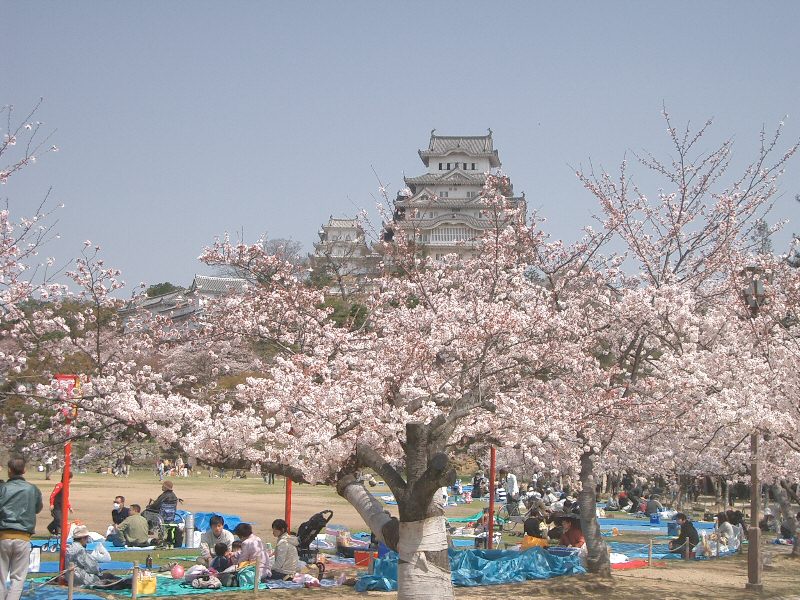 Decoration
Hanami花見
The Japanese tradition of gathering to enjoy cherry blossoms in spring
🇯🇵 Japan and 7 more · Custom, Jan to May
Decoration
Hanami花見
The Japanese tradition of gathering to enjoy cherry blossoms in spring
🇯🇵 Japan and 7 more · Custom, Jan to May
 Decoration
Bouquet
A creative arrangement of flowers, given or displayed for many occasions
🇨🇳 China and 1 more · Arrangement
Decoration
Bouquet
A creative arrangement of flowers, given or displayed for many occasions
🇨🇳 China and 1 more · Arrangement
 Decoration
Famille rose粉彩
Pink-enamel style of Chinese porcelain decoration
🇨🇳 China and 1 more · Art or design
Decoration
Famille rose粉彩
Pink-enamel style of Chinese porcelain decoration
🇨🇳 China and 1 more · Art or design