
Dwarf crested iris
Iris cristata, family Iridaceae
A low-growing iris with blue to purple spring flowers and a golden crest
Dwarf crested iris is a perennial plant native to the eastern United States, valued for its small, fragrant blue or purple blooms in spring. It grows in woodlands and rocky slopes, spreading by rhizomes to form dense patches, and is cultivated as an ornamental groundcover in temperate gardens.
- Native to woodlands and rocky slopes in the eastern United States
- Flowers are blue, lavender, purple, sometimes white or pink, with a golden crest
- Spreads by rhizomes to form dense groundcover
- Endangered in Maryland and Pennsylvania
- All parts are poisonous if ingested
What does Dwarf crested iris look like?
Dwarf crested iris is a small perennial that forms low mats through creeping rhizomes. Its leaves are narrow and sword-shaped, starting short and lengthening after flowering. In spring, it produces delicate flowers in shades of blue, lavender, or purple, sometimes white or rarely pink. Each flower has a central white area ringed with darker color and a raised golden or orange ridge on the outer petals. The blooms are lightly scented and measure about 3–5 cm across.
Where does Dwarf crested iris come from?
This iris is native to the woodlands and rocky hills of the eastern United States, especially in areas south of the last glaciation. It has been known in North America for centuries and was introduced to England in the 18th century by botanist John Bartram. The species was first described scientifically in 1789. Its name comes from the Latin for 'crested', referring to the raised ridge on the flower.
When and how Dwarf crested iris blooms
Dwarf crested iris flowers in April and May. It prefers woodland conditions with well-drained, slightly acidic to neutral soil and partial shade, though it can tolerate sun. The plant spreads by rhizomes, forming colonies. Propagation is usually by dividing the rhizomes in autumn, but it can also be grown from seed, which takes several years to flower. It is often used as a groundcover in gardens and naturalized in woodland settings.


How Dwarf crested iris is used
Gardeners grow this iris for its spring flowers and ability to cover ground in shaded areas. In its native region, it has been used by Cherokee people in traditional remedies, especially the root, which was applied to skin or taken as a tea. The plant is also noted for attracting bees. All parts, especially the rhizome and leaves, are poisonous if eaten, and handling may cause skin irritation.
Kinds of Dwarf crested iris
Many cultivated forms exist, including white-flowered 'Alba', deep blue 'Caerulea', and large-flowered 'Echo Ruffles'. Other cultivars offer variations in flower color, size, and form, such as 'Tennessee White', 'Powder Blue Giant', and 'Summer Sky'. These selections provide gardeners with a range of options for color and habit.
What Dwarf crested iris means
Dwarf crested iris is considered endangered in some states like Maryland and Pennsylvania due to habitat loss. It is recognized as an ornamental plant in temperate gardens and valued for its early spring bloom. The plant has a history in both horticulture and traditional medicine, and its distinctive crested flower gives it its scientific and common names.
Where Dwarf crested iris is used and seen
 BouquetA creative arrangement of flowers, given or displayed for many occasions
 The Daffodil FestivalPierce County’s spring parade and daffodil celebration since 1934
 Hakone Botanical Garden of WetlandsA garden of wetland and alpine plants in Hakone, Japan
 Parc floral de ParisA botanical garden and flower park in the Bois de Vincennes, Paris
 Parc Floral de la SourceA large public garden in Orléans built around the source of the Loiret river
 KeukenhofA vast Dutch flower garden famous for its spring tulip displays
 KanzashiTraditional Japanese hair ornaments, often crafted as folded silk flowers
 HanafudaJapanese playing cards with flower designs used for traditional games
Questions people ask about Dwarf crested iris
Where does the dwarf crested iris come from?
It is native to the eastern United States, growing wild in woodlands, rocky hillsides, and along streams, especially in regions south of the last glaciation.
What does the flower look like?
The flowers are small and fragrant, typically blue, lavender, or purple, with a central white area and a raised golden or orange ridge on each outer petal. White and rarely pink forms also occur.
Is the plant toxic?
Yes, all parts of the plant, especially the rhizome and leaves, are poisonous if eaten and can cause stomach upset. Handling may also cause skin irritation.
How is it used by people?
It is grown as an ornamental groundcover in gardens and has been used in Cherokee traditional medicine, mainly the root, for various remedies.
Are there different varieties?
Yes, there are many cultivated forms with differences in flower color and size, including white, deep blue, and large-flowered types.
Good reading and sources
- Lady Bird Johnson Wildflower CenterLady Bird Johnson Wildflower Center, Article
- Iris cristataRoyal Horticultural Society, Article
- Plants of the World OnlineRoyal Botanic Gardens, Kew, Plant database
- Where it has been recordedGBIF, Plant database
- Sightings and photos by naturalistsiNaturalist, Plant database
- Iris cristata on WikipediaEncyclopedia
- More photos on Wikimedia CommonsPhotos
- Wikidata recordOpen data
The facts on this page come from the Wikipedia article "Iris cristata", written by its contributors and used under the CC BY-SA 4.0 licence, and from its Wikidata record (CC0). Phool rewrote the text in its own words, with AI assistance, and compares every page with the article to make sure no passage is copied. It may be reused under the same CC BY-SA 4.0 licence with a link back.
It may contain mistakes. It is not medical or foraging advice: many flowers are poisonous, and traditional uses are reported, not recommended. If something is wrong, tell us. Last refreshed 2026-10-03.
Others in the family Iridaceae
The whole family Gladiolus
Tall, showy flower spikes grown from corms, known as sword lilies
Gladiolus · Garden flower
Gladiolus
Tall, showy flower spikes grown from corms, known as sword lilies
Gladiolus · Garden flower
 Iris
A large group of perennial flowers with striking, six-lobed blooms
Iris · Wildflower
Iris
A large group of perennial flowers with striking, six-lobed blooms
Iris · Wildflower
 Crocus
Small corm-grown flowers in white, yellow, orange or purple
🇹🇷 Turkey and 7 more · Wildflower
Crocus
Small corm-grown flowers in white, yellow, orange or purple
🇹🇷 Turkey and 7 more · Wildflower
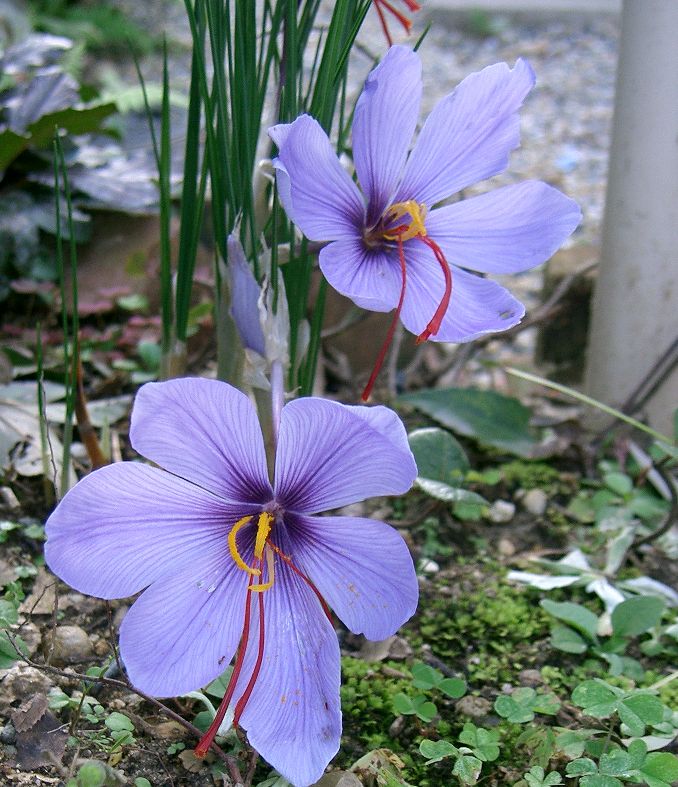 Saffron crocusCrocus sativus
The purple autumn flower whose red stigmas yield the spice saffron
🇨🇳 China and 1 more · Garden flower
Saffron crocusCrocus sativus
The purple autumn flower whose red stigmas yield the spice saffron
🇨🇳 China and 1 more · Garden flower
More from the United States
All the flowers of the United States PeachPrunus persica
A flowering fruit tree from China, grown for its pink blossoms and sweet fruit
🇨🇳 China and 7 more · Flowering tree
PeachPrunus persica
A flowering fruit tree from China, grown for its pink blossoms and sweet fruit
🇨🇳 China and 7 more · Flowering tree
 AlmondPrunus amygdalus
A Mediterranean tree grown for its fragrant spring flowers and edible seeds
🇮🇷 Iran and 6 more · Flowering tree
AlmondPrunus amygdalus
A Mediterranean tree grown for its fragrant spring flowers and edible seeds
🇮🇷 Iran and 6 more · Flowering tree
 CactusCactaceae
Succulent plants with spines, native to the Americas
🇲🇽 Mexico and 7 more · Wildflower
CactusCactaceae
Succulent plants with spines, native to the Americas
🇲🇽 Mexico and 7 more · Wildflower
 Chrysanthemum菊花
Autumn-blooming flower with thousands of varieties, cherished in East Asia and beyond
🇨🇳 China and 6 more · Wildflower
Chrysanthemum菊花
Autumn-blooming flower with thousands of varieties, cherished in East Asia and beyond
🇨🇳 China and 6 more · Wildflower