
Japanese iris
Iris ensata, family Iridaceae
In its own language: ハナショウブ
A tall, rhizomatous iris with bluish-purple flowers and yellow-marked falls
Japanese iris is a herbaceous perennial that grows up to 80 cm tall with strap-like leaves and midsummer blooms. Native to East Asia, it thrives in acidic, boggy soils and is especially valued in Japanese gardens and hybridised worldwide for its striking flowers.
- Flowers show bluish purple with yellow on the falls due to copigmentation
- Grows naturally in Japan, China, Korea and Russia
- Thrives in acidic, marshy soil and tolerates −20 °C
- Cultivated in Japan for at least five centuries
- Three traditional Japanese strains: Edo, Higo and Ise
What does Japanese iris look like?
This plant stands upright on a rhizome and reaches about 80 cm in height. Its long, narrow leaves resemble straps. In midsummer, it produces flowers in shades of bluish purple, with the lower petals, called falls, showing a bright yellow patch. The colour effect comes from copigmentation.
Where does Japanese iris come from?
Iris ensata grows wild across Japan, China, Korea and parts of Russia. It has been part of Japanese horticulture for at least 500 years, possibly linked to early rice farming. Known locally as hanashōbu, it became central to garden traditions and later spread to Europe and North America in the 1800s.
When and how Japanese iris blooms
It blooms in summer and prefers wet, acidic ground like bogs or pond margins. Hardy to −20 °C, it slowly forms dense clumps where conditions suit it. Gardeners propagate it by dividing rhizomes, and it thrives in temperate climates with consistent moisture.


How Japanese iris is used
In Japan, it is a cherished garden plant, with regional styles named after Edo, Higo and Ise. Western growers have created many large-flowered varieties in varied hues. It appears in ornamental plantings in parks and private gardens across temperate zones.
Kinds of Japanese iris
Three historic Japanese strains are recognised: Edo from Tokyo, Higo from Kumamoto and Ise from Mie. In the United States, breeders like Arlie Payne and the Marx family developed new cultivars with bigger blooms and broader colour ranges.
What Japanese iris means
The flower is deeply embedded in Japanese gardening history. Though not tied to specific festivals here, its cultivated form, hanashōbu, is distinct from other irises used in rituals. Several of its garden varieties have received recognition for excellence in cultivation.
Where Japanese iris is used and seen
 The Daffodil FestivalPierce County’s spring parade and daffodil celebration since 1934
 GosekkuFive seasonal festivals once held at the Japanese imperial court
 Hakone Botanical Garden of WetlandsA garden of wetland and alpine plants in Hakone, Japan
 Parc floral de ParisA botanical garden and flower park in the Bois de Vincennes, Paris
 Parc Floral de la SourceA large public garden in Orléans built around the source of the Loiret river
 KeukenhofA vast Dutch flower garden famous for its spring tulip displays
 KanzashiTraditional Japanese hair ornaments, often crafted as folded silk flowers
 BouquetA creative arrangement of flowers, given or displayed for many occasions
Traditions that use it
Questions people ask about Japanese iris
Where does Japanese iris come from?
It is native to Japan, China, Korea and Russia, growing wild across these regions.
What does the flower look like?
It has bluish-purple petals with a yellow mark on the lower falls, blooming in midsummer on tall stems.
How is it used in gardens?
It is grown in wet, acidic spots in temperate gardens worldwide and is especially prized in Japanese horticulture.
Are there different kinds of Japanese iris?
Yes, traditional Japanese types include Edo, Higo and Ise; American breeders have also made many new cultivars.
What kind of soil does it need?
It prefers boggy or marshy ground with low, acidic pH and plenty of moisture.
Good reading and sources
- Iris ensata 'Aldridge Visitor'Royal Horticultural Society, Article
- USDA Plants DatabaseUS Department of Agriculture, Article
- Plants of the World OnlineRoyal Botanic Gardens, Kew, Plant database
- Where it has been recordedGBIF, Plant database
- Sightings and photos by naturalistsiNaturalist, Plant database
The facts on this page come from the Wikipedia article "Iris ensata", written by its contributors and used under the CC BY-SA 4.0 licence, and from its Wikidata record (CC0). Phool rewrote the text in its own words, with AI assistance, and compares every page with the article to make sure no passage is copied. It may be reused under the same CC BY-SA 4.0 licence with a link back.
It may contain mistakes. It is not medical or foraging advice: many flowers are poisonous, and traditional uses are reported, not recommended. If something is wrong, tell us. Last refreshed 2026-10-03.
Others in the family Iridaceae
The whole family Gladiolus
Tall, showy flower spikes grown from corms, known as sword lilies
Gladiolus · Garden flower
Gladiolus
Tall, showy flower spikes grown from corms, known as sword lilies
Gladiolus · Garden flower
 Iris
A large group of perennial flowers with striking, six-lobed blooms
Iris · Wildflower
Iris
A large group of perennial flowers with striking, six-lobed blooms
Iris · Wildflower
 Crocus
Small corm-grown flowers in white, yellow, orange or purple
🇹🇷 Turkey and 7 more · Wildflower
Crocus
Small corm-grown flowers in white, yellow, orange or purple
🇹🇷 Turkey and 7 more · Wildflower
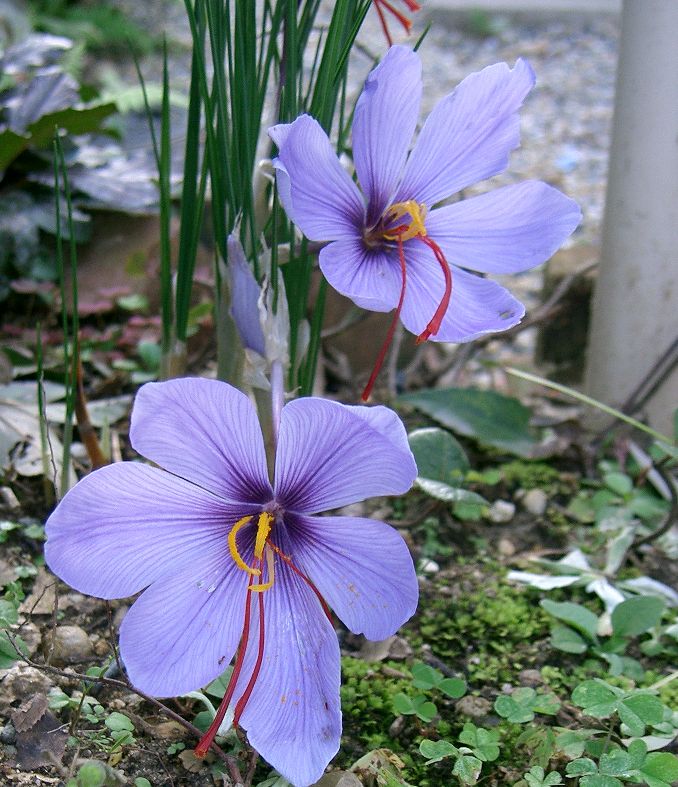 Saffron crocusCrocus sativus
The purple autumn flower whose red stigmas yield the spice saffron
🇨🇳 China and 1 more · Garden flower
Saffron crocusCrocus sativus
The purple autumn flower whose red stigmas yield the spice saffron
🇨🇳 China and 1 more · Garden flower
More from Japan
All the flowers of Japan PeachPrunus persica
A flowering fruit tree from China, grown for its pink blossoms and sweet fruit
🇨🇳 China and 7 more · Flowering tree
PeachPrunus persica
A flowering fruit tree from China, grown for its pink blossoms and sweet fruit
🇨🇳 China and 7 more · Flowering tree
 Chrysanthemum菊花
Autumn-blooming flower with thousands of varieties, cherished in East Asia and beyond
🇨🇳 China and 6 more · Wildflower
Chrysanthemum菊花
Autumn-blooming flower with thousands of varieties, cherished in East Asia and beyond
🇨🇳 China and 6 more · Wildflower
 Sacred lotusNelumbo nucifera
The pink aquatic flower sacred in Asia and grown for food, worship and beauty
🇮🇳 India and 7 more · Water flower
Sacred lotusNelumbo nucifera
The pink aquatic flower sacred in Asia and grown for food, worship and beauty
🇮🇳 India and 7 more · Water flower
 Wild cherryPrunus avium
A tall flowering tree native to Europe, grown for its sweet fruit and spring blossom
🇮🇹 Italy and 6 more · Flowering tree
Wild cherryPrunus avium
A tall flowering tree native to Europe, grown for its sweet fruit and spring blossom
🇮🇹 Italy and 6 more · Flowering tree