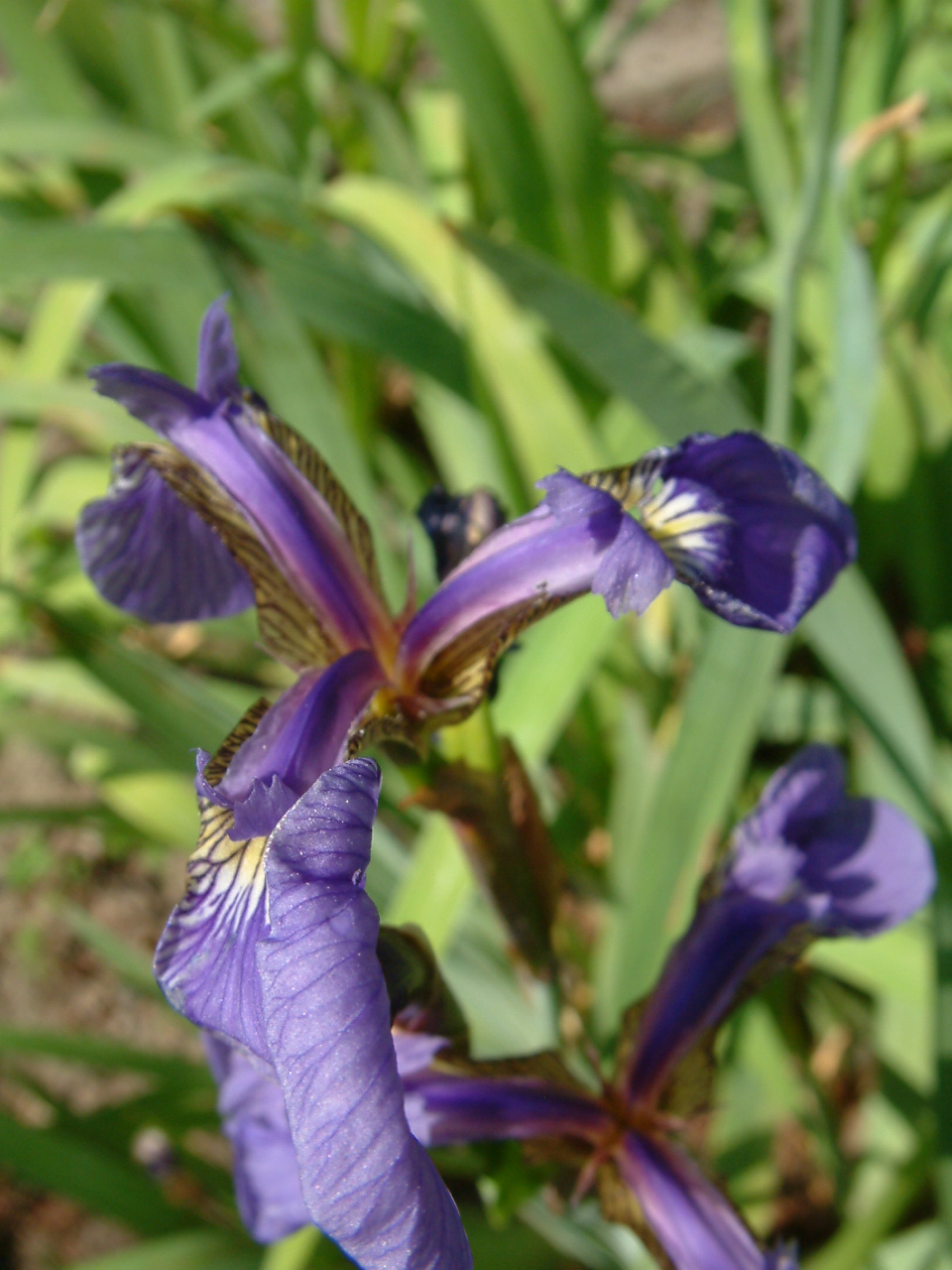
Beachhead iris
Iris setosa, family Iridaceae
A hardy iris with blue to violet flowers found across northern Asia and North America
Beachhead iris (Iris setosa) is a rhizomatous perennial with violet to blue flowers, native to cold regions of Asia and North America. It grows in wetlands, meadows, and rocky shores, forming clumps of grass-like leaves and blooming in early summer. The plant is valued for its hardiness and is used in gardens and breeding.
- Only iris native to both Asia and North America
- Flowers range from violet-blue to rare pink and white
- Grows in wetlands, meadows, and rocky shores
- Extremely cold-hardy, down to −34 °C
- Some Japanese varieties are critically threatened
What does Beachhead iris look like?
Beachhead iris is a perennial plant with thick, branching rhizomes that form spreading clumps. Its leaves are long, narrow, and grass-like, often with a purple tinge at the base. The stems can reach from 10 cm up to 1 m tall and bear 3–4 large flowers per stem. The blooms are usually violet, blue, or lavender, but rare pink or white forms exist. Each flower has three broad, veined sepals and three much smaller, bristle-like petals, giving a flat, three-petaled look.
Where does Beachhead iris come from?
Iris setosa is native to cold regions around and below the Arctic Circle in Asia and North America, including Japan, China, Russia, Korea, Canada, and the United States. It was first described from Siberia in 1820. The species is unique among irises for its wide, circumarctic range, being the only iris native to both Asia and North America. Its name comes from the Latin 'seta', meaning bristle, referring to its small inner petals.
When and how Beachhead iris blooms
The plant blooms in early summer, usually June to July, producing flowers on tall, branched stems. It prefers moist or wet soils but can adapt to drier or sandy ground and is often found in meadows, bogs, and along rocky shores. Propagation is mainly by dividing the rhizomes in spring or autumn, but it can also be grown from seed, which requires a cold period to germinate. The plant is very cold-hardy and survives harsh winters.


How Beachhead iris is used
Beachhead iris is grown as a hardy ornamental in gardens, especially in regions with cold winters. It is suitable for bog gardens, woodland edges, and borders. The species is also important in breeding hybrid irises. In Japan, some regional varieties are threatened and protected. The plant is recognized for its adaptability and has received horticultural awards.
Kinds of Beachhead iris
Iris setosa forms natural hybrids with other irises, such as Iris versicolor. In Japan, the hondoensis and nasuensis varieties are notable, with larger flowers and different leaf shapes. The Canadian form is slightly different from Asian forms. Some Japanese varieties are critically threatened in the wild.
What Beachhead iris means
Beachhead iris is valued for its resilience and beauty in cold climates. It is sometimes called Arctic iris or Alaska iris, reflecting its northern range. The plant is an emblem in some regions and has received the Royal Horticultural Society's Award of Garden Merit. It is also known for its role in scientific studies of plant classification.
Where Beachhead iris is used and seen
 BouquetA creative arrangement of flowers, given or displayed for many occasions
 The Daffodil FestivalPierce County’s spring parade and daffodil celebration since 1934
 Hakone Botanical Garden of WetlandsA garden of wetland and alpine plants in Hakone, Japan
 Parc floral de ParisA botanical garden and flower park in the Bois de Vincennes, Paris
 Parc Floral de la SourceA large public garden in Orléans built around the source of the Loiret river
 KeukenhofA vast Dutch flower garden famous for its spring tulip displays
 KanzashiTraditional Japanese hair ornaments, often crafted as folded silk flowers
 HanafudaJapanese playing cards with flower designs used for traditional games
Questions people ask about Beachhead iris
Where does the beachhead iris come from?
Beachhead iris (Iris setosa) is native to northern Asia and North America, including regions in Japan, China, Russia, Korea, Canada, and the United States, especially Alaska.
What does the beachhead iris look like?
It has grass-like leaves and tall stems bearing large flowers in shades of violet, blue, or lavender. The flowers have three broad sepals and three small, bristle-like petals, giving a flat appearance. Rarely, flowers can be pink or white.
When does Iris setosa bloom?
It blooms in early summer, typically from June to July in the northern hemisphere.
What is the cultural or symbolic meaning of Iris setosa?
The plant is valued for its hardiness and is sometimes used as an emblem in northern regions. It has also been recognized by horticultural societies for its garden value.
How is Iris setosa used?
It is mainly grown as a hardy ornamental in gardens and used in breeding hybrid irises. Some regional varieties are protected due to their threatened status.
Good reading and sources
- Lady Bird Johnson Wildflower CenterLady Bird Johnson Wildflower Center, Article
- Iris setosa | bristle-pointed irisRoyal Horticultural Society, Article
- USDA Plants DatabaseUS Department of Agriculture, Article
- Plants of the World OnlineRoyal Botanic Gardens, Kew, Plant database
- Where it has been recordedGBIF, Plant database
- Sightings and photos by naturalistsiNaturalist, Plant database
The facts on this page come from the Wikipedia article "Iris setosa", written by its contributors and used under the CC BY-SA 4.0 licence, and from its Wikidata record (CC0). Phool rewrote the text in its own words, with AI assistance, and compares every page with the article to make sure no passage is copied. It may be reused under the same CC BY-SA 4.0 licence with a link back.
It may contain mistakes. It is not medical or foraging advice: many flowers are poisonous, and traditional uses are reported, not recommended. If something is wrong, tell us. Last refreshed 2026-10-03.
Others in the family Iridaceae
The whole family Gladiolus
Tall, showy flower spikes grown from corms, known as sword lilies
Gladiolus · Garden flower
Gladiolus
Tall, showy flower spikes grown from corms, known as sword lilies
Gladiolus · Garden flower
 Iris
A large group of perennial flowers with striking, six-lobed blooms
Iris · Wildflower
Iris
A large group of perennial flowers with striking, six-lobed blooms
Iris · Wildflower
 Crocus
Small corm-grown flowers in white, yellow, orange or purple
🇹🇷 Turkey and 7 more · Wildflower
Crocus
Small corm-grown flowers in white, yellow, orange or purple
🇹🇷 Turkey and 7 more · Wildflower
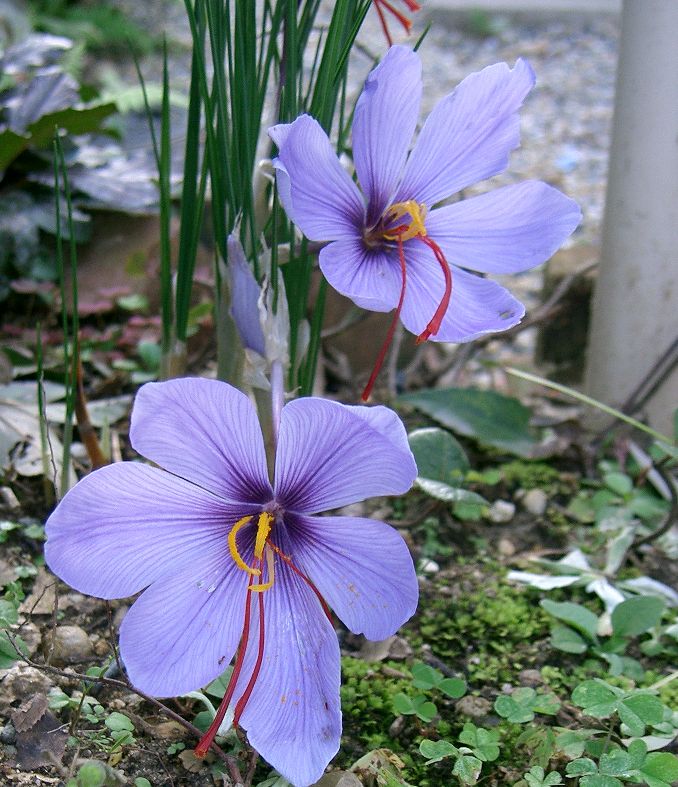 Saffron crocusCrocus sativus
The purple autumn flower whose red stigmas yield the spice saffron
🇨🇳 China and 1 more · Garden flower
Saffron crocusCrocus sativus
The purple autumn flower whose red stigmas yield the spice saffron
🇨🇳 China and 1 more · Garden flower
More from Japan
All the flowers of Japan PeachPrunus persica
A flowering fruit tree from China, grown for its pink blossoms and sweet fruit
🇨🇳 China and 7 more · Flowering tree
PeachPrunus persica
A flowering fruit tree from China, grown for its pink blossoms and sweet fruit
🇨🇳 China and 7 more · Flowering tree
 BirchBetula
Slender trees with papery bark found across the northern world
🇨🇳 China and 7 more · Wildflower
BirchBetula
Slender trees with papery bark found across the northern world
🇨🇳 China and 7 more · Wildflower
 Chrysanthemum菊花
Autumn-blooming flower with thousands of varieties, cherished in East Asia and beyond
🇨🇳 China and 6 more · Wildflower
Chrysanthemum菊花
Autumn-blooming flower with thousands of varieties, cherished in East Asia and beyond
🇨🇳 China and 6 more · Wildflower
 Sacred lotusNelumbo nucifera
The pink aquatic flower sacred in Asia and grown for food, worship and beauty
🇮🇳 India and 7 more · Water flower
Sacred lotusNelumbo nucifera
The pink aquatic flower sacred in Asia and grown for food, worship and beauty
🇮🇳 India and 7 more · Water flower